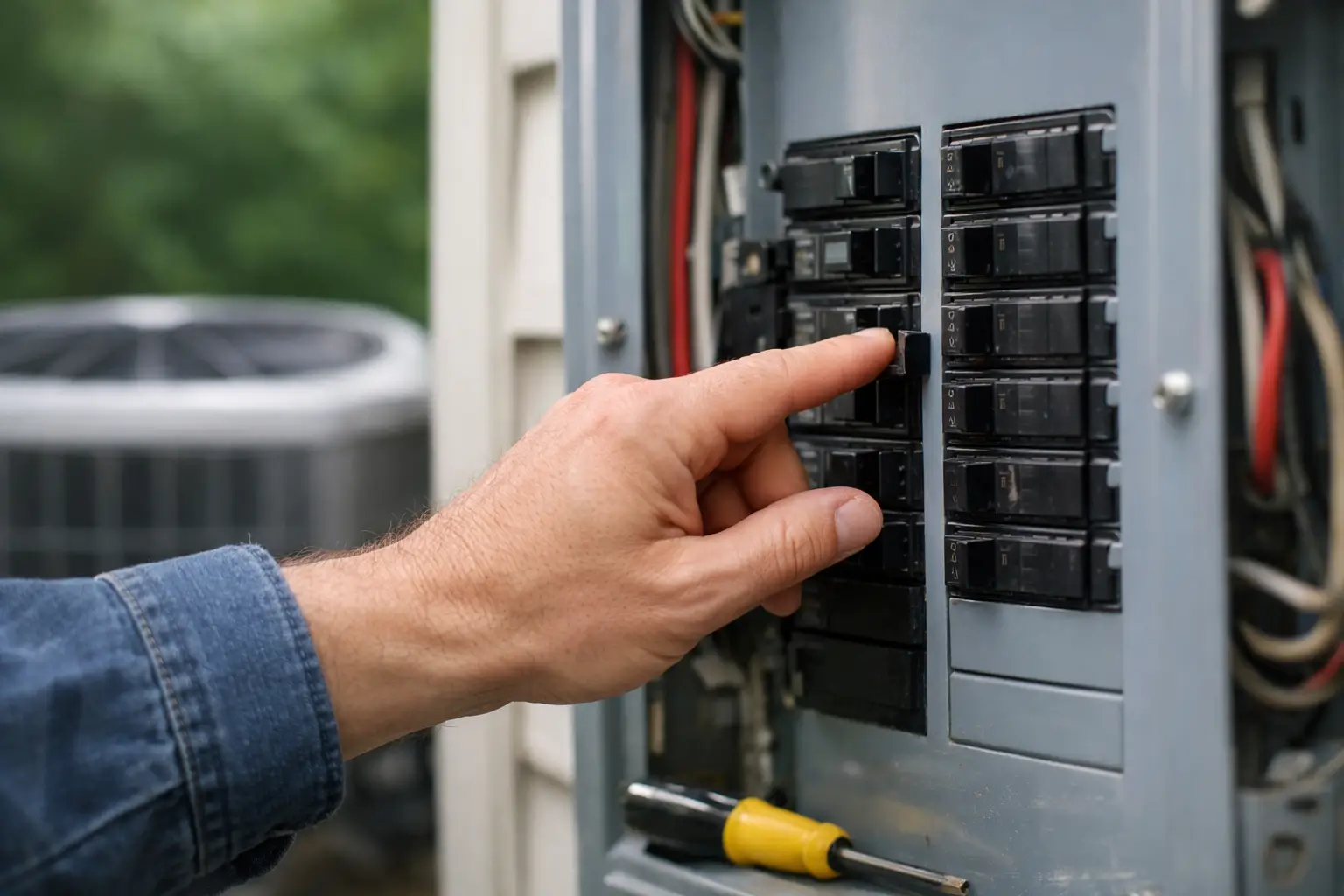
Your air conditioner quits on a hot afternoon, or your furnace stops when the temperature drops. Before assuming the equipment has failed, check whether the circuit breaker has tripped. Knowing how to reset HVAC breaker equipment safely can restore comfort quickly, but it can also reveal an electrical or mechanical issue that needs professional attention.
A breaker is designed to shut off power when it detects an overload, short circuit, or ground fault. It is protecting your home and your HVAC system. Resetting it once may be appropriate. Resetting it repeatedly is not a repair and can create a safety risk.
First, Make Sure the Breaker Is the Problem
An HVAC system may have more than one power source. A furnace or air handler is commonly connected to a dedicated breaker, while a central air conditioner or heat pump outdoor unit often uses a separate double-pole breaker. The outdoor unit may also have a disconnect box mounted nearby.
Start with the thermostat. Make sure it is set to heat or cool, the temperature setting calls for operation, and the thermostat screen is on. If the thermostat is blank, replace the batteries if applicable. A tripped breaker may be the cause, but a thermostat setting, a clogged condensate drain safety switch, or a furnace door that is not fully closed can also stop the system.
At your electrical panel, look for a breaker labeled HVAC, furnace, air conditioner, heat pump, air handler, or condenser. A tripped breaker does not always point fully to the OFF position. It may sit in the middle, between ON and OFF, or appear nearly on while feeling loose.
How to Reset an HVAC Breaker Safely
Only reset a breaker if there are no signs of an urgent electrical problem. Do not touch the panel if the area is wet, if you smell burning, hear buzzing, see scorch marks, or notice a hot electrical panel. Keep your hands dry, wear shoes, and stand on a dry floor.
Follow this process carefully:
- Turn the thermostat off. This reduces the chance that the system will immediately start under load when power is restored.
- Open the electrical panel and identify the HVAC breaker. Avoid touching any wiring or removing the panel cover.
- Move the breaker firmly all the way to the OFF position first. A tripped breaker must be fully switched off before it can reset.
- Move it firmly back to the ON position.
- Wait a few minutes, then turn the thermostat back on and call for heating or cooling.
For central air conditioning and heat pumps, the outdoor unit may not start immediately. Many systems have a built-in delay of several minutes to protect the compressor. Give it time before deciding the reset did not work.
If the breaker stays on and your system resumes normal operation, keep an eye on it for the next day or two. One isolated trip can happen during a power fluctuation or after an unusually high electrical load. A breaker that trips again points to a problem that should be diagnosed.
When You Should Not Reset the HVAC Breaker
There are situations where resetting the breaker is the wrong next step. Call for professional HVAC or electrical service if the breaker trips immediately, trips again after the system runs briefly, or will not remain in the ON position.
Stop and seek help right away if you notice a burning odor, smoke, crackling or buzzing sounds, melted insulation, discoloration near the breaker, or water around electrical equipment. Also avoid resetting the system if the outdoor unit is covered in ice, the furnace has visible water damage, or a storm has affected your home’s electrical system.
A breaker that keeps tripping is doing its job. Forcing it back on can overheat wiring, damage expensive components, or increase the risk of an electrical fire. This is especially true with older electrical panels, aging HVAC equipment, or systems that have recently been repaired or installed.
Why an HVAC Breaker Trips
The reason behind a tripped breaker can range from simple maintenance needs to a serious component failure. The timing of the trip gives a technician useful clues.
If the breaker trips when the air conditioner or heat pump first starts, the issue may involve a failing capacitor, worn compressor, loose electrical connection, or a breaker that no longer handles its rated load properly. An outdoor unit draws the most power during startup, so weak electrical components often show up then.
If the system runs for a while and trips later, restricted airflow may be contributing. A severely clogged air filter, blocked return vents, dirty indoor coil, or failing blower motor can make the equipment work harder and overheat. For cooling equipment, a dirty outdoor condenser coil can also raise operating pressure and increase electrical demand.
Water-related problems matter, too. A backed-up condensate drain can shut down some furnaces and air handlers through a safety switch. Moisture entering an outdoor disconnect, electrical connection, or control component can cause intermittent trips. These issues require more than a breaker reset.
In some homes, the concern is not the HVAC equipment itself. A loose wire, corroded connection, undersized circuit, damaged breaker, or electrical panel issue may be the source. HVAC technicians can evaluate system-side causes, while an electrician may be needed when the problem is within the home’s electrical distribution system.
What to Check Before Calling for Service
You do not need to troubleshoot live electrical components to give a technician helpful information. Note whether the breaker trips as soon as you reset it, when the blower turns on, or when the outdoor unit starts. Also note whether you were using other high-demand appliances, such as a dryer, oven, space heater, or electric vehicle charger.
Check the air filter if it is safe and accessible. A filter that looks gray, packed with dust, or bent inward should be replaced with the correct size and type. Make sure supply registers and return grilles are open and not blocked by furniture, rugs, or storage items.
For an air conditioner or heat pump, look at the outdoor unit without removing any panels. Clear leaves, grass clippings, and loose debris from around it, leaving plenty of open space for airflow. Do not spray electrical areas with water, straighten coil fins with sharp tools, or attempt to restart a unit that is making loud mechanical noises.
Prevent Future Breaker Trips With Routine Care
Regular maintenance helps prevent many of the conditions that make HVAC equipment draw too much power. Replace filters on schedule, keep outdoor equipment clear, and schedule seasonal service before periods of heavy heating or cooling use.
During a professional maintenance visit, a technician can check electrical connections, test capacitors and motors, inspect amp draw, clean coils, confirm airflow, and identify worn components before they leave you without heating or cooling. That is often less disruptive and less costly than waiting for a mid-season breakdown.
If your system is older and experiencing repeat electrical issues, repair may not always be the best long-term value. A qualified home comfort professional can help you compare repair costs, efficiency improvements, equipment options, and available rebate opportunities where applicable.
Get Help When the Breaker Keeps Tripping
A single reset can be a practical first step. A repeated trip is a message from your home that should not be ignored. Licensed HVAC professionals can safely diagnose whether the cause is airflow, a failed component, wiring, moisture, or an electrical supply issue.
Comfort should not depend on repeatedly walking to the electrical panel. If your heating or cooling system will not stay running, arrange service promptly, especially during extreme weather. A proper diagnosis protects your equipment, your energy costs, and the people who rely on your home to stay comfortable.