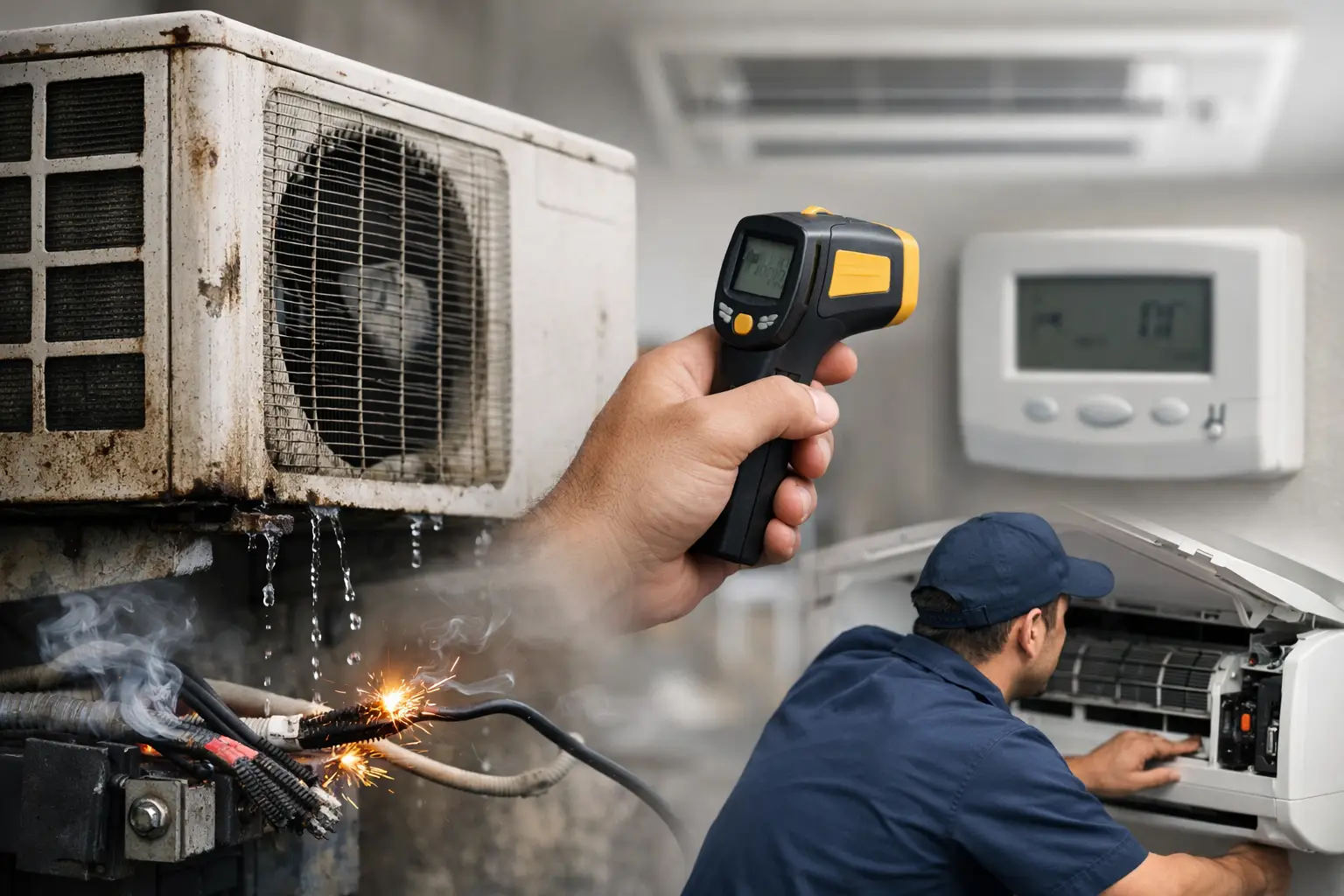
A hot afternoon is a poor time to learn that your air conditioner can no longer keep up. The most useful air conditioner replacement signs often show up well before a complete breakdown: longer cooling cycles, rooms that never feel comfortable, and repair bills that keep returning. Recognizing them early gives you time to compare efficient options, explore available rebates, and choose a replacement on your schedule instead of during an emergency.
10 Air Conditioner Replacement Signs to Watch
No single symptom automatically means you need a new system. A skilled technician can often restore a newer unit with a targeted repair. But when several warning signs appear at once, replacement may offer better comfort, lower operating costs, and more dependable performance.
1. Your air conditioner is more than 10 to 15 years old
Age alone does not tell the whole story. A well-maintained unit may still run effectively after a decade, while a neglected system can struggle much sooner. Still, once an air conditioner reaches the 10- to 15-year range, wear on major components becomes more likely and efficiency can fall behind current equipment.
Older systems may also use refrigerants that are increasingly difficult or expensive to source. If a major part fails on an aging unit, putting significant money into a repair may not be the best long-term decision. An in-home assessment can help compare the expected repair life with the value of a new system.
2. Cooling is uneven from room to room
If the living room feels comfortable but an upstairs bedroom stays warm and stuffy, the air conditioner may be losing capacity. Weak cooling can also point to duct leaks, insulation gaps, thermostat issues, or an airflow restriction, so it should not be diagnosed by guesswork.
A professional evaluation identifies whether the equipment is the problem or whether your home needs airflow improvements. In some cases, a replacement combined with proper system sizing, zoning, or duct adjustments solves comfort problems that a simple repair never could.
3. Your energy bills keep climbing
Utility costs naturally rise during a hot stretch, but a steady increase from year to year deserves attention. As an air conditioner ages, it may need more electricity to deliver the same amount of cooling. Dirty coils, worn motors, refrigerant problems, and declining compressor performance can all contribute.
Compare similar billing periods, rather than one unusually hot month. If your usage has climbed while your cooling habits have not changed, have the system inspected. A high-efficiency replacement can reduce energy use, although the actual savings depend on your home, system size, insulation, thermostat settings, and local electricity rates.
4. Repairs are becoming frequent or expensive
One repair does not mean it is time to replace your AC. Electrical components, capacitors, and contactors can sometimes be repaired at a reasonable cost. The decision changes when service calls become routine or when the repair involves a costly major component, such as the compressor or evaporator coil.
Consider the full picture: the unit’s age, repair history, current efficiency, warranty coverage, and the likelihood of another failure. Spending money to gain a few more reliable seasons can make sense. Spending heavily on a system near the end of its service life often does not.
5. The system runs constantly without reaching the set temperature
On very hot days, it is normal for an air conditioner to run for longer periods. It should still make steady progress toward the temperature set on the thermostat. If it runs almost nonstop while the house remains warm, the system may be undersized, losing refrigerant, restricted by poor airflow, or losing capacity due to age.
Constant operation also adds stress to the equipment and can raise monthly costs. Do not ignore this issue simply because cool air is still coming from the vents. A timely inspection may prevent a complete failure during peak cooling season.
6. You hear new or concerning noises
A consistent low operating sound is normal. Banging, grinding, squealing, rattling, or repeated clicking is not. These sounds may indicate loose hardware, a failing motor, worn bearings, electrical problems, or compressor trouble.
Some noise issues are repairable, especially when they are addressed early. But unusual sounds from an older unit, paired with weak cooling or high repair costs, are stronger air conditioner replacement signs. Turn the system off and request service if you hear loud grinding, smell burning, or notice repeated breaker trips.
7. Humidity stays high indoors
Cooling is only part of an air conditioner’s job. It should also remove a reasonable amount of moisture from the air. When indoor humidity remains high, rooms can feel warmer than the thermostat reading, and you may notice clammy surfaces, musty odors, or a general sense of discomfort.
High humidity can come from ventilation or building-envelope issues, but it can also signal an air conditioner that is improperly sized or no longer operating correctly. A system that is too large may cool the home too quickly and shut off before removing enough moisture. That is why correct sizing matters just as much as choosing an efficient model.
8. Airflow from vents has become weak
Weak airflow can make even a functional air conditioner feel ineffective. Start with the basics: check that return and supply vents are open and not blocked by furniture, and replace a dirty filter if needed. If the issue continues, the cause may be a failing blower motor, duct problem, coil buildup, or an aging system that cannot move air as it should.
A technician should inspect the entire cooling system before recommending replacement. If the outdoor unit is still in good condition, the fix may be in the indoor equipment or ductwork. If several components are worn, a coordinated replacement may be the more dependable solution.
9. You are dealing with refrigerant leaks
Refrigerant is not something an air conditioner should routinely consume. If levels are low, there is usually a leak that needs to be found and repaired. Simply adding refrigerant without addressing the source may provide temporary cooling, but it does not solve the underlying problem.
For an older system using outdated refrigerant, a leak can become especially costly. The right choice depends on the location and severity of the leak, the system’s age, and the condition of its major components. A clear repair-versus-replace estimate helps you make a decision based on total value, not just today’s service bill.
10. Your comfort needs have changed
Sometimes the equipment is not broken. Your home may have changed. A finished basement, home office, addition, growing family, or changing work schedule can expose limitations in a system that once seemed adequate. You may also be ready for quieter operation, better humidity control, smart thermostat compatibility, or a heat pump that provides efficient heating and cooling.
Replacement is an opportunity to design for how you use your home now. A qualified contractor should calculate the proper load instead of selecting equipment based only on the size of your old unit. Oversizing and undersizing both create comfort and efficiency problems.
When Repair Makes Sense and When Replacement Is Smarter
Repair is often the practical choice for a newer system with a minor, isolated issue. Regular maintenance, clean filters, and prompt service can extend its useful life. Replacement becomes more compelling when an older unit has multiple problems, requires a major repair, cannot keep the home comfortable, or costs too much to operate.
Do not make the decision based on age alone or on the lowest upfront price. Ask for clear options that outline the repair, the expected lifespan after repair, replacement efficiency ratings, warranty coverage, installation requirements, and any rebate opportunities. The best outcome is a system that delivers reliable comfort without unnecessary operating costs.
A planned replacement gives your household more control over the budget and the equipment choice. If you are seeing several of these warning signs, Pro West Heating & Air Conditioning can assess your system, explain the practical options, and provide a clear estimate before a small comfort issue becomes a no-cooling emergency.