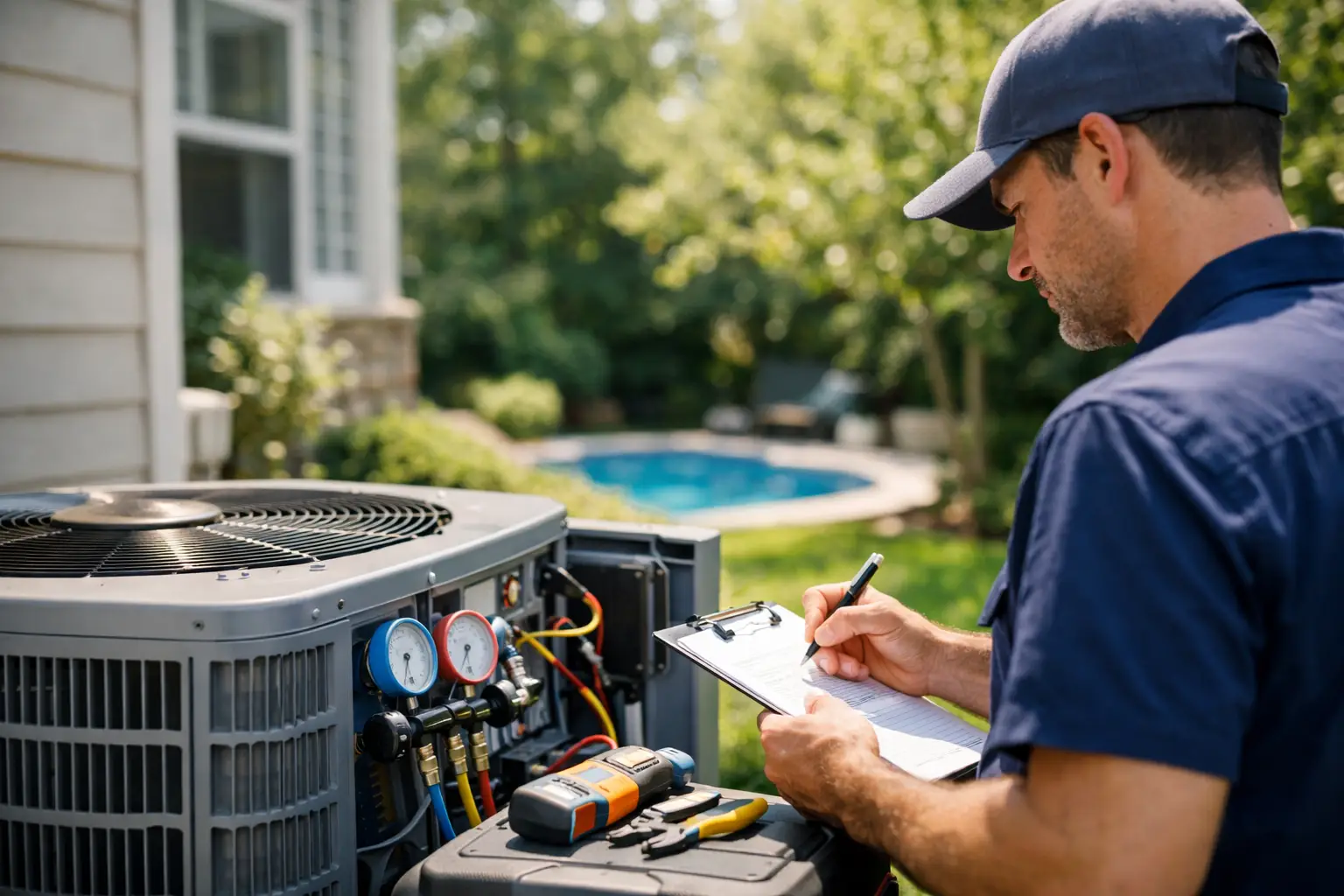
The first hot day is a poor time to find out your air conditioner has a clogged filter, a blocked outdoor unit, or a weak capacitor. A practical AC maintenance checklist for your home helps you catch small issues before they become a no-cooling call, a high utility bill, or an uncomfortable night indoors.
Some maintenance is safe and worthwhile for homeowners. Other work, especially electrical testing, refrigerant service, and internal cleaning, belongs with a licensed HVAC technician. The goal is not to take your system apart. It is to keep airflow clear, spot warning signs early, and schedule professional service before summer demand peaks.
AC Maintenance Checklist for Homeowners
Start with the items that protect airflow and help your equipment run without unnecessary strain. Set aside 20 to 30 minutes each month during cooling season, then arrange a professional tune-up once a year.
- Check or replace the air filter every 30 to 90 days.
- Confirm supply vents and return grilles are open and unobstructed.
- Clear leaves, grass, mulch, and storage items from the outdoor condenser.
- Test the thermostat and verify the system starts, cools, and cycles properly.
- Look for water near the indoor unit or drain line.
- Listen for new noises and pay attention to unusual odors.
- Schedule annual professional AC maintenance before extended hot weather arrives.
These steps are simple, but they address many of the conditions that shorten equipment life. Restricted airflow, for example, can make an air conditioner run longer, cool less effectively, and put extra stress on the blower and compressor.
Replace the filter on schedule
Your filter is one of the most important items on any home AC maintenance checklist. A dirty filter limits the air moving across the indoor coil. That can reduce comfort, increase energy use, and in severe cases contribute to coil icing.
Check the filter monthly, especially if you have pets, allergies, construction dust, or a busy household. Replacement timing depends on the filter type and your home, not just the date printed on the package. If the filter looks gray and packed with debris, replace it. If you use a high-efficiency filter, make sure it is compatible with your system. A filter that is too restrictive can create its own airflow problem.
Keep vents, returns, and registers clear
Walk through the home and make sure furniture, rugs, curtains, and boxes are not blocking supply vents or return-air grilles. Closing vents in unused rooms may seem like a way to save money, but it can disrupt system airflow and pressure balance. Unless your system was designed with zoning controls, keep most vents open.
Pay special attention to large return grilles. They pull air back to the HVAC system, and they need clear space around them. A blocked return can make bedrooms feel stuffy, cause uneven temperatures, and make the equipment work harder than necessary.
Clean around the outdoor condenser
The outdoor unit releases the heat removed from your home. It needs room to breathe. Turn off power at the disconnect before removing loose leaves, branches, or debris from around the unit. Keep plants and landscaping trimmed back so there is roughly 2 feet of open space around the sides and above the condenser.
Do not cover the unit while it is operating, and do not use a pressure washer on the coil fins. Those thin metal fins bend easily and can restrict airflow. A gentle rinse with a garden hose may be appropriate if the exterior coil is visibly dusty, but skip this step if you are unsure how to do it safely. Professional cleaning is the better choice when the coil is heavily soiled or the fins are damaged.
Check Your Thermostat Before Cooling Season
A thermostat issue can look like an AC failure when it is actually a settings, battery, or programming problem. Set the thermostat to cooling mode and choose a temperature a few degrees below the current room temperature. Within several minutes, you should hear the indoor system start and then the outdoor unit engage.
Make sure the fan is set to Auto rather than On for normal operation. The On setting keeps the blower running continuously, which can raise electricity use and sometimes make indoor air feel more humid between cooling cycles.
If you have a smart thermostat, review the schedule before summer. Aggressive setbacks can save energy for some households, but the best settings depend on insulation, sun exposure, household routines, and how quickly your home heats up. A consistent setting is often more comfortable for families with pets, young children, or people working from home.
Watch the condensate drain
Air conditioning removes moisture from indoor air. That water drains through a condensate line, usually near the furnace or air handler. Check the area for standing water, staining, musty smells, or a drain pan that looks full.
A clogged drain line can trigger a safety switch and shut the system down. It can also lead to water damage if the issue is ignored. You may be able to keep the drain opening clear, but recurring clogs, visible mold, or water around the equipment should be handled by a technician.
Know the Warning Signs That Need Service
Home maintenance can prevent common problems, but it cannot replace a full inspection. Call for professional service if your AC runs but does not cool, cycles on and off repeatedly, blows warm air, trips a breaker, or makes grinding, buzzing, or loud rattling sounds.
Ice on the refrigerant line or indoor coil is another reason to stop and get help. It may be caused by restricted airflow, a dirty coil, a blower issue, or a refrigerant problem. Continuing to run a frozen system can cause more damage.
Odors matter, too. A mild dusty smell at the first startup can be normal. A burning smell, electrical odor, persistent musty smell, or chemical-like odor is not something to ignore. Turn the system off if you suspect an electrical issue and arrange service promptly.
What a Professional AC Tune-Up Should Include
A professional maintenance visit goes beyond replacing a filter and rinsing the outdoor cabinet. A licensed technician can inspect electrical connections, test capacitors and controls, check system operation, examine the blower, evaluate refrigerant performance, clean coils as needed, and verify that the condensate system is draining correctly.
The value is early detection. A worn electrical component, loose connection, or drainage issue may be inexpensive to address during maintenance but much more disruptive if it causes a breakdown during a heat wave. Regular service also gives you a clearer picture of your system’s condition, efficiency, and likely repair needs.
For older equipment, maintenance is also a good time to discuss the trade-off between repair and replacement. A repair may make sense when the issue is isolated and the system is otherwise reliable. If repairs are becoming frequent, cooling is uneven, or utility costs keep climbing, an energy-efficient replacement may offer better long-term value. The right choice depends on the equipment’s age, repair history, home layout, and budget.
A Better Routine for Lasting Home Comfort
Use this checklist monthly during the cooling season, then book professional service once a year. Keep a simple record of filter changes, repairs, and anything unusual you notice. That history makes it easier to spot patterns and helps your technician diagnose issues faster.
When your AC is quiet, clean, and cooling evenly, it is easy to forget it is working in the background. A few routine checks give your system a better chance of staying that way when your home needs it most.