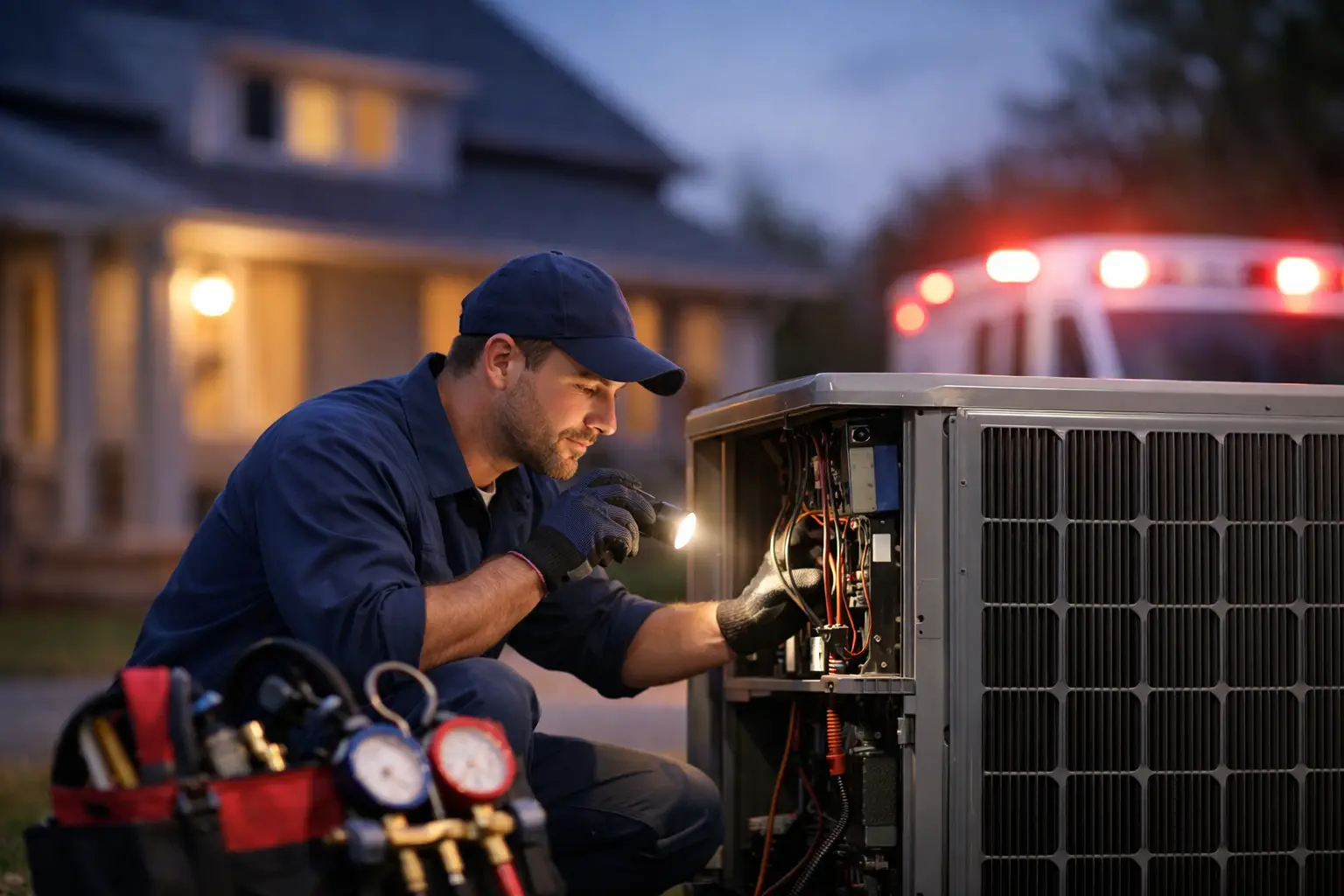
A furnace that quits at 2 a.m. in January feels very different from a repair you can schedule next week. The same goes for an air conditioner that stops during a heat wave or a boiler that leaves your home without heat or hot water. That is when 24/7 HVAC emergency repair stops being a convenience and starts being a real need.
For homeowners, the hard part is knowing whether the problem is truly urgent, what you should do right away, and when waiting could lead to bigger damage or higher costs. Not every HVAC issue is an emergency. Some absolutely are. The difference matters because a fast response can protect your comfort, your equipment, and in some cases your safety.
When 24/7 HVAC emergency repair is the right call
An HVAC emergency usually means one of three things: your home is unsafe, your system failure is severe enough to put health at risk, or the problem could cause property damage if it is not handled quickly. That can look different from one house to the next.
If your furnace will not turn on during freezing weather, that is an emergency for most households. If your AC fails during a mild spring day, it may be inconvenient but not urgent. A boiler leak, a burning smell from your system, or a complete loss of heat in a home with children, older adults, or health concerns should not wait. The same applies to many no-hot-water situations when the issue is tied to a larger equipment failure or active leak.
There is also a practical side to emergency repair. Some problems start small and get expensive fast. A failing blower motor, frozen evaporator coil, electrical issue, or ignition problem can put added strain on the rest of the system. Waiting too long may turn a targeted repair into a larger replacement conversation.
Signs your HVAC problem should not wait until morning
Some warning signs are clear. Others are easy to second-guess. If you notice a gas smell, shut the system down if you can do so safely, leave the home, and call the appropriate emergency utility service first. If there is smoke, sparks, or signs of an electrical short, turn off power to the unit and seek immediate help.
Other serious issues include no heat during cold weather, no cooling during dangerous indoor temperatures, water leaking around the furnace, boiler, or air handler, loud banging or grinding noises, and repeated tripped breakers when the system starts. A system that short cycles, blows cold air when it should heat, or stops and starts with an error code may also need urgent attention depending on the conditions in your home.
The part that depends is comfort versus risk. If your system is underperforming but still running, you may be able to schedule a standard repair. If the home is becoming unlivable, if water is pooling, or if the unit appears unsafe, 24/7 HVAC emergency repair is the better move.
What to do before the technician arrives
A few quick steps can sometimes restore operation or at least prevent more damage while you wait for service. Start with the thermostat. Make sure it is set to the correct mode and that the temperature setting is where it should be. It sounds basic, but thermostat settings, dead batteries, and accidental programming changes cause more no-heat and no-cool calls than many homeowners expect.
Next, check the breaker panel. If a breaker has tripped once, reset it one time. If it trips again, stop there. Repeated resetting can make the problem worse and points to an issue that needs professional diagnosis.
If your system uses a filter, take a look at it. A severely clogged filter can restrict airflow enough to cause overheating, shutdowns, or frozen AC coils. Replacing a dirty filter is a smart first check, but it is not a fix for every issue.
For air conditioners or heat pumps, check the outdoor unit for obvious blockage. Heavy debris, snow, or ice can affect operation. For boilers or furnaces, look for visible water around the equipment and shut the system off if leaking is active.
What you should not do is open sealed panels, bypass safety controls, or try to force a restart over and over. Emergency service works best when the technician arrives to an untouched problem, not one that has been made harder to trace.
Why fast service protects more than comfort
The biggest reason homeowners call for emergency HVAC service is simple: they want the house comfortable again. That is valid, but speed matters for more than comfort.
In winter, extended heat loss can affect plumbing, indoor humidity, and overall livability. In summer, extreme indoor temperatures can become a health issue, especially for infants, seniors, and anyone with respiratory or medical concerns. If your system is tied into hot water production, a breakdown can disrupt basic daily routines fast.
There is also the equipment side. HVAC systems are connected systems. A bad capacitor may overwork a compressor. Poor airflow may damage a heat exchanger or freeze a coil. A small boiler issue may affect pressure, circulation, or leak risk. The longer the system runs in a fault condition, the greater the chance that one failed part starts taking other parts with it.
That is why responsive residential service matters. A licensed technician can identify whether the right path is repair, safe temporary stabilization, or replacement planning if the equipment is at the end of its life.
What a good emergency repair visit should look like
When you call for emergency service, you should expect a clear, practical process. First comes problem triage. A good company asks the right questions about the symptoms, equipment type, safety concerns, and home conditions so they can prioritize properly.
On arrival, the technician should inspect the system, confirm the source of failure, and explain the issue in plain language. Homeowners do not need a lecture. They need a straightforward answer about what failed, what can be done tonight, and what the next steps look like.
Sometimes the fix is immediate. A failed ignitor, contactor, capacitor, thermostat issue, or minor control problem may be handled on the spot. Sometimes the technician can restore safe temporary operation while a specific part is ordered. And sometimes the emergency visit confirms that repair is no longer the cost-effective option.
That last point matters. Not every emergency call ends with a repair. If an older furnace, boiler, heat pump, or air conditioner has recurring failures, rising energy use, and expensive repair needs, replacement may be the better long-term decision. The right contractor will be honest about that without pushing you into a rushed decision unless safety leaves no alternative.
Repair now or replace later? It depends
Homeowners often worry that an emergency call automatically means a sales pitch. It should not. But there are situations where replacement is the smarter financial move.
If the unit is older, out of warranty, and failing at major components, putting money into a short-term fix may only delay another breakdown. On the other hand, if the system has been reliable and the repair is targeted and reasonable, fixing it is often the right choice.
Energy efficiency also changes the equation. A newer high-efficiency furnace, heat pump, or tankless water heater can lower operating costs over time. In some cases, rebates make an upgrade more attractive than homeowners expect. A service company that understands repair and replacement should be able to explain both paths clearly so you can choose based on budget, urgency, and long-term value.
For many households, that balance of fast repair support and practical upgrade guidance is exactly what they want. Pro West Heating & Air Conditioning serves homeowners with that same approach – responsive service when comfort is on the line, along with honest recommendations when a system upgrade makes more sense.
How to reduce the chance of another after-hours breakdown
Emergency repairs cannot always be avoided, but many can. Systems usually show warning signs before they fail completely. Rising utility bills, uneven temperatures, strange noises, weak airflow, delayed starts, and short cycling are all worth addressing before peak season arrives.
Routine maintenance gives you the best chance of catching those issues early. A seasonal inspection can reveal worn electrical parts, dirty burners, blocked drains, refrigerant issues, airflow restrictions, and control problems before they turn into late-night service calls. It also helps your system run more efficiently, which matters just as much to most homeowners as reliability.
Filter changes, thermostat checks, and paying attention to performance shifts are small habits that make a real difference. So does calling for service when the system first starts acting differently instead of waiting for a total shutdown.
The goal is not perfection. HVAC equipment works hard, and every system ages. The goal is fewer surprises, lower risk, and a home that stays comfortable when you need it most.
When your heating, cooling, or hot water system fails after hours, the best next step is a calm one: protect safety first, do the basic checks you can do safely, and bring in experienced help when the problem cannot wait.