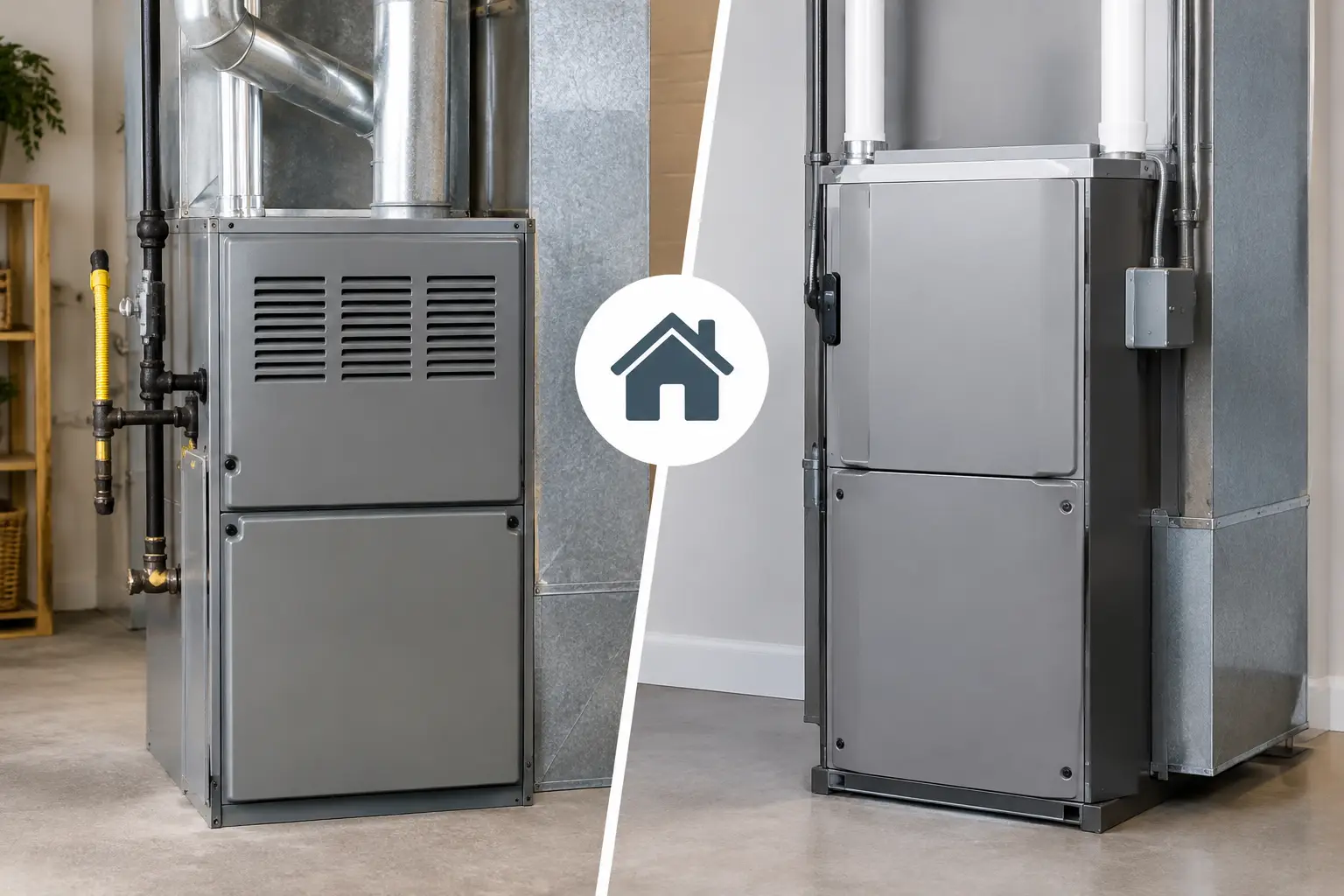
A furnace replacement rarely feels optional. When your current system is noisy, uneven, expensive to run, or has stopped working during a cold Lower Mainland night, you need a heating decision that protects your comfort and your budget. The gas vs electric furnace question comes down to more than the equipment price: your available utilities, ductwork, energy costs, home size, and long-term plans all matter.
For many local homes, a high-efficiency gas furnace remains a practical, dependable choice. An electric furnace can also make sense in the right situation, particularly where gas service is unavailable or a homeowner wants to avoid combustion equipment. The best option is the one that fits your home – not simply the one with the lowest sticker price.
Gas vs Electric Furnace: The Key Differences
Both systems use a blower to move warmed air through your home’s ductwork. The difference is how they create that heat. A gas furnace burns natural gas inside a heat exchanger, while an electric furnace uses electric resistance heating elements, similar in principle to an oversized toaster element.
That difference affects operating cost, installation requirements, maintenance needs, and the type of comfort you can expect. Gas furnaces usually deliver hotter supply air and can warm a home quickly. Electric furnaces produce steady heat but may take longer to recover when indoor temperatures drop significantly.
Neither system is automatically right for every household. A qualified in-home assessment should account for your home’s heat loss, insulation, windows, duct condition, electrical capacity, and existing equipment.
Upfront Cost and Installation Considerations
Electric furnaces often cost less to purchase and install when the home already has sufficient electrical capacity and compatible ductwork. They have fewer mechanical components related to combustion, and there is no need for a gas line, vent pipe, or condensate management associated with a high-efficiency gas furnace.
However, an electric furnace can require major electrical work. Resistance heat draws substantial power, so an older electrical panel may need an upgrade. That expense can quickly change the value comparison.
A gas furnace generally has a higher installation cost because it requires a properly sized gas connection, safe venting, combustion air considerations, and careful setup of the heat exchanger and burner system. If your home already has gas service and an existing furnace location, installation is usually more straightforward than adding gas service from scratch.
Replacement is also the right time to assess the entire air distribution system. Leaky, undersized, or poorly balanced ducts can make a new furnace feel disappointing, regardless of the fuel source. Proper sizing and installation matter as much as the furnace model itself.
Which Furnace Costs Less to Run?
For many homeowners, monthly operating cost is the deciding factor. In areas where natural gas is reasonably priced, gas furnaces typically cost less to operate than standard electric resistance furnaces. Electricity can be more expensive per unit of delivered heat, especially during a long heating season.
A gas furnace is not 100% efficient, but modern high-efficiency models can convert a very large share of their fuel into usable heat. Their annual fuel utilization efficiency, or AFUE, commonly reaches 95% or higher. Some heat still leaves through the venting system, but far less than with older furnaces.
Electric furnaces are often described as 100% efficient at the unit because nearly all electricity entering the equipment becomes heat indoors. That is technically true at the home, but it does not guarantee lower bills. The price of electricity is the larger factor.
Your actual costs depend on local utility rates, thermostat settings, insulation, air leakage, household routines, and furnace sizing. A system that runs constantly because it is undersized or fighting poor insulation will cost more no matter how efficient its rating looks on paper.
Comfort, Reliability, and Performance
Gas furnaces are known for quick, powerful heat. The air leaving the registers tends to feel warmer, which many families prefer on cold mornings and during sudden temperature drops. A properly sized variable-speed gas furnace can also run longer at lower output, reducing temperature swings and improving airflow throughout the home.
Electric furnaces are quieter in operation because there are no burners or combustion components. They can be a simple choice for smaller homes, mild climates, or properties without natural gas access. They also avoid concerns related to gas piping and venting.
That said, electric resistance furnaces may create noticeably higher winter bills in a larger home. They also depend entirely on the electrical grid. A standard gas furnace still needs electricity for its controls and blower, so neither system will operate normally during an outage without backup power. But a gas furnace generally places less demand on a home generator than an electric furnace.
Maintenance and Safety Requirements
Every furnace needs professional maintenance. A gas furnace deserves particular attention because it includes burners, a heat exchanger, a venting system, and safety controls. Annual service helps identify issues such as dirty burners, restricted airflow, ignition problems, venting concerns, or a heat exchanger problem before it becomes an emergency repair.
Electric furnaces have fewer combustion-related maintenance requirements, but they are not maintenance-free. Heating elements, relays, wiring, blower motors, filters, and ducts still need inspection. Restricted airflow is especially hard on any forced-air system and can contribute to overheating or premature component failure.
Homeowners should replace or clean filters on schedule, keep vents open and unobstructed, and pay attention to warning signs. Burning odors that persist, unusual cycling, weak airflow, cold rooms, loud operation, or a sudden utility-bill increase are all reasons to schedule service.
For gas heating, carbon monoxide alarms are essential. Install them according to manufacturer instructions and test them regularly. A well-maintained gas furnace is designed to operate safely, but early detection and professional service provide valuable peace of mind.
When a Gas Furnace Is Usually the Better Choice
A gas furnace is often the stronger choice when your home already has natural gas service, you need dependable heat for a larger space, and you want to manage winter operating costs. It is particularly appealing for homeowners replacing an older gas furnace with existing ductwork and venting infrastructure.
High-efficiency gas furnaces can also pair well with central air conditioning. If your current air conditioner is nearing the end of its service life, replacing compatible equipment together can improve system performance and avoid paying for duplicate labor later.
When an Electric Furnace May Make Sense
An electric furnace can be appropriate when natural gas is unavailable, extending a gas line would be costly, or a home’s heating needs are modest. It may also suit homeowners who prioritize simpler equipment and are comfortable with potentially higher electricity costs.
Still, if you are considering electric heat because you want lower energy use, ask about a heat pump before choosing an electric resistance furnace. A heat pump moves heat rather than creating it through resistance, so it can provide much more efficient heating in many conditions. Some homes benefit from a dual-fuel setup, where a heat pump handles milder weather and a gas furnace provides reliable backup heat during colder periods.
Available rebates can affect the math for energy-efficient upgrades. Eligibility changes over time and depends on the equipment, home, and program requirements, so it is worth reviewing your options before committing to a replacement.
Get the Decision Right Before Installation
The right furnace starts with accurate load calculations, not a guess based on the size of the old unit. Oversized equipment can short cycle, create uneven temperatures, and wear components faster. Undersized equipment may run continuously and still leave parts of your home uncomfortable.
A professional estimate should explain the recommended capacity, efficiency level, expected installation work, thermostat options, warranty coverage, and any needed duct or electrical improvements. At Pro West Heating & Air Conditioning, the goal is to give homeowners clear options that match their comfort needs and budget, with dependable support when heat cannot wait.
Before choosing between gas and electric, look beyond the purchase price. Think about the utility service already available to your home, how long you expect to stay there, and the comfort you want on the coldest day of the year. A properly selected and professionally installed heating system can make that decision pay off every winter.