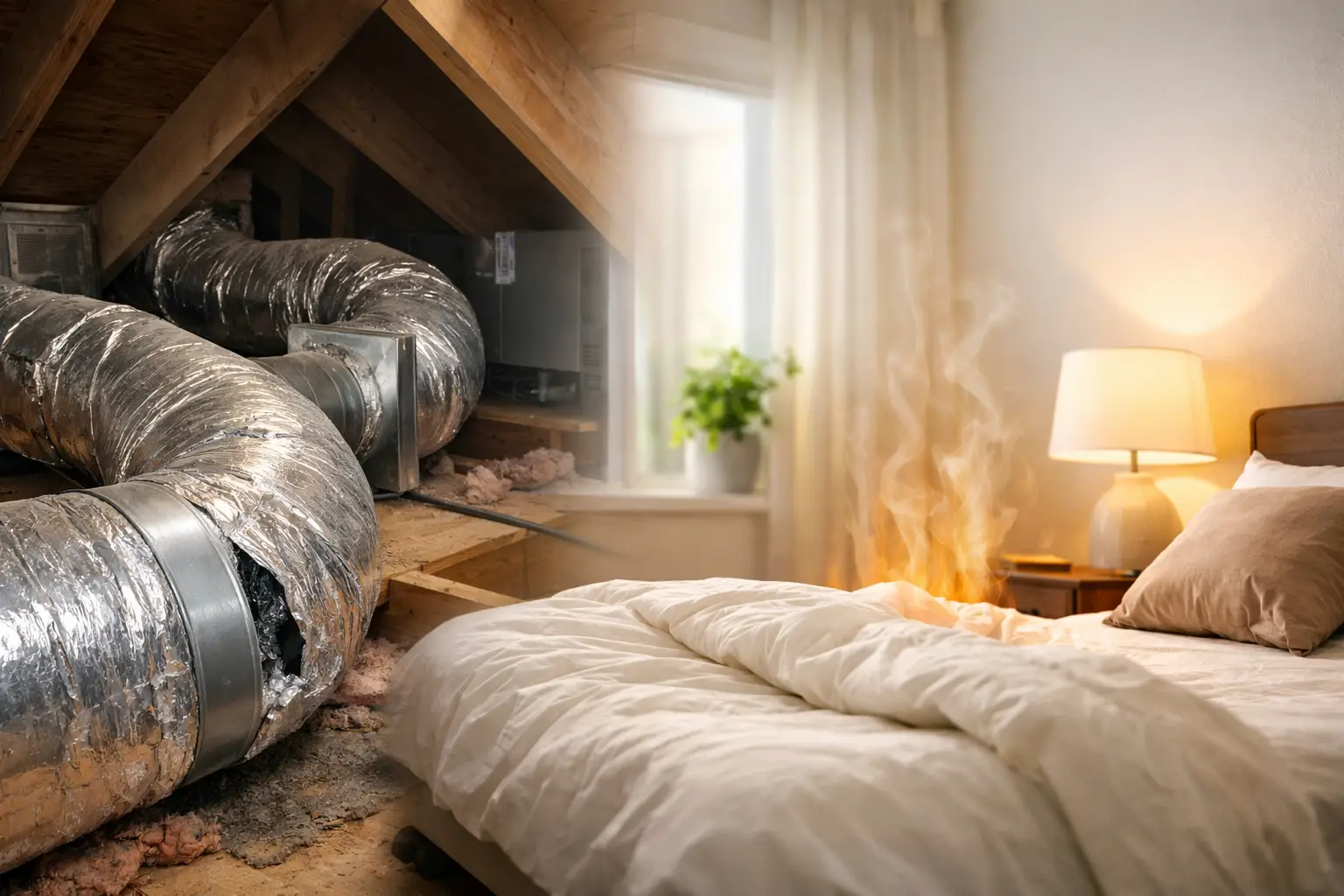
If one bedroom feels stuffy while the rest of the house is comfortable, the problem may not be your air conditioner or furnace alone. Can ductwork cause hot rooms? Absolutely. Your ducts are the delivery system for conditioned air, and even a well-sized HVAC unit cannot keep every room comfortable if that delivery system is leaking, restricted, poorly designed, or out of balance.
A hot room is frustrating because it often leads homeowners to lower the thermostat for the entire house. That can increase energy use, make already-comfortable rooms too cold, and still fail to solve the real issue. Finding the source of uneven temperatures is the better path to lasting comfort.
How Ductwork Can Cause Hot Rooms
Ductwork affects how much cooled or heated air reaches each room. When airflow is weak, air escapes before it arrives, or a room receives less capacity than it needs, that space can run several degrees warmer than the rest of the home.
In cooling season, the issue is especially noticeable in upstairs bedrooms, rooms above garages, west-facing rooms, and spaces with large windows. Those rooms may have higher heat gain to begin with. If the ducts serving them are also underperforming, the comfort gap becomes hard to ignore.
Leaky Ducts Lose Conditioned Air
Duct leaks are one of the most common causes of uneven room temperatures. A disconnected joint, damaged flexible duct, or unsealed connection in an attic, crawlspace, basement, or garage can release cooled air into an unconditioned area instead of your living space.
The result is simple: less air reaches the hot room. Leaks can also pull dusty, humid, or unconditioned air into the duct system, which may reduce comfort and place additional strain on the equipment. Sealing accessible duct leaks correctly can improve both room temperatures and system efficiency.
Poor Duct Design Restricts Airflow
Duct size and layout matter. A long run with too many turns, undersized ductwork, crushed flex duct, or a branch line that was added during a renovation can limit the amount of air delivered to a room.
This is not always visible from the vents. Air may still be coming out, but not in the volume needed to offset the room’s heat gain. A contractor should measure airflow and static pressure rather than assume the system is working properly based on feel alone.
Uninsulated Ducts Can Warm Up the Air
Ducts routed through a hot attic or garage are exposed to extreme temperatures. If those ducts are poorly insulated, cooled air can pick up heat before it reaches the register. During winter, the reverse can happen as heated air loses warmth along the way.
Insulation will not correct a duct that is too small or leaking badly, but it can make a meaningful difference when the duct path runs through unconditioned space. Proper insulation and sealed duct connections work together.
Dampers May Be Closed or Out of Adjustment
Some systems have manual balancing dampers near the air handler or along main duct trunks. These are designed to regulate airflow to different areas of the home. If a damper serving a hot room is partially closed, that room may be starved for air.
Homeowners sometimes close vents in unused rooms hoping to force more air elsewhere. This can backfire. Closing too many registers increases resistance in the system and can reduce overall performance. It is better to have airflow assessed and balanced professionally.
Ductwork Is Not Always the Only Cause
A hot room can involve ductwork, but a complete diagnosis should look beyond it. The room itself may be gaining more heat than the HVAC system and ducts were designed to handle.
Poor attic insulation, air leaks around windows, direct afternoon sun, a dark roof, or a room over a garage can all contribute. A second-floor bedroom with large west-facing windows may need better solar control and insulation as well as improved airflow. In some homes, the existing equipment was never sized for a finished basement, converted attic, or home addition.
Other possible causes include a dirty air filter, a failing blower motor, a clogged evaporator coil, low refrigerant, or an aging air conditioner that cannot meet demand on hot days. If every room is warmer than expected, the issue may be system-wide. If only one or two rooms are affected, duct distribution, insulation, and room-specific heat gain move higher on the list.
Signs Your Hot Room Is a Duct Problem
There are a few clues that point toward ductwork. The hot room may have noticeably weaker airflow at the supply register than similar-sized rooms. It may be farther from the furnace or air handler, located over a garage, or served by a long flexible duct run.
You may also notice that the room improves slightly when interior doors are left open. That can indicate a return-air problem. Supply air needs a path back to the central return grille. A closed bedroom door, tight door clearance, or lack of a dedicated return can trap air in the room and reduce circulation.
Noisy vents, rattling ducts, dusty attic spaces near duct runs, and rooms that change temperature dramatically from floor to ceiling are additional reasons to have the duct system inspected.
What a Professional Duct Assessment Should Include
A reliable HVAC diagnosis should not begin with a recommendation to replace equipment. First, a technician should confirm whether the system is producing the right temperature air and then evaluate whether that air is reaching the rooms that need it.
A thorough assessment may include checking filter condition, blower performance, supply and return airflow, duct leakage, static pressure, damper settings, duct insulation, and register placement. The technician should also consider the room’s size, window exposure, insulation, and occupancy.
This approach helps avoid expensive guesswork. Replacing an air conditioner may help if the unit is undersized or failing, but it will not fix a disconnected duct in the attic or a bedroom with no adequate return-air path.
Fixes That Can Improve a Hot Room
The right fix depends on what the assessment finds. Small issues may be resolved by sealing duct joints, reconnecting damaged ductwork, opening or adjusting dampers, cleaning components, or improving attic insulation. In some cases, adding or resizing a return path makes a significant difference.
For rooms with high heat gain, window coverings, air sealing, and insulation upgrades can reduce the cooling load. If a remodel or addition changed the home’s layout, duct modifications may be needed to deliver more airflow where it is needed.
Zoning is another option for homes with persistent temperature differences between floors or areas with different sun exposure. A zoned system uses dampers and separate temperature controls to direct heating and cooling more precisely. It is a strong solution in the right home, but it must be designed around the equipment and duct system. Zoning is not a substitute for correcting major leaks, restrictions, or poor duct design.
A ductless mini-split can also be worth considering for a hard-to-condition addition, bonus room, garage conversion, or top-floor space. It provides independent temperature control without requiring extensive duct alterations. The trade-off is upfront cost and the need for indoor and outdoor unit placement.
When to Call an HVAC Professional
Call for an inspection when a room remains hot even with the thermostat set lower, airflow from the vent is weak, utility bills have risen unexpectedly, or comfort problems started after a renovation. You should also schedule service if you see damaged duct insulation, hear persistent duct noises, or suspect a duct has come loose.
Pro West Heating & Air Conditioning can assess the full comfort picture, from your equipment and airflow to duct condition and practical upgrade options. The goal is not simply to make the thermostat run longer. It is to help each area of your home receive the comfort it was meant to have.
A hot room does not have to become the room everyone avoids in summer. Start with a professional evaluation, address the actual airflow or heat-gain issue, and give your home a more even, efficient way to stay comfortable.