A radiator that is warm at the bottom but cool across the top is not necessarily failing. In most hydronic heating systems, it is a sign that air is trapped inside. Learning how to bleed radiators can restore more even heat in a few minutes, reduce frustrating cold spots, and help your boiler operate as intended.
This is a manageable homeowner task when the system is working normally. However, bleeding is not a fix for every heating issue. If you are losing boiler pressure, see water around a radiator valve, or need to bleed the same radiator repeatedly, the problem may need professional attention.
Why radiators need bleeding
Radiators heat your home by circulating hot water from a boiler through pipes and into each radiator. Air can enter the system after repairs, pressure changes, or gradual water loss. Because air rises, it often collects near the top of a radiator and prevents hot water from filling that area.
The result is uneven heating. You may notice that a bedroom takes much longer to warm up, a radiator makes gurgling sounds, or one room stays chilly while the thermostat says the rest of the house is comfortable. Air in the system can also make the boiler work harder than it should.
Bleeding releases that trapped air through the small bleed valve near the top of the radiator. Once water begins to come out in a steady stream, the air has been removed.
Before you bleed a radiator
Start by confirming that you have a hot-water radiator system. Standard radiators and hydronic baseboards connected to a boiler can require air removal. Forced-air furnaces, electric baseboards, and most heat pumps do not have radiators to bleed. Steam radiator systems are different as well and should be handled carefully, especially if you are unsure which type of system you have.
Turn the heating system off and allow radiators to cool before opening a bleed valve. Hot water can cause burns, and a cooled system makes it easier to work safely and assess boiler pressure afterward. If your boiler has a circulation pump, turning the system off also gives air time to rise to the top of each radiator.
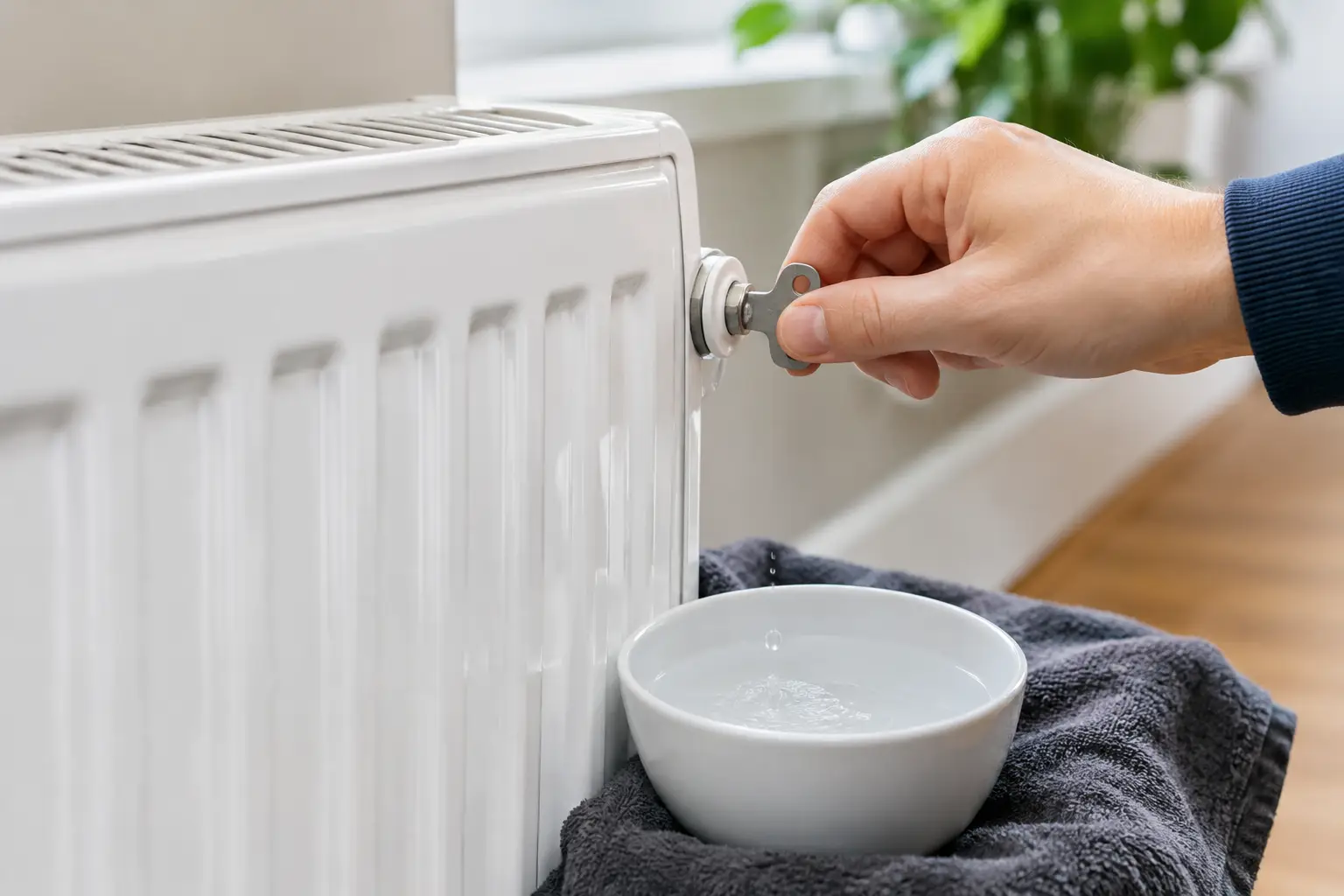
You will usually need a radiator key. Some newer radiators use a flat-head screwdriver instead. Keep a small container and an absorbent cloth nearby to catch a small amount of water. Wear gloves if access is tight or the radiator is still warm.
Before opening any valve, look at your boiler pressure gauge if you have a sealed system. Many homes read roughly 12 to 15 psi when the system is cold, although the correct pressure depends on your home and equipment. Make a note of the reading so you can see whether pressure drops significantly after bleeding.
How to bleed radiators safely
Begin with the radiator that is cold at the top, noisy, or heating unevenly. If several radiators need attention, the exact order can depend on the layout of your plumbing and your boiler manufacturer’s recommendations. In a multi-level home, upper-floor radiators are common places for trapped air to collect. If you are unsure, address the problem radiator first, then check the others.
Find the bleed valve
Look near the upper corner of the radiator for a small square valve, round fitting, or screw. It is usually on the side opposite the thermostatic radiator valve or temperature control. Do not confuse the bleed valve with the larger valves at the bottom of the radiator, which control water flow.
Place the cloth directly beneath the valve and hold your container below it. Only a little water should come out, but catching it protects walls, flooring, and trim.
Open the valve slowly
Insert the radiator key and turn it counterclockwise about one-quarter turn. Do not remove the valve completely. You should hear a soft hissing sound as trapped air escapes.
Keep the valve open until the hissing stops and a steady trickle of water appears. The water may be slightly discolored at first, particularly in an older system. A few drops are normal. A strong flow, however, means the valve has been opened too far.
Close the valve without overtightening
Turn the key clockwise until the valve is snug and the water stops. Do not force it. Overtightening can damage the valve or make future bleeding difficult.
Wipe the area dry, then move to the next radiator if needed. When you are finished, turn the heating system back on and give it time to circulate. Check that the radiator now warms evenly from top to bottom.
Check boiler pressure after bleeding
Bleeding lets air out, but it may also release enough water to lower system pressure. Check the boiler gauge again once you have finished. If the pressure is below the normal cold operating range for your system, the boiler may need to be repressurized according to the manufacturer’s instructions.
This step is where homeowners should use caution. Boiler filling loops, pressure-reducing valves, and expansion tanks vary by system. Adding too much water can create a separate problem, including pressure relief valve discharge when the system heats up. If you do not know the proper pressure for your boiler or are uncomfortable refilling it, schedule a service visit instead of guessing.
After restoring power, listen for normal operation and inspect each bled valve for moisture. A valve that continues to drip may need a new internal seal or replacement valve.
When bleeding will not solve the problem
A radiator that remains cold after bleeding may not have trapped air. If it is cold at the bottom, for example, sludge or mineral buildup may be restricting water flow. A radiator that is completely cold could have a stuck valve, a failed circulator pump, an issue with a zone control, or a thermostat problem.
Pay attention to patterns. One cold radiator is often a local valve, air, or balance issue. Several cold radiators may point to boiler pressure, circulation, or zone control trouble. If heat works downstairs but not upstairs, air is possible, but so is inadequate system pressure or a circulation problem.
Frequent air buildup also deserves investigation. A closed hydronic system should not need constant bleeding. Repeated air can indicate a small leak, a faulty automatic air vent, an expansion tank issue, or a problem with the boiler’s pressure controls. Treating the symptom over and over can allow a minor repair to become a more expensive failure.
Avoid these common radiator bleeding mistakes
The biggest mistake is opening a bleed valve while the radiator is extremely hot. Wait until it is safe to touch. Another common issue is opening the valve too far or removing it altogether, which can quickly create a messy leak.
Do not use bleeding as the first response to every cold room. Make sure the thermostat is calling for heat and that the radiator’s supply and return valves are open. If a thermostatic valve has been set low or stuck closed after summer, bleeding will not restore heat.
It is also wise not to drain large amounts of water from the radiator. Once air has escaped and water flows steadily, close the valve. Releasing extra water only lowers boiler pressure and can introduce fresh oxygenated water into the system when it is refilled.
Get dependable help for radiator and boiler problems
Bleeding a radiator can be a quick comfort fix, but your heating system should not require constant attention to keep rooms warm. If radiators stay uneven, pressure keeps falling, or you notice leaks or boiler warning lights, a qualified technician can identify the cause before you lose heat altogether.
Pro West Heating & Air Conditioning helps homeowners resolve boiler, radiator, and whole-home heating issues with clear recommendations and responsive service. A properly operating hydronic system should deliver quiet, consistent warmth – not leave you adjusting valves and layering blankets in the coldest room of the house.