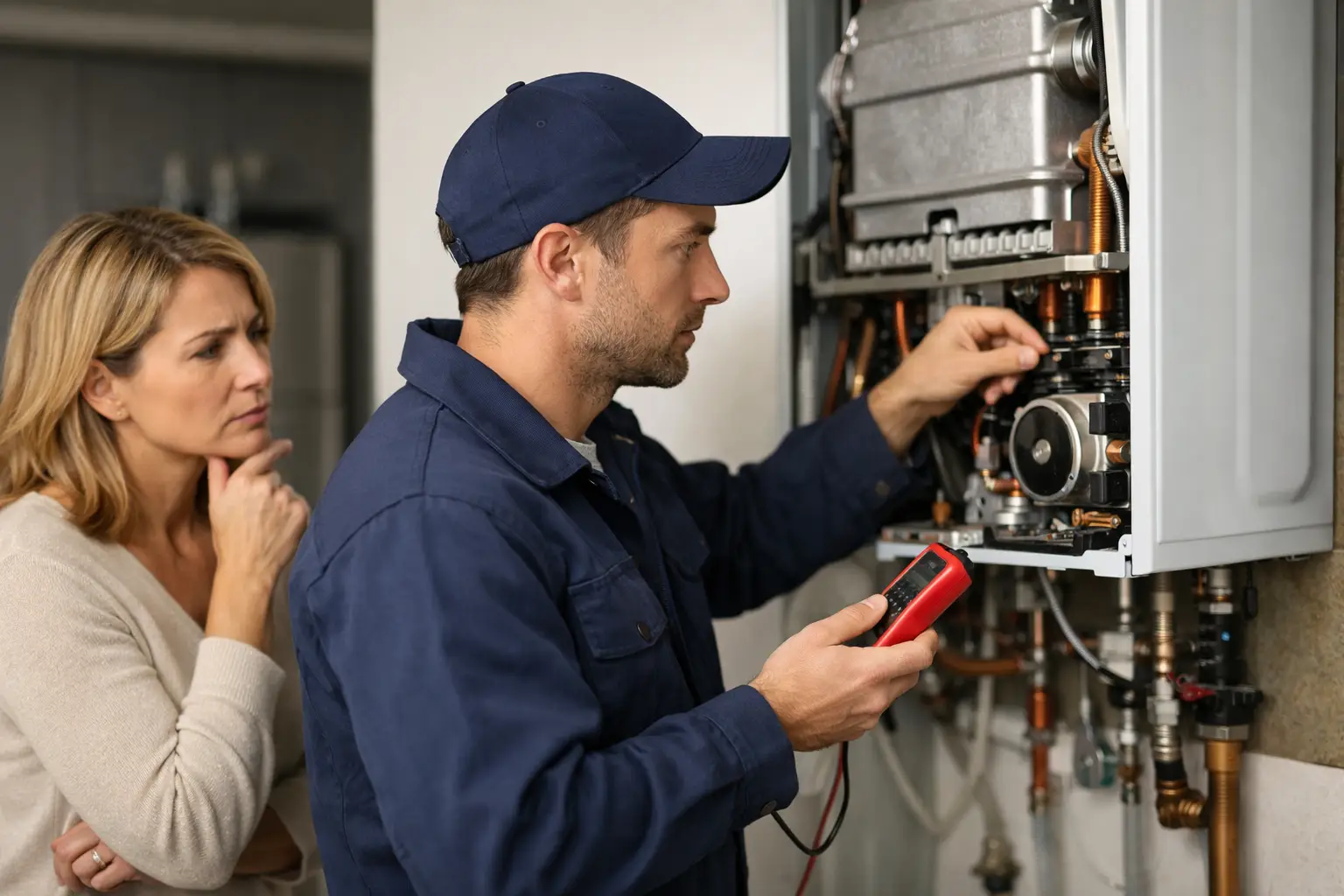
A boiler rarely fails at a convenient time. It may start with one cold room, a shower that never gets fully hot, or an unfamiliar banging sound from the utility room. Knowing the basics of boiler repair for homeowners helps you respond quickly, protect your household, and avoid turning a manageable issue into a no-heat emergency.
A boiler is not a typical DIY appliance. It combines water, pressure, electricity, and often natural gas. Homeowners can safely spot warning signs, check a few simple conditions, and provide useful details to a technician. Actual repairs, especially anything involving gas, combustion, electrical components, or sealed system pressure, should be handled by a licensed professional.
Signs Your Boiler Needs Professional Attention
Some boiler problems are obvious. Others develop slowly and show up as rising utility bills or uneven comfort. A boiler that needs repair may still produce some heat, which is why homeowners sometimes delay service until the system stops working altogether.
Watch for rooms that remain cold while other areas are comfortable, radiators that take much longer to heat up, or water that fluctuates from hot to lukewarm. These issues can point to circulation problems, trapped air, a failing pump, a faulty zone valve, or a control issue. The cause depends on the type of boiler and how the home’s heating system is configured.
Unusual sounds deserve attention as well. Gurgling can indicate air in the system. Banging or knocking may be related to pressure, pipe movement, mineral buildup, or circulation trouble. A persistent humming sound could come from a pump or motor working harder than it should. Noise alone does not identify the repair, but it gives a technician a useful starting point.
Leaks are another clear warning sign. A small amount of water near a pressure relief valve or fitting can become a bigger problem if left alone. Water can damage flooring, framing, and electrical components, while a loss of system pressure can leave your heat unreliable. Do not try to seal boiler piping with temporary household products. Turn off the system if it is safe to do so and arrange service.
Boiler Repair for Homeowners Starts With Safe Checks
Before calling for service, there are a few safe observations you can make. First, confirm that the thermostat is set to heat and is set higher than the current room temperature. If it uses batteries, replace them. Check whether the boiler display shows an error code and write it down exactly.
Next, look at the boiler pressure gauge if your system has one. Many residential boilers operate within a normal pressure range shown on the gauge or in the owner’s manual. Pressure that is unusually low or high can affect performance, but homeowners should not repeatedly add water or adjust valves without guidance. Doing so can mask a leak or create a pressure problem.
You can also check that the boiler has power and that the appropriate circuit breaker has not tripped. If a breaker trips again after being reset once, leave it off and call a professional. Repeated tripping can signal an electrical fault that needs proper diagnosis.
If you smell gas, hear a loud hissing sound near a gas line, see soot, or notice symptoms of carbon monoxide exposure such as headache, dizziness, nausea, or confusion, treat it as an emergency. Leave the home, avoid operating switches or appliances, and contact your gas utility or emergency services from a safe location. Do not restart the boiler.
Common Boiler Problems and What They Can Mean
A boiler that will not turn on may have a thermostat issue, power interruption, ignition fault, failed control, or a safety shutdown. Modern boilers are designed to stop operating when a sensor detects an unsafe condition. Resetting the system once according to the manufacturer’s instructions may be appropriate, but repeated resets are not a repair. They can delay diagnosis and put added stress on the equipment.
Low heat output is often a circulation issue rather than a failure to generate heat. A technician may inspect the circulator pump, air elimination components, zone controls, valves, and piping. In radiant heating systems, the issue may be isolated to one zone or manifold instead of the entire boiler.
Low boiler pressure can result from a leak, a failed expansion tank, an issue with the fill system, or air released during normal operation. High pressure may involve the expansion tank, pressure-reducing valve, or a control problem. Both conditions need a trained technician because the system must be assessed as a whole.
No hot water can be especially disruptive when a boiler also supplies domestic hot water. The repair could involve a diverter valve, indirect water heater, heat exchanger, sensor, or control. The right answer depends on whether the boiler serves baseboard heating, radiators, radiant floors, an indirect tank, or a combination system.
When Repair Makes Sense and When Replacement May Be Smarter
Not every boiler issue calls for replacement. A newer system with a failed sensor, circulator, valve, or ignition component can often be repaired cost-effectively. Routine repairs and maintenance can extend the life of a well-installed boiler while keeping heat and hot water dependable.
Replacement becomes worth discussing when repairs are frequent, parts are difficult to source, efficiency is poor, or the boiler is nearing the end of its expected service life. A system that runs constantly, heats unevenly, or produces steadily higher energy bills may be costing more than it appears.
The decision should not be based on age alone. A technician should consider the condition of the boiler, its maintenance history, the type of distribution system in the home, repair costs, and the efficiency gains available from newer equipment. In some homes, a high-efficiency boiler, updated controls, zoning improvements, or a compatible hot water upgrade can improve comfort as much as it improves operating costs.
For homeowners considering an upgrade, available rebate programs can affect the overall value of a project. A qualified contractor can explain equipment options, sizing considerations, and whether an upgrade fits the home’s heating needs rather than simply recommending the biggest unit available.
How Maintenance Helps Prevent Emergency Repairs
Annual boiler maintenance is one of the best ways to reduce surprise breakdowns. During a professional visit, the technician can inspect combustion performance, safety controls, venting, system pressure, pumps, valves, electrical connections, and signs of corrosion or leaks. They can also identify small concerns before a cold-weather failure leaves the home without heat.
Maintenance does not guarantee that a part will never fail. It does, however, give homeowners a clearer picture of the system’s condition and can help preserve efficiency. This matters in homes with radiant floors or multiple heating zones, where a minor circulation issue can affect comfort in ways that are not immediately obvious.
Between visits, keep the area around the boiler clear and dry. Avoid storing paint, chemicals, boxes, or laundry against the equipment. Pay attention to changes in sound, pressure readings, heating speed, and hot water performance. Early details make service calls more efficient.
What to Expect From a Boiler Service Call
A professional boiler repair visit should begin with diagnosis, not guesswork. The technician will review the symptoms, inspect the equipment, check fault codes and controls, and test the system safely. If a repair is needed, you should receive a clear explanation of the issue, the recommended work, and the practical options available.
For homeowners in the Lower Mainland, Pro West Heating & Air Conditioning provides residential boiler service with a focus on responsive support, clear recommendations, and long-term home comfort. Whether the issue is a sudden loss of heat or a boiler that has been struggling for weeks, timely service can help prevent further damage and restore dependable operation.
Your boiler does a quiet but essential job every day. When it starts sending warning signs, responding early gives you more choices, less stress, and a better chance of keeping your home warm and comfortable when you need it most.