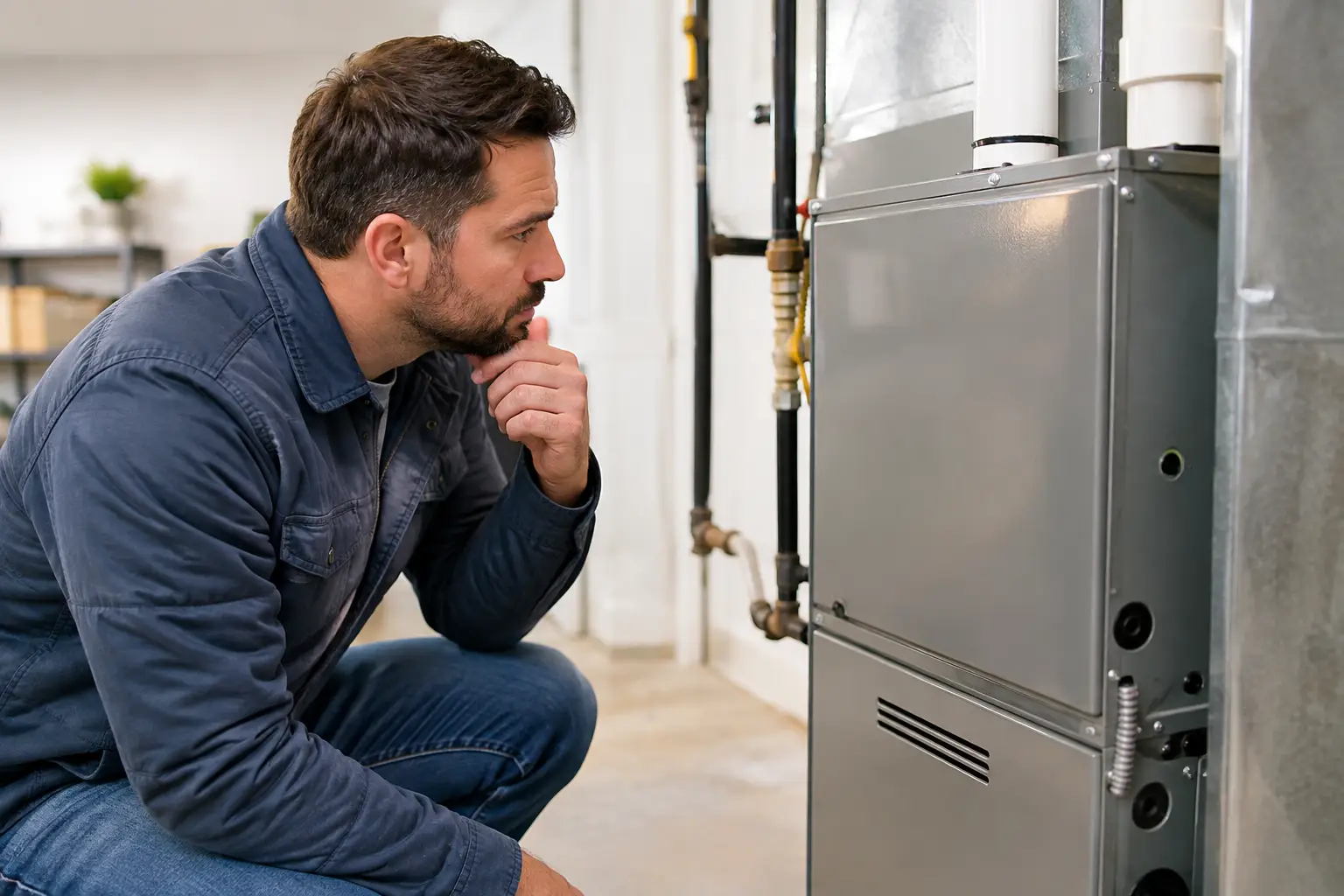
Waking up to a cold house is stressful, especially when temperatures are low and your furnace stopped overnight without warning. Before you assume the system needs to be replaced, take a few safe steps to narrow down the issue. Some problems are simple, such as a thermostat setting or a tripped breaker. Others, including gas leaks, ignition failures, and overheating equipment, need immediate professional attention.
The priority is keeping your household safe and preventing frozen pipes or further equipment damage. Avoid repeatedly turning the furnace on and off, removing access panels, or attempting repairs around gas lines or electrical components.
What to Do When Your Furnace Stopped Overnight
Start by checking whether the furnace is truly off or simply not producing enough heat. Look at the thermostat display and compare the set temperature with the current indoor temperature. Set the thermostat to Heat and raise the setting a few degrees above room temperature. If it uses batteries, replace them before assuming the furnace has failed.
Next, check that the furnace power switch is on. Many systems have a switch that resembles a standard light switch near the unit. Then inspect your electrical panel for a tripped furnace breaker. If the breaker has tripped once, reset it once. If it trips again, leave it off and schedule service. A recurring trip can point to an electrical fault, a failing blower motor, or another issue that should not be ignored.
If you have a high-efficiency furnace, check the outside intake and exhaust pipes. In wet, snowy, or freezing weather, these vents can become blocked by snow, ice, leaves, or debris. Clear only what is safely accessible from outdoors. Do not insert objects deep into the pipe or dismantle the venting.
A dirty air filter can also shut down a furnace. Restricted airflow causes the system to overheat, and the safety limit switch may stop the burners from running. If the filter is visibly dirty, replace it with the correct size and type. Then give the furnace time to cool before restarting it.
Check for Signs That Require Immediate Help
Not every no-heat call is an emergency, but certain warning signs are. Leave the home and contact emergency services or your gas utility if you smell natural gas, hear a hissing sound near a gas line, or feel unwell with symptoms such as dizziness, nausea, headache, or confusion.
If a carbon monoxide alarm sounds, get everyone outside immediately and call for help from a safe location. Do not re-enter the home until emergency responders say it is safe. Carbon monoxide has no smell or color, which is why working detectors near sleeping areas and on every level of the home are essential.
You should also turn off the furnace and request prompt service if you notice burning odors that do not fade quickly, smoke, scorch marks, water pooling around the unit, loud banging, or repeated clicking without startup. These conditions can indicate a mechanical, electrical, drainage, or combustion issue.
Why a Furnace Can Stop During the Night
A furnace often runs longer overnight because outdoor temperatures drop and the home loses heat more quickly. That extra demand can expose a part that was already wearing out.
A clogged filter is one common cause. When airflow is restricted, heat builds up in the furnace cabinet. The system may shut down on a safety limit to prevent damage, leaving the blower running or stopping the furnace completely.
Ignition and flame-sensing problems are also frequent. Modern gas furnaces use electronic ignition rather than a standing pilot light. If the igniter is worn or the flame sensor is dirty, the burners may fail to light or may shut off shortly after starting. Homeowners may hear clicking, see the furnace attempt to start, and then feel only cool air from the vents.
Condensate drain problems affect many high-efficiency furnaces. These units create water during operation, which drains through tubing and a trap. If the line freezes, clogs, or backs up, a safety switch may prevent the furnace from operating. This is particularly common during cold snaps.
Other possible causes include a failed blower motor, damaged control board, loose wiring, a malfunctioning pressure switch, or an issue with the gas supply. These are not do-it-yourself repairs. Proper diagnosis matters because several different failures can create similar symptoms.
Keep Your Home Safe Until Heat Is Restored
If indoor temperatures are falling, focus on protecting people, pets, and plumbing. Close blinds and curtains, keep interior doors open to help warm air circulate, and gather household members in one room if necessary. Dress in layers and use blankets rather than relying on unsafe heating methods.
Use portable space heaters carefully and only according to the manufacturer’s instructions. Keep them on a flat surface, at least three feet away from bedding, furniture, curtains, and other combustible materials. Plug them directly into a wall outlet, never an extension cord or power strip. Turn them off when leaving the room or going to sleep.
To help prevent frozen pipes, open cabinet doors beneath sinks on exterior walls so warmer room air can reach the plumbing. Let faucets run at a slow drip if temperatures inside are approaching freezing. Know where your main water shutoff is located in case a pipe bursts.
Do not use an oven, barbecue, camp stove, or generator to heat your home. These methods create serious fire and carbon monoxide risks. A fireplace may provide limited heat if it is operating correctly and venting properly, but it should not be treated as a substitute for a safe, functioning central heating system.
When a Repair Makes Sense and When Replacement May Be Better
A furnace that stops once is not automatically at the end of its life. A repair may be the practical choice when the unit is relatively new, the issue is isolated, and the system has otherwise been reliable. Replacing a filter, cleaning a flame sensor, repairing a condensate drain, or replacing an ignition component can restore dependable heat without a major investment.
The decision changes when breakdowns become frequent, repair costs rise, or the furnace is nearing the end of its expected service life. Older equipment can be less efficient and may use parts that are harder to source. A new high-efficiency furnace can improve comfort, reduce energy use, and provide more consistent temperature control, but the right choice depends on your home’s size, insulation, ductwork, budget, and heating needs.
A qualified technician should inspect the system before recommending a path forward. The goal is not simply to get the heat back on for one night. It is to identify why the failure occurred and whether the repair will provide reliable performance through the rest of the heating season.
How to Reduce the Chances of Another No-Heat Night
Annual furnace maintenance is one of the best ways to catch problems before they become overnight emergencies. A professional tune-up can identify dirty burners, worn igniters, weak capacitors, drainage issues, airflow restrictions, and unsafe combustion conditions. It also gives your technician a chance to confirm that safety controls are working as intended.
Between visits, replace filters on the schedule recommended for your household and filter type. Homes with pets, construction dust, allergies, or heavy furnace use may need more frequent changes. Keep supply vents and return grilles open and clear of furniture, and make sure outside furnace vents remain free of snow and debris.
When you need fast help, Pro West Heating & Air Conditioning provides residential furnace service with a focus on clear answers, safe repairs, and restoring your home comfort as quickly as possible. A cold morning is disruptive enough. The right diagnosis can help make sure it does not turn into a repeated problem.