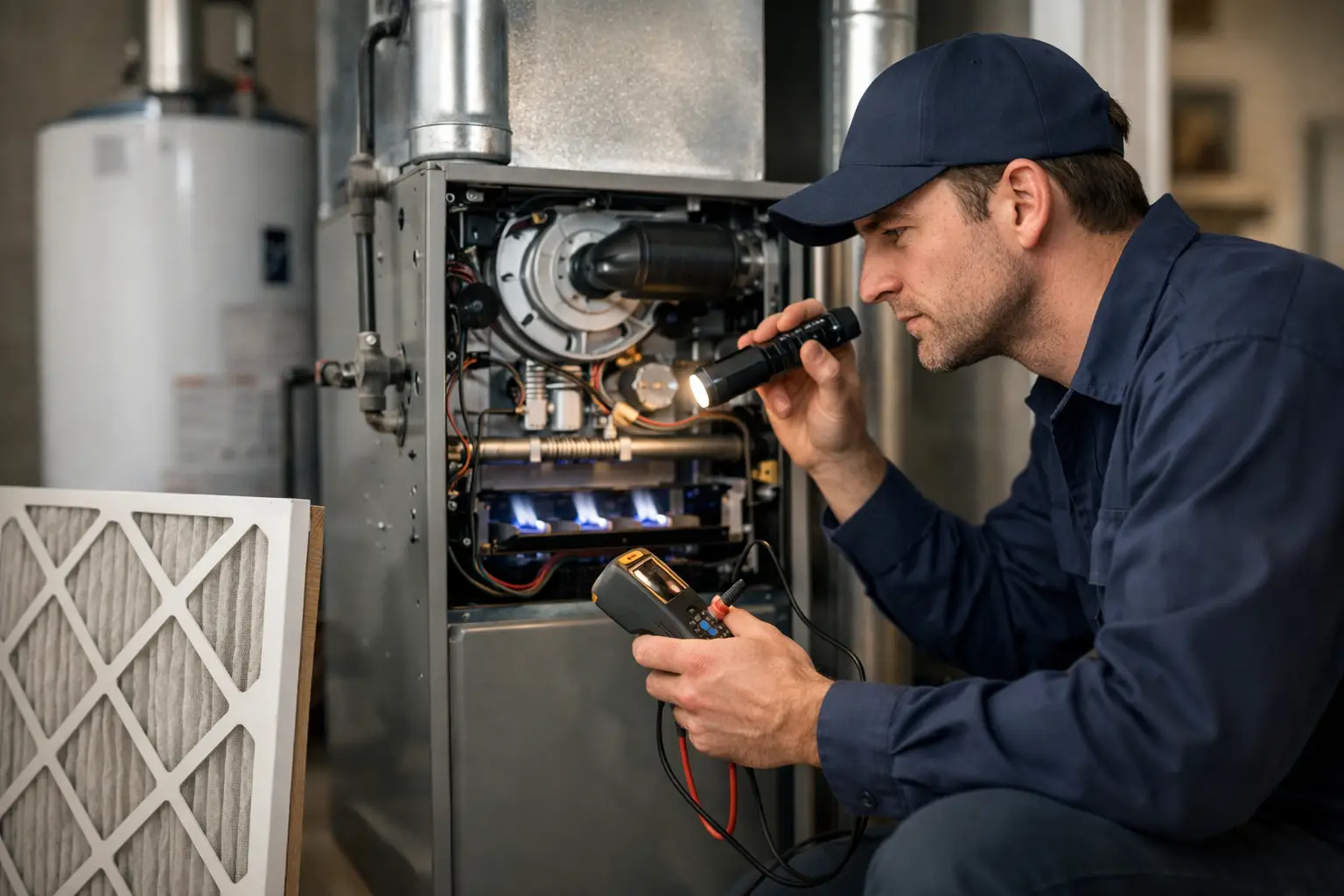
A furnace can appear to be working normally right up until the night it stops producing heat. It may still turn on, blow air, and maintain the thermostat setting while a worn component, dirty burner, or venting concern develops behind the scenes. So, do furnaces need annual inspections? For most homes, yes. A professional inspection once a year is one of the most practical ways to protect your comfort, reduce surprise repairs, and identify safety concerns before the heating season is in full swing.
For homeowners, annual furnace service is less about checking a box and more about getting dependable heat when your family needs it. The best time to schedule it is before cold weather arrives, when appointments are easier to book and your system has time to be repaired if needed.
Why do furnaces need annual inspections?
A furnace is a combustion appliance with electrical controls, moving parts, air filters, safety switches, and a venting system that all need to work together. Dust buildup, normal wear, restricted airflow, and small adjustments can affect how efficiently and reliably those parts operate.
Annual inspections help catch issues while they are still manageable. A technician may find a weak igniter, a deteriorating flame sensor, loose electrical connection, clogged condensate drain, or early signs of blower motor wear. None of those problems necessarily means you need a new furnace. Addressing them early can often prevent a no-heat call on the coldest day of the year.
For gas furnaces, safety is another major reason. Proper combustion and venting matter. During an inspection, a qualified technician checks for conditions that could lead to incomplete combustion, gas leaks, carbon monoxide concerns, or unsafe operation. Homeowners should also maintain working carbon monoxide alarms, but those alarms are not a substitute for furnace maintenance.
What happens during a professional furnace inspection?
A complete furnace inspection is more than changing the filter and confirming that warm air comes from the registers. The exact process depends on the furnace type, age, condition, and manufacturer requirements, but a qualified visit generally includes a close look at the system’s operation and safety controls.
The technician starts by checking the furnace’s overall condition, thermostat response, airflow, and heating cycle. They inspect the filter and blower compartment, examine electrical connections, and listen for unusual noise from the motor or inducer. They also check the burners and ignition system to make sure the furnace lights and runs properly.
On a gas furnace, the service professional evaluates the heat exchanger, flue or venting components, gas connections, flame quality, and combustion-related safety controls. High-efficiency furnaces also have condensate drains and pressure switches that need attention. A blocked drain or failing switch can shut down the system at an inconvenient time.
The technician should explain what they found in clear terms. If a repair is recommended, you should understand the issue, the urgency, and whether it affects safety, comfort, or efficiency. A dependable contractor will not treat every worn part as a reason for replacement. Sometimes a simple repair and routine upkeep are the right solution. Other times, especially with an aging furnace and repeated repair needs, replacement may offer better long-term value.
Annual service can help control heating costs
A furnace that has to work harder because of dirty components or poor airflow can use more energy to deliver the same comfort. Maintenance does not make an older furnace perform like a brand-new high-efficiency model, but it can help it operate closer to its intended performance.
Filter care plays a major role. A dirty filter restricts airflow, which can cause hot spots inside the furnace, strain the blower, and lead to short cycling. Most disposable filters need checking monthly during active heating use and replacement as needed. Homes with pets, renovation dust, or higher indoor air quality needs may require more frequent changes.
Annual service also gives homeowners a chance to discuss uneven temperatures, dry air, rooms that never seem comfortable, or rising utility bills. The furnace may not be the only factor. Ductwork, thermostat settings, insulation, zoning, and indoor air quality equipment can all affect comfort. Looking at the complete system helps avoid spending money on the wrong fix.
When annual inspections are especially important
Every furnace benefits from routine maintenance, but some systems deserve extra attention. If your furnace is more than 10 years old, has needed repairs in recent seasons, or runs for long periods to heat the home, yearly professional service is particularly worthwhile.
Schedule an appointment sooner rather than waiting for your regular maintenance visit if you notice burning odors that do not go away after the first seasonal use, rattling or banging noises, frequent cycling, weak airflow, cool air from vents, yellow burner flames, water around the furnace, or a sudden increase in heating costs. A carbon monoxide alarm that activates, a gas smell, or visible soot requires immediate action. Leave the home if you suspect a gas leak or carbon monoxide issue, contact emergency services or your gas utility as appropriate, and do not operate the furnace until it has been inspected.
A furnace that is still heating is not always a furnace that is operating safely. Small changes in sound, smell, or performance are worth taking seriously.
Is an annual inspection required?
In many homes, an annual furnace inspection is not a legal requirement. However, the furnace manufacturer may require documented maintenance to keep warranty coverage in effect. Lease agreements, home warranty plans, insurance policies, or local regulations may also have specific conditions. Check the paperwork for your equipment rather than assuming the rules are the same for every system.
Even when it is not required, annual service remains the smart standard for most gas furnaces. Skipping maintenance may save a service call in the short term, but it increases the chance that a minor issue will become an emergency repair. It can also make it harder to spot declining performance before your winter energy bills climb.
Electric furnaces do not have gas combustion or venting components, but they still benefit from yearly inspection. Electrical connections, heating elements, airflow, safety controls, and the blower system need to be checked. The safety priorities differ, yet reliability and efficiency still depend on regular care.
What homeowners can do between appointments
Professional inspection should handle the technical and safety-related work, but homeowners can support furnace performance throughout the year. Keep the area around the furnace clear, avoid storing flammable materials nearby, and make sure supply and return vents remain open and unobstructed. Check filters regularly and use the filter type recommended for your system.
Pay attention to the thermostat and your home’s comfort patterns. If some rooms are consistently colder than others, do not assume you simply need to turn the heat higher. An HVAC professional can help determine whether the issue is related to airflow, duct design, thermostat placement, insulation, or equipment capacity.
Avoid removing furnace panels, adjusting gas components, or attempting to clean burners yourself. Those tasks require proper tools, training, and testing. A quick do-it-yourself fix can create a bigger problem or mask a condition that needs professional repair.
Choose service before the first cold snap
The most convenient time to book furnace maintenance is early fall, before repair schedules fill up and before your system is under daily demand. That timing gives you a clear picture of your furnace’s condition and time to make informed decisions if service is needed.
For homeowners who want reliable heating, a licensed HVAC professional can inspect the full system, explain any findings, and help prioritize the next step. Pro West Heating & Air Conditioning provides residential furnace maintenance, repairs, and replacement guidance with a focus on safe, efficient home comfort.
A yearly inspection is a small, planned appointment that can spare your household a much larger disruption. Schedule it before winter, keep up with filter changes, and treat unusual furnace behavior as an early warning worth checking.