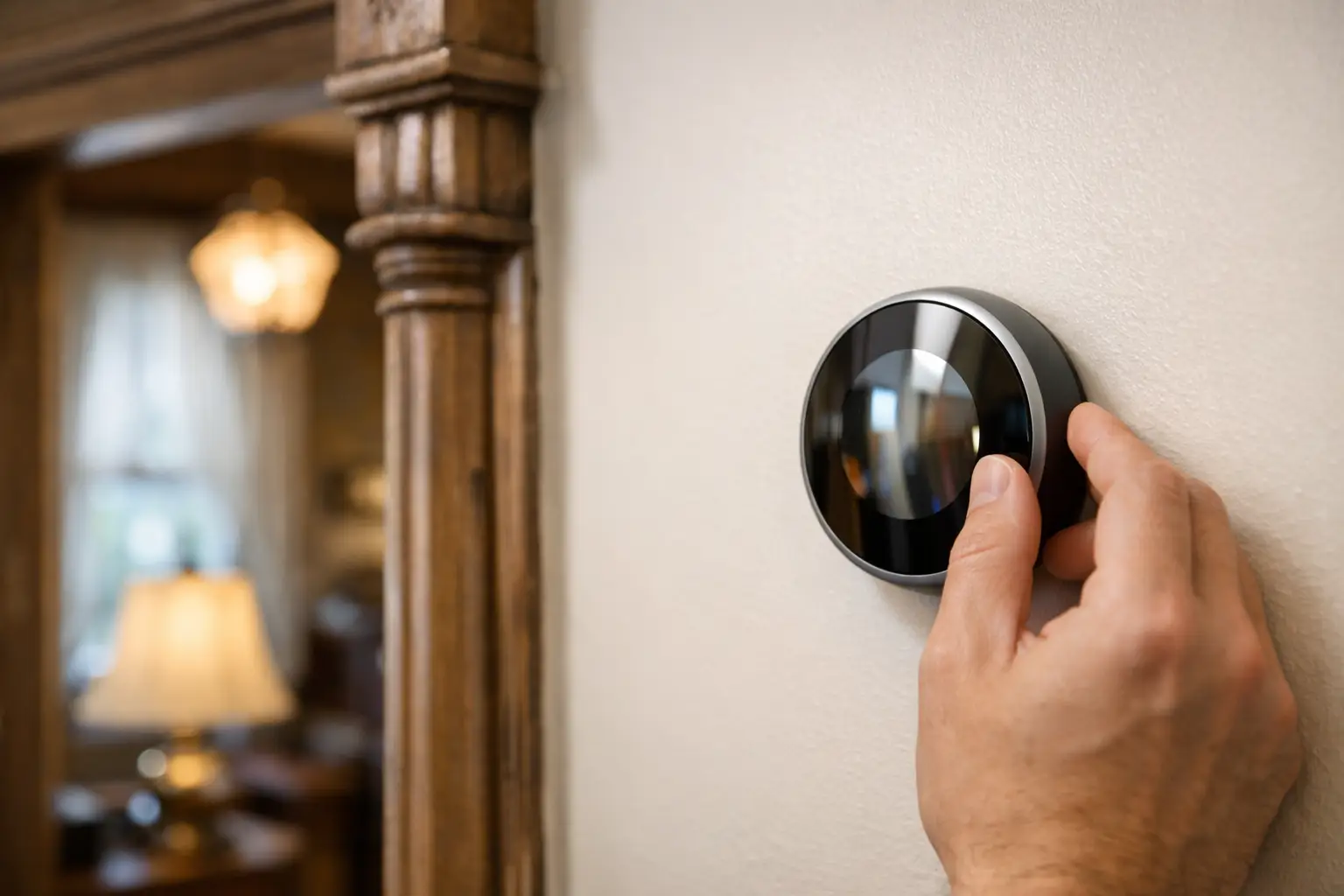
A thermostat upgrade can make an older house feel noticeably more comfortable, but only when it matches the equipment behind the wall. The best thermostat for older homes is not always the one with the largest screen or the most app features. It is the one that works safely with your wiring, heating system, and daily routine without creating service issues.
Older homes across the Lower Mainland often have boilers, radiant heat, furnaces, fireplaces, or a mix of newer and original equipment. That variety makes compatibility the first decision. Before choosing a thermostat, identify what heats and cools your home and have the wiring checked if anything is unclear.
Start With Your Heating System
A thermostat does more than read the room temperature. It sends a signal to tell your heating or cooling equipment when to start and stop. The type of signal and power required can vary significantly between systems.
A forced-air furnace with central air conditioning usually works with a standard low-voltage thermostat. This is the easiest setup for many programmable and smart thermostat options. If the home also has a heat pump, the thermostat must be designed to manage heat pump staging and auxiliary heat correctly.
Homes with boilers and hydronic radiant heating need closer attention. A boiler may use a simple two-wire control, a zone valve, a circulator relay, or multiple heating zones. Some smart thermostats work well with these systems, while others need an added power adapter, relay, or professional installation. The wrong setup can lead to short cycling, rooms that never reach temperature, or equipment that runs when it should not.
Electric baseboard heat is another exception. It typically uses line voltage, not the low-voltage wiring used by furnaces and boilers. A standard smart thermostat cannot be installed on a line-voltage baseboard circuit unless it is specifically made for that application.
Gas fireplaces, wall heaters, and older gravity systems can also have specialized controls. In these situations, choosing by appearance alone is a costly mistake. A licensed HVAC technician can confirm compatibility before a thermostat purchase turns into an unnecessary repair call.
What Makes the Best Thermostat for Older Homes?
For many older properties, the best choice balances control with simplicity. Smart features are useful, but dependable operation comes first. Look for a thermostat that supports your heating equipment, offers clear temperature control, and can be installed without compromising the system.
A clear, accurate display
Older homes can have temperature differences between rooms, especially near drafty windows, upper floors, additions, and finished basements. A thermostat with a readable display and accurate sensing makes everyday adjustments easier. If the thermostat is located in a hallway that stays cooler or warmer than the main living area, a model that supports remote room sensors may provide better results.
Remote sensors are particularly helpful for families who spend most of their time in one area of the home. Rather than heating based solely on the temperature in a central hallway, the system can respond to the room that matters most at that time of day.
Scheduling that fits real life
A programmable thermostat can reduce wasted heating and cooling by lowering demand when the household is asleep or away. The best schedules are realistic. Setting the home dramatically colder in winter may save a little energy, but it can make morning recovery slow and uncomfortable, especially with radiant floors or cast-iron radiator systems.
For boiler and radiant heating systems, modest setbacks are usually more effective than large temperature swings. These systems often respond slowly because they heat water, floors, or heavy radiators before the room temperature changes. A thermostat with flexible scheduling is useful, but the schedule should respect how the system actually operates.
Smart controls, if the wiring supports them
Wi-Fi thermostats let homeowners adjust settings from a phone, review usage patterns, receive maintenance reminders, and manage comfort while traveling. These features are valuable for busy households, second homes, and anyone who wants visibility into their energy use.
However, many smart thermostats require a common wire, often called a C-wire, for consistent power. Older thermostats may have only two wires. Some models can operate without a C-wire, and some can use an adapter, but that does not mean every installation is suitable. A weak power setup may cause the thermostat to lose connection, cycle equipment unexpectedly, or drain its internal battery.
If your existing thermostat has limited wiring, a simpler programmable model may be the better long-term choice. Alternatively, an HVAC professional can assess whether new wiring or a compatible power solution is appropriate.
Controls for multiple zones
Many older homes have been renovated in stages. One floor may have a furnace, while an addition has radiant heat or a ductless heat pump. Others have separate thermostats for upstairs and downstairs zones.
If your home has zoning, every thermostat needs to work with the zone controls and the equipment serving that area. Replacing one thermostat without considering the full system can create uneven temperatures or put extra strain on the equipment. Zoning is highly effective when designed correctly, but it requires a thermostat strategy rather than a one-size-fits-all purchase.
Check These Details Before You Buy
Before selecting a model, remove the thermostat cover only if you can do so safely and take a photo of the existing wiring. Do not disconnect wires or assume wire colors tell the full story. A wire may be present but unused, or it may have been repurposed during a past repair.
Confirm these four details first:
- The type of heating system: furnace, boiler, radiant heat, heat pump, baseboard, or fireplace.
- Whether the system also provides air conditioning or uses a heat pump.
- The number of wires connected to the existing thermostat and the terminal labels they use.
- Whether the home has one heating zone or multiple independently controlled areas.
It also helps to consider the thermostat location. A thermostat placed beside a kitchen, exterior door, sunny window, fireplace, or supply vent can receive misleading temperature readings. Even the best thermostat cannot correct a poor location on its own. Moving it may improve comfort more than upgrading the device.
Smart Thermostat Benefits and Trade-Offs
A smart thermostat can be a worthwhile upgrade when the home has compatible equipment and the household will use its features. Automatic schedules, occupancy sensing, energy reports, and remote control can help reduce unnecessary runtime. Some models also provide filter reminders and alerts when indoor temperatures fall unusually low.
The trade-off is complexity. Wi-Fi connectivity, account setup, software updates, and additional sensors create more variables than a basic thermostat. If an older home has inconsistent wiring or a simple boiler control, reliability may be more valuable than advanced automation.
A quality programmable thermostat remains a strong option for homeowners who want predictable comfort without relying on an app. It can provide weekday and weekend schedules, clear settings, and dependable control at a lower installed cost. There is no need to pay for features you will not use.
When Professional Installation Is the Better Choice
Professional installation is recommended when you have a boiler, radiant heat, a heat pump, baseboard heating, multiple zones, unexplained wiring, or a thermostat that has been acting erratically. It is also the right call if your heating system turns on and off too frequently, does not reach the set temperature, or leaves some rooms much warmer than others.
A thermostat replacement is a good opportunity to assess the system as a whole. An experienced technician can verify wiring, confirm equipment settings, check thermostat placement, and make sure the control is not masking a larger issue such as poor airflow, a failing zone valve, or an aging boiler component.
Pro West Heating & Air Conditioning can help homeowners choose and install controls that suit their equipment, comfort goals, and planned efficiency upgrades. A proper recommendation starts with the home and system you have, not a generic product shelf.
Choose Compatibility Before Features
The right thermostat should make your home easier to live in. It should maintain steady temperatures, support efficient operation, and give you as much control as you actually want. For an older home, that may be a straightforward programmable thermostat, a smart model with room sensors, or a properly matched control for a boiler or radiant zone.
Before you buy, take a moment to confirm what is behind the wall and what is in the mechanical room. That small step helps ensure your thermostat upgrade delivers the comfort you expect instead of adding one more surprise to an older home.