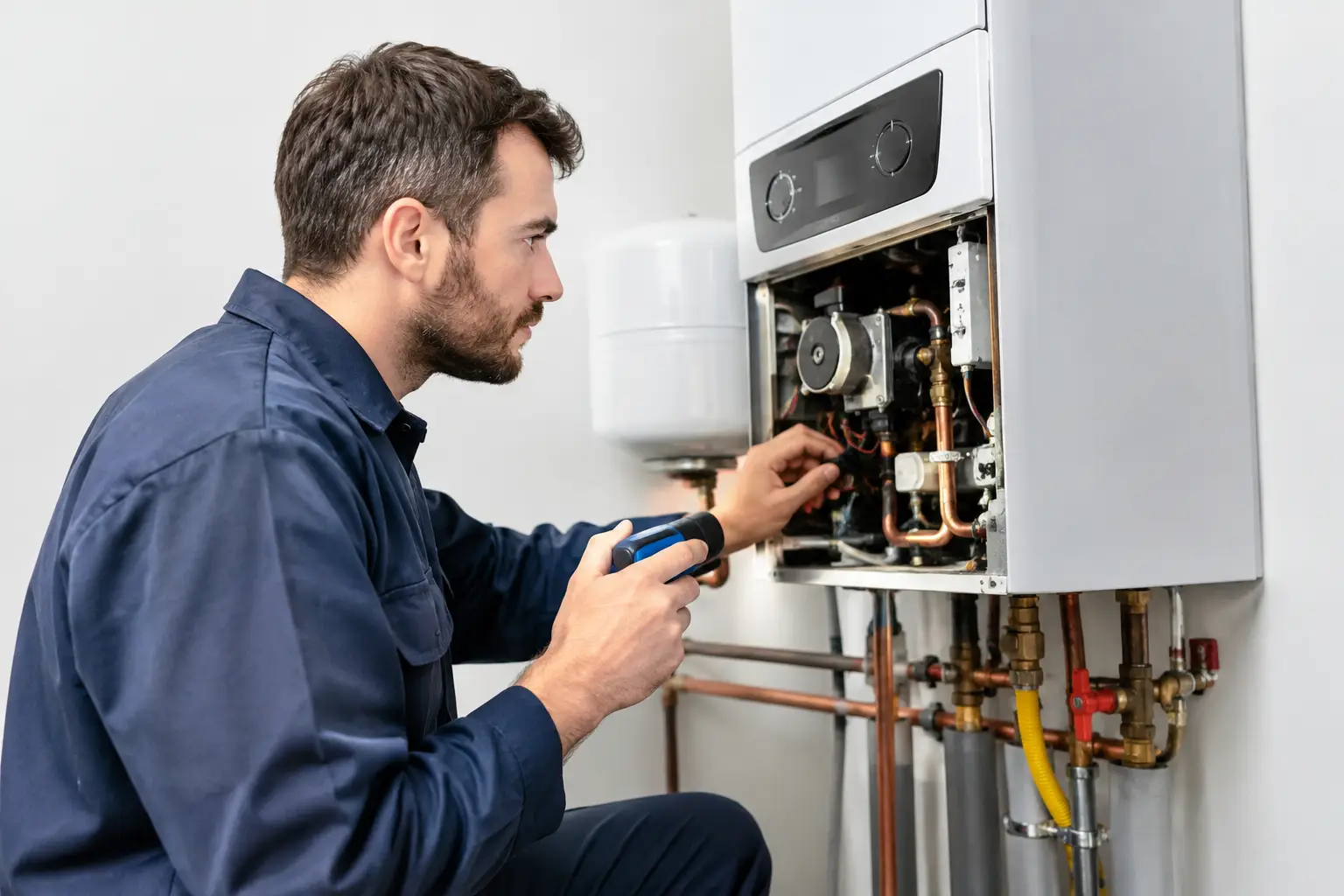
A boiler rarely stops working without giving your home a warning first. Recognizing boiler repair signs early can mean the difference between a quick service visit and a no-heat emergency on a cold Lower Mainland night. If your radiators are not heating evenly, your energy bills have climbed, or you have noticed water around the unit, it is time to pay attention.
Boilers are built to provide steady, efficient heat for years, but they still depend on pumps, valves, controls, piping, and safe combustion to do their job. A problem in one area can affect comfort throughout the house. The right response is not always replacement. In many cases, timely repair and maintenance can restore reliable heat and prevent more expensive damage.
1. Your Home Has Cold Rooms or Uneven Heat
When the boiler is running but some rooms stay chilly, do not assume the system simply needs more time. Uneven heat can point to trapped air in radiators, circulation problems, a failing pump, a stuck zone valve, low system pressure, or sludge buildup in the lines.
A single cold radiator may have a relatively simple cause. Several cold rooms, however, can indicate a larger circulation issue that deserves professional attention. Turning the thermostat higher may make the boiler run longer, but it will not correct the underlying problem. It can also increase your utility costs without improving comfort.
2. You Hear Banging, Whistling, or Gurgling
A properly operating boiler is not always silent, but new or persistent noises are among the most common boiler repair signs. Banging or rumbling, sometimes called kettling, may occur when mineral deposits or sludge restrict water flow through the heat exchanger. As water overheats in that area, it can create steam and produce a sound similar to a kettle boiling.
Whistling can be related to pressure or restricted water flow. Gurgling often suggests air in the system. These sounds do not automatically mean the boiler is unsafe or beyond repair, but they should not be ignored. Addressing the cause early may help protect key components and maintain better heating efficiency.
3. Your Boiler Pressure Keeps Dropping or Rising
Most residential boilers have a pressure gauge. While normal pressure varies by system and whether it is hot or cold, frequent swings are a reason to schedule service. Low pressure can result from a leak, a faulty pressure relief valve, or an issue with the expansion vessel. High pressure can also indicate a failed expansion vessel, filling-loop problem, or internal control issue.
Avoid repeatedly adding water to restore pressure without knowing why it dropped. That may temporarily get the system running, but it can mask a leak or allow a more serious issue to continue. A licensed technician can inspect the system, locate the cause, and make the correct repair.
4. There Is Water Around the Boiler
Water on the floor near a boiler should always be checked promptly. Sometimes the source is minor, such as condensation or a loose fitting. Other times, the boiler itself, a pipe connection, pump seal, valve, or pressure relief component may be leaking.
Even a small, slow leak matters. It can cause corrosion, damage nearby flooring or walls, reduce boiler pressure, and eventually lead to component failure. If you see active leaking, turn off the unit if you can do so safely, protect the surrounding area from water damage, and arrange for professional repair. Do not remove the boiler cover or attempt to repair sealed combustion components yourself.
5. Your Energy Bills Rise Without a Clear Reason
Higher heating bills are not always caused by the boiler. Cold weather, thermostat changes, poor insulation, and longer hours at home can all increase energy use. But if your bills rise while comfort drops or the boiler seems to run constantly, the system may be losing efficiency.
Common causes include a dirty or scaled heat exchanger, poor combustion, circulation issues, failing controls, or a boiler that is no longer properly matched to your home’s heating needs. Regular maintenance can catch many efficiency problems before they become breakdowns. If your boiler is older and requires repeated service, a repair technician can also help you compare repair costs with the potential long-term value of a high-efficiency upgrade.
6. The Boiler Turns On and Off Too Often
Short cycling happens when a boiler starts, runs briefly, shuts down, and then restarts repeatedly. This puts extra wear on components and can leave your home feeling inconsistent or damp. It may be caused by thermostat placement, a control problem, overheating, poor water circulation, low system pressure, or an oversized boiler.
The solution depends on the cause. A thermostat issue may be straightforward, while sizing or circulation concerns can require a more detailed evaluation. What matters is getting a diagnosis rather than accepting frequent cycling as normal operation.
7. You Smell Gas or Notice Combustion Concerns
If you smell gas, leave the home immediately if the odor is strong or persistent. Do not use electrical switches, light matches, start vehicles near the home, or try to locate the leak yourself. Once you are safely outside, contact your gas utility or emergency services according to local guidance.
Other warning signs can include soot around the boiler, yellow or irregular burner flames where visible, or unusual exhaust odors. These concerns may point to incomplete combustion or venting issues. Gas boiler work requires qualified service. Fast, professional attention protects your household and helps ensure the system is operating safely.
8. The Pilot Light or Burner Flame Looks Wrong
For boilers with a visible pilot or burner flame, a steady blue flame is generally what you want to see. A yellow, flickering, or lazy-looking flame can indicate combustion problems, dirt in the burner, or insufficient air supply. Never adjust gas controls or burner settings on your own.
Modern boilers may not have a standing pilot light, so this sign will not apply to every system. If your boiler displays an error code, shuts itself down, or repeatedly needs to be reset, treat that as the modern equivalent of a visible warning. Write down the code and share it with the technician. It can speed up diagnosis and avoid unnecessary guesswork.
9. Your Boiler Needs Frequent Resets or Repairs
An occasional repair is part of owning any mechanical system. But repeated lockouts, recurring error codes, or multiple service calls in a single heating season deserve a closer look. Continuing to repair an aging boiler can make sense when the issue is isolated, the unit is otherwise efficient, and replacement parts are readily available.
The calculation changes when repairs become frequent, expensive, or tied to major components. Age, efficiency, condition, warranty coverage, and your plans for the home all matter. A trusted technician should explain the options clearly, including what repair will accomplish, what risks remain, and when replacement may be the more practical investment.
10. Your Carbon Monoxide Alarm Activates
A carbon monoxide alarm is never a boiler problem to troubleshoot on your own. If the alarm sounds, get everyone outside into fresh air immediately and call emergency services or your gas utility from a safe location. Do not re-enter until authorities say it is safe.
Carbon monoxide is colorless and odorless, which is why working alarms are essential in homes with fuel-burning equipment. After the immediate emergency is handled, have the boiler and venting system inspected by a qualified professional before using it again.
When to Call for Boiler Repair
Some issues can wait for a regular appointment, such as a single radiator heating poorly or a boiler that is making a new noise but still operating. Others call for faster action, including active water leaks, loss of heat during cold weather, repeated shutdowns, pressure problems, soot, or any concern involving gas or carbon monoxide.
Do not wait until a complete failure leaves your family without heat or hot water. Pro West Heating & Air Conditioning provides responsive residential boiler service, including help with repairs, maintenance, and informed replacement decisions when an older system no longer delivers dependable comfort.
A boiler that heats quietly, evenly, and efficiently is easy to take for granted. If yours is telling you something is wrong, acting now can help protect your comfort, control costs, and keep a smaller repair from becoming an urgent winter problem.