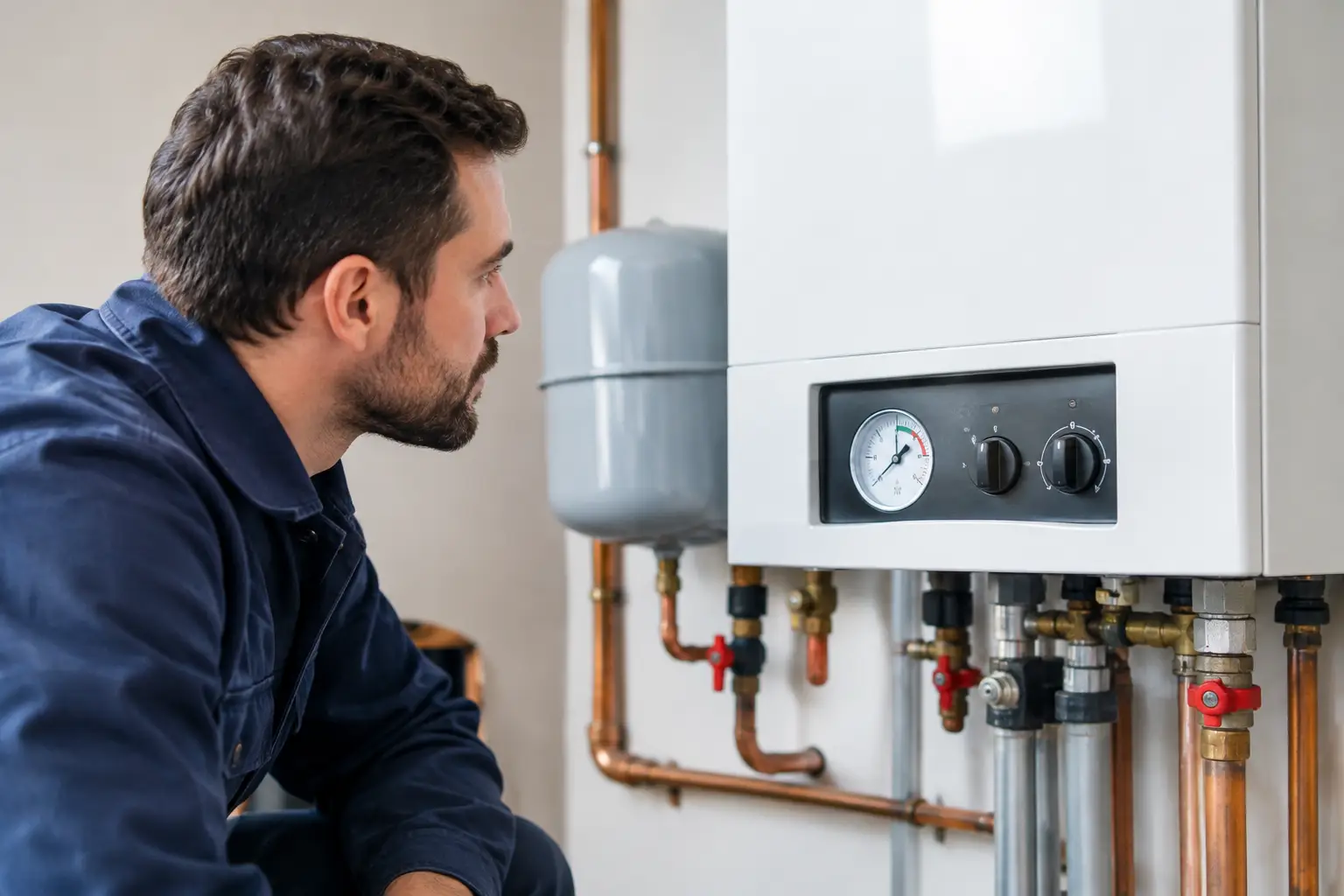
A boiler gauge that keeps dropping is more than an inconvenience. When your boiler is losing pressure, your radiators may heat unevenly, the system may shut down, and a small hidden issue can turn into water damage or a no-heat emergency.
The good news is that pressure loss usually has a specific, repairable cause. The right response depends on how quickly the gauge drops, whether you can see water, and whether the pressure changes only when the heating is running. Here is what homeowners should know before resetting the system or calling for service.
What Boiler Pressure Should Look Like
Most sealed residential boiler systems operate at roughly 12 to 15 psi when cold. When the boiler is running and the water heats up, pressure rises somewhat. Your system’s recommended range may differ, so always treat the markings in your boiler manual or the guidance from your installer as the final word.
A one-time small drop in pressure after bleeding radiators or servicing the system is not always alarming. If the gauge falls repeatedly, however, the system is losing water or cannot manage normal pressure changes properly. Repeatedly adding water without finding the cause is not a long-term fix.
Low pressure can prevent some boilers from firing. Others may run but produce weak, inconsistent heat. If the boiler locks out, avoid repeatedly resetting it. A lockout is the equipment’s way of protecting itself, and repeated resets can mask a problem that needs attention.
Why Is Your Boiler Losing Pressure?
A leak in the heating system
A leak is one of the most common reasons for pressure loss. It may be visible around radiator valves, pipe joints, the boiler itself, or under floors and inside walls. Even a slow drip can lower pressure over several days or weeks.
Look for damp spots, staining, rust around valves, bubbling paint, or a white or greenish residue on copper fittings. Check beneath radiators and around exposed piping, but do not remove boiler panels or disturb gas-line components. A hidden leak can be harder to identify, especially in radiant floor heating or pipes routed through finished spaces.
Water released from the pressure-relief valve
Your boiler has a pressure-relief valve designed to discharge water if pressure rises too high. It is an important safety component, not a nuisance part to block or cap. If it opens, water commonly runs through a discharge pipe to an exterior location, floor drain, or nearby utility area.
If the relief valve is releasing water, the gauge may later read low. The valve itself may be worn, but the underlying issue may be excessive system pressure caused by a failed expansion tank or an overfilled system. A technician should assess both conditions rather than simply replace a valve and leave the root cause unresolved.
A failed or improperly charged expansion tank
Water expands as it heats. The expansion tank gives that expanding water somewhere to go, keeping boiler pressure within a safe operating range. When the tank loses its air charge or its internal diaphragm fails, pressure can climb sharply while the system is hot.
The relief valve may then release water. Once the boiler cools, the pressure drops too low. This hot-high, cold-low pattern is a strong sign that the expansion tank needs professional testing or replacement.
Air bleeding, recent service, or a filling-valve problem
Bleeding radiators removes trapped air, but it also releases a small amount of system water. Pressure may need to be restored afterward. If you recently had work completed on the boiler, radiators, or piping, ask the service provider whether the system was filled and purged correctly.
In some cases, the boiler’s filling valve does not close fully, allowing pressure to rise. In others, it does not open or function correctly when the system needs to be topped up. Because incorrect filling can lead to high pressure and relief-valve discharge, this is a good reason to bring in a qualified heating professional.
What You Can Safely Check First
Start by noting the pressure when the boiler is cold, then check it again after the heating has been running for a while. A photo of the gauge at both points can help a technician understand the pattern. You should also check whether the boiler display shows a fault code and write it down.
Next, inspect accessible areas for signs of moisture. Check around radiator valves, beneath exposed pipes, near the boiler, and where the relief-valve discharge pipe ends. If you find water around electrical parts, smell gas, see a major leak, or hear unusual banging or whistling, turn off the heating if it is safe to do so and arrange urgent service.
Some boilers allow homeowners to restore pressure through an integrated filling loop or filling valve. Only do this if you know your boiler’s approved procedure and can clearly read the gauge. Fill slowly, stop at the recommended cold-pressure range, and make sure the valve is fully closed afterward. Never overfill the system, and never bypass a safety valve.
If the pressure drops again soon after refilling, do not keep adding water every few days. Fresh water introduces oxygen and minerals that can contribute to corrosion inside the system. More importantly, recurring pressure loss points to a leak, relief-valve discharge, or component failure that needs repair.
When Low Boiler Pressure Needs a Professional
Schedule service if the pressure falls more than once, the boiler will not stay running, or you see any evidence of leaking. Fast pressure loss over hours rather than days deserves prompt attention, particularly if water is appearing near the boiler, ceilings, walls, or flooring.
You should also call a heating technician when pressure rises close to the high end of the gauge while the boiler is operating, then falls very low after it cools. That cycle commonly involves the expansion tank or pressure-relief system and should not be handled by trial and error.
A licensed technician can pressure-test the heating circuit, inspect the relief valve and discharge line, test the expansion tank, check radiator and piping connections, and verify that the boiler controls are operating correctly. This approach helps avoid replacing the wrong part or overlooking a concealed leak.
For homeowners dealing with no heat or a recurring boiler fault, Pro West Heating & Air Conditioning can diagnose the full heating system and recommend a repair that fits the condition of the equipment. If an older boiler is becoming unreliable or inefficient, a professional assessment can also clarify whether repair or replacement offers better long-term value.
Can You Prevent Boiler Pressure Problems?
Annual boiler maintenance is the most practical prevention. During service, a technician can inspect for early leaks, test safety controls, confirm expansion-tank operation, and identify corrosion before it becomes a larger repair. Maintenance is especially useful before the heating season, when a boiler will be under its heaviest demand.
Homeowners can help by keeping the area around the boiler clear, watching the pressure gauge occasionally, and addressing drips promptly. If you have radiators, pay attention to cold spots, gurgling sounds, or repeated needs to bleed air. These symptoms do not always mean a major failure, but they can signal circulation or pressure issues worth checking.
A boiler should provide quiet, dependable heat without constant attention to its gauge. If yours needs frequent refilling or keeps shutting down, treating the pressure loss early can protect your comfort, your home, and the life of the system.