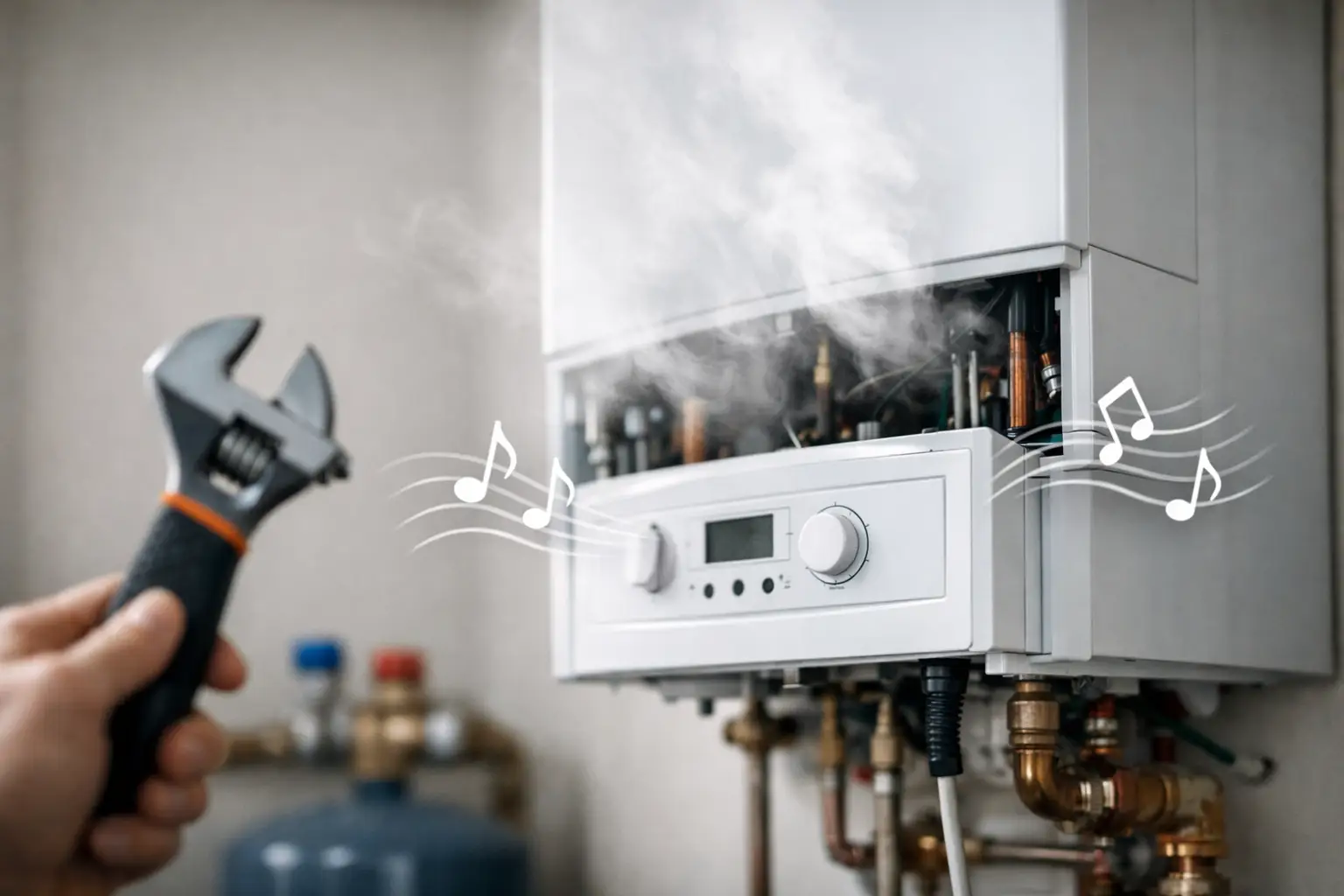
A boiler that suddenly bangs, whistles, or gurgles can make a normally comfortable home feel uncertain fast. If you are asking, why is my boiler making noise, the sound itself can offer a useful clue. Some noises are normal as metal pipes heat and cool. Others point to trapped air, water flow problems, mineral buildup, or a component that needs professional repair.
The key is knowing which sounds can wait for a scheduled service visit and which require prompt attention. A well-maintained boiler should operate steadily in the background, not demand your attention every time it starts.
Why Is My Boiler Making Noise?
Boilers make noise when water, air, pressure, heat, or moving mechanical parts are not behaving as they should. The location and timing of the sound matter. A brief ticking sound from pipes after the heat comes on is very different from repeated loud banging inside the boiler cabinet.
Older systems can be more prone to noise, particularly if they have not been flushed or serviced regularly. However, newer boilers can also become noisy due to incorrect water pressure, a faulty pump, air in the system, or an installation issue. Do not assume a noisy boiler is simply part of having an older heating system.
Kettling or Rumbling Sounds
A rumbling, popping, or kettle-like sound is often called kettling. It usually occurs when mineral deposits, sludge, or debris restrict water flow through the boiler’s heat exchanger. Water trapped in those hot areas can overheat and turn to steam, creating the familiar kettle sound.
Kettling is more common in areas with harder water, but corrosion debris in an older closed-loop heating system can create similar problems. Left alone, it can reduce efficiency, increase energy use, and put unnecessary strain on the boiler.
A technician may recommend flushing the system, cleaning the heat exchanger, treating the water, or replacing a damaged component. The right repair depends on the boiler’s age, condition, and the extent of buildup. Flushing is often worthwhile, but if a heat exchanger is heavily damaged, replacement may be the more reliable long-term choice.
Banging, Knocking, or Clanging
A single light knock may come from pipes expanding and shifting against framing as hot water begins circulating. That is common, especially in homes with radiant heating or baseboard systems. Repeated, loud banging is different.
Banging can be caused by trapped air, restricted water flow, a failing circulator pump, loose pipe supports, or pressure issues. In some cases, the sound comes from water moving too quickly through the system. If the noise begins with a sudden change in heating performance, such as cold rooms or uneven radiator heat, schedule service rather than waiting for it to worsen.
Do not try to open the boiler or adjust internal controls to stop banging. Boilers combine hot water, electricity, and in many homes, natural gas. A trained technician can identify whether the issue is in the boiler, the pump, the piping, or the heating zones.
Whistling or High-Pitched Screeching
Whistling often suggests water or air is being forced through a narrow opening. It may be related to low system water pressure, a partially closed valve, a restricted heat exchanger, or air trapped in the system. A high-pitched screech can also come from a worn pump or fan motor, depending on the type of boiler.
Check the pressure gauge only if you know where it is and can read it safely. Many residential boiler systems operate within a normal pressure range specified by the manufacturer, and that range can vary. If the gauge is unusually low or high, avoid repeatedly adding water or releasing pressure without professional guidance. An incorrect adjustment can create a larger problem or mask a leak.
Gurgling or Bubbling
Gurgling usually means there is air somewhere in the heating loop. Air pockets can prevent water from circulating properly, which may leave certain rooms cooler than others. You may hear gurgling in the boiler itself, radiators, baseboards, or pipes.
Some homeowners can bleed air from radiators, but the correct approach depends on the heating system. Hydronic baseboard and radiant systems may require different procedures, and frequent air buildup can signal a leak, a faulty expansion tank, or an issue with the automatic air vent. If gurgling keeps returning after the system is bled, it is time to have the cause diagnosed.
Humming, Vibrating, or Grinding
A low hum is often normal while a boiler is running. But a new vibration, loud buzzing, or grinding sound can point to a mechanical issue. Circulator pumps, fans, zone valves, and motors all make some operational noise, yet they should not sound strained.
Vibration may also travel through pipes or mounting brackets, making a small issue sound much louder throughout the home. A technician can determine whether a component needs tightening, cleaning, repair, or replacement. Addressing a failing pump early can help prevent a no-heat situation during colder weather.
Clicking and Ticking
Light ticking is often the least concerning boiler sound. Metal expands when heated and contracts as it cools, so pipes may tick as temperatures change. A thermostat, relay, or zone valve may also click during normal operation.
Pay attention if clicking becomes rapid, constant, or is followed by failed ignition, no heat, error codes, or a gas smell. Repeated ignition clicking on a gas boiler should be inspected promptly. The boiler may be struggling to light safely or reliably.
What You Can Safely Check Before Calling
Before scheduling service, listen closely to where the noise is coming from and when it happens. Does it start only when the thermostat calls for heat? Does it occur while hot water is running? Is one heating zone affected, or the entire home? These details help speed up diagnosis.
You can also look for visible warning signs around the boiler without removing panels: water on the floor, dripping from pipes, corrosion, flashing error codes, or a pressure gauge that appears far outside its usual range. Make a note of the boiler brand, model, and any displayed code.
Avoid taking apart the unit, adjusting gas controls, or repeatedly resetting the boiler. A reset may temporarily clear a fault, but repeated lockouts usually mean there is an underlying issue that needs repair.
When a Noisy Boiler Is an Emergency
Turn the boiler off and seek immediate professional help if you smell gas, notice smoke, see signs of scorching, or hear a loud ongoing banging that does not stop. Leave the home and contact the appropriate emergency service if you suspect a gas leak. Do not operate switches, appliances, or open flames near the suspected leak.
A water leak also deserves quick attention, especially if it is near electrical components or becoming more severe. Even a small leak can affect system pressure, damage flooring, and lead to more expensive boiler repairs.
If there is no immediate danger but your boiler is making new or worsening noises, arrange a repair visit soon. Waiting until the system stops heating can leave your household without comfort when you need it most.
Preventing Boiler Noise and Costly Repairs
Annual boiler maintenance is the best way to catch the early causes of noise. A professional service visit can include checking pressure, inspecting the heat exchanger, testing safety controls, evaluating pumps and valves, examining venting, and looking for leaks or water-quality issues.
For homes with hydronic radiant heat, regular maintenance also helps protect the circulator equipment and maintain balanced heat across different zones. A clean, properly adjusted system runs quieter, uses less energy, and is less likely to fail unexpectedly.
If your boiler is older and has recurring noise, leaks, or repair needs, ask about the cost of repair versus replacement. A high-efficiency boiler may offer lower operating costs and more dependable comfort, but replacement is not automatically the answer. A professional assessment should consider the condition of the existing system, your home’s heating needs, and the expected value of the repair.
Pro West Heating & Air Conditioning can diagnose boiler noises, restore reliable heat, and help you make a clear decision when repair or replacement is needed. A strange sound is your heating system asking for attention. Address it early, and you are far more likely to protect your comfort, efficiency, and peace of mind.