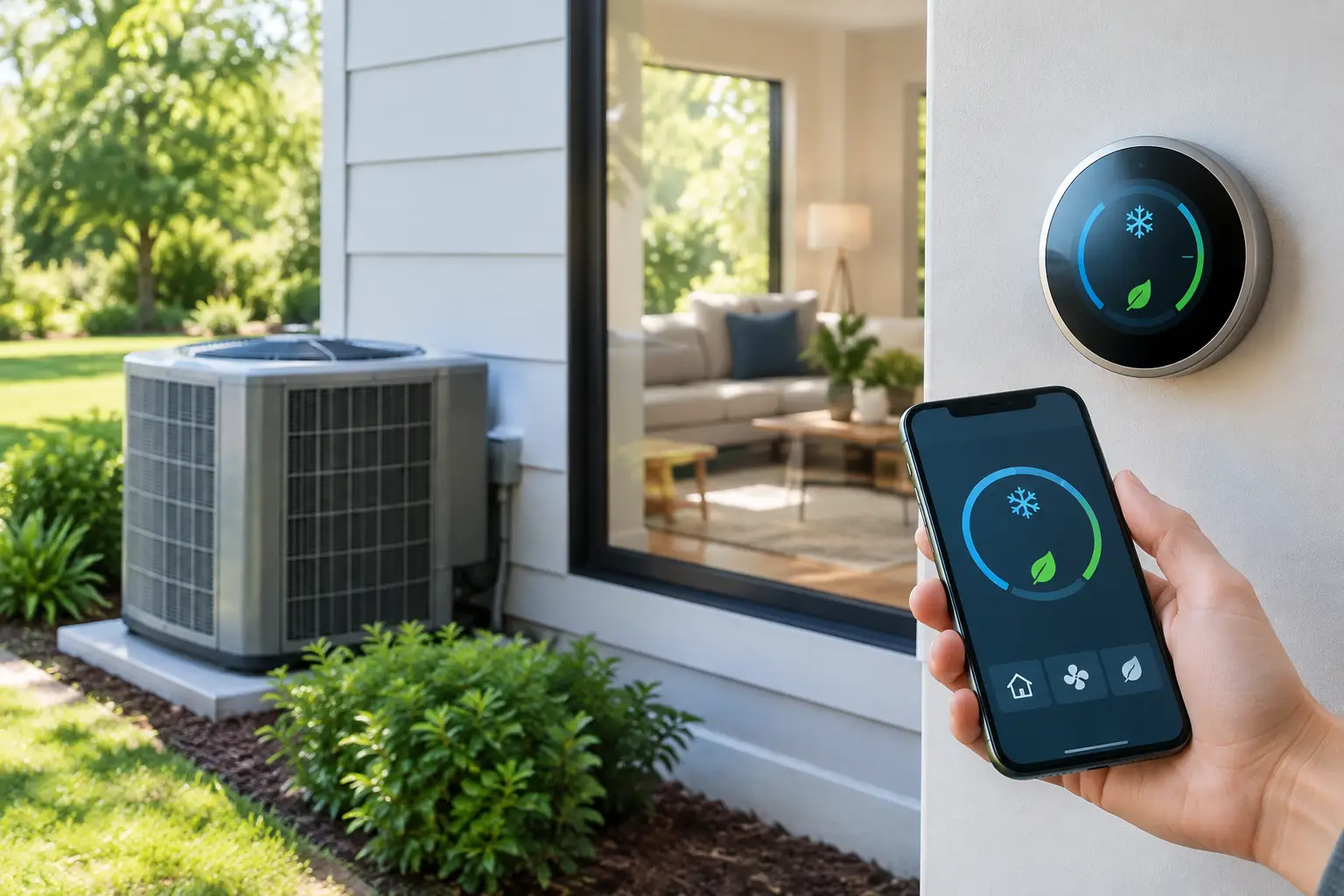
A thermostat that keeps the upstairs from overheating, an alert before a furnace failure, and heating that adjusts to your family’s schedule are not luxury features anymore. Smart HVAC gives homeowners more control over comfort while helping reduce wasted energy – but the right setup depends on the equipment already in your home.
For homeowners managing cold winters, warm summer stretches, and rising utility costs, smart controls can make a noticeable difference. They work best when they support a properly sized, well-maintained heating and cooling system. A smart thermostat cannot repair a failing furnace or compensate for poor airflow, but it can help a healthy system run more efficiently.
What Smart HVAC Means for Your Home
Smart HVAC refers to heating, cooling, ventilation, and comfort equipment that can communicate with sensors, thermostats, or mobile apps. The goal is simple: use real-time information to maintain a more consistent indoor temperature without running equipment longer than necessary.
The most familiar example is a Wi-Fi thermostat. Instead of setting one temperature and leaving it there, homeowners can create schedules, make adjustments from a phone, and receive reminders when it may be time for service or a filter change. Many models learn household patterns over time, although manual scheduling is often more predictable for families with changing routines.
A complete smart home comfort system can go further. Remote temperature sensors can identify rooms that are consistently too hot or too cold. Zoning equipment can direct heating or cooling where it is needed. Indoor air quality monitors can track humidity, particles, or carbon dioxide levels, helping homeowners make informed choices about ventilation and filtration.
These features are useful, but they should serve the home rather than add unnecessary complexity. For a smaller home with even temperatures, a dependable smart thermostat may be all that is needed. A larger multi-level home with hot bedrooms, a finished basement, or rooms that sit unused for much of the day may benefit from sensors or zoning.
Where Smart Controls Deliver Real Value
The strongest benefit of smart HVAC is not simply being able to change the temperature from the couch. It is the ability to reduce the gap between how your home feels and how your equipment operates.
More consistent comfort from room to room
One thermostat measures the temperature in one location, often a hallway. That can leave bedrooms, home offices, and upper floors outside the comfort range. Smart room sensors give the thermostat additional information, allowing it to prioritize the rooms your household uses at certain times.
For example, a family may want the main floor comfortable in the evening but bedrooms at the right temperature overnight. A compatible thermostat and sensors can make those shifts automatically. This does not create separate temperature control in every room, but it can improve balance in homes with mild hot and cold spots.
Less wasted heating and cooling
Programmable schedules have been around for years, yet many homeowners never use them because they can be frustrating to set up. Smart thermostats make scheduling easier and may use occupancy settings or geofencing to avoid conditioning an empty home at full capacity.
Savings vary. A home with consistent schedules, good insulation, and properly operating equipment is more likely to see meaningful reductions than a home where the furnace is short cycling, the ducts are leaking, or the system is oversized. Comfort settings also matter. If a household wants the same temperature around the clock, the energy-saving opportunity will be smaller.
Earlier warning signs
Some connected thermostats and HVAC controls can flag unusual runtime, rapid temperature changes, or equipment behavior that may deserve attention. These notifications are helpful because they prompt a homeowner to act before a small concern turns into a no-heat or no-cooling call.
An alert is not a diagnosis. It cannot confirm whether the issue is a dirty filter, weak capacitor, refrigerant concern, ignition problem, or airflow restriction. When an alert repeats or the system is not keeping up, a licensed technician should inspect the equipment.
Better visibility into indoor air quality
Comfort is also about the air your family breathes. Smart indoor air quality monitors can track conditions that are difficult to notice day to day, including humidity levels and airborne particles. That information can guide practical upgrades such as improved filtration, humidity control, ventilation adjustments, or a whole-home air cleaner.
The best solution depends on the problem. Dry air in winter, excess moisture, pet dander, and cooking odors do not all call for the same equipment. Monitoring provides useful data, but a professional assessment helps ensure the fix matches the home.
Smart HVAC Upgrades Worth Considering
Start with the comfort issue you want to solve. That approach avoids buying technology that looks impressive but does little for your daily routine.
A smart thermostat is usually the most practical first upgrade when you have compatible central heating, air conditioning, or a heat pump. Look for a model that works with your system type, especially if you have a heat pump, multi-stage furnace, boiler, or equipment with separate heating and cooling controls. Compatibility matters more than brand name.
Smart sensors are a strong next step for homes with uneven temperatures. They are most useful when the thermostat can use them in scheduled comfort settings. Placing a sensor in the coldest room is not always the answer – it should be placed where people spend time and where comfort matters most.
Zoning is a larger investment, but it can be worthwhile in homes with distinct areas that have different needs. It may involve motorized dampers in ductwork, multiple thermostats, or separate equipment zones. Zoning must be designed correctly. Closing off too much airflow can strain some systems, so this is not a do-it-yourself add-on.
For homes replacing aging equipment, smart-compatible furnaces, heat pumps, air handlers, boilers, and controls can provide a more integrated experience. This is often the best time to plan for sensors, zoning, and energy-efficient operation because the system can be selected and installed as a whole.
What to Check Before You Upgrade
Before installing smart controls, make sure the underlying HVAC system is ready. A thermostat cannot solve mechanical problems, and connected features will not overcome poor installation.
Ask these questions during an in-home assessment:
- Is the existing equipment correctly sized and operating reliably?
- Does the thermostat wiring support the control being considered?
- Are airflow, duct condition, and filter maintenance contributing to uneven temperatures?
- Is the home a candidate for zoning, or would insulation and air sealing provide better value?
- Are there available utility rebates for qualifying high-efficiency equipment or controls?
A professional should also confirm how a new thermostat will interact with your current equipment. Heat pumps, in particular, need controls configured properly so backup heat does not run unnecessarily. Boiler and radiant heating systems have their own control requirements as well. Choosing the wrong thermostat can lead to uneven heating, higher operating costs, or equipment that does not perform as intended.
Smart Features Still Need Professional Maintenance
Connected equipment makes it easier to spot patterns, but regular maintenance remains essential. Filters need changing, drains need clearing, electrical connections need inspection, and combustion or refrigerant components need qualified service. Smart notifications can remind you to schedule care, but they do not replace it.
For homeowners considering a major upgrade, Pro West Heating & Air Conditioning can assess the full system rather than focusing on one device. That includes equipment condition, control compatibility, airflow, comfort concerns, and options that may qualify for available efficiency rebates.
The best smart HVAC plan is the one that quietly makes your home more comfortable without demanding constant attention. Start with the problem you feel every day – a cold bedroom, high energy use, unreliable heating, or uneven summer cooling – and choose upgrades that solve it for the long term.