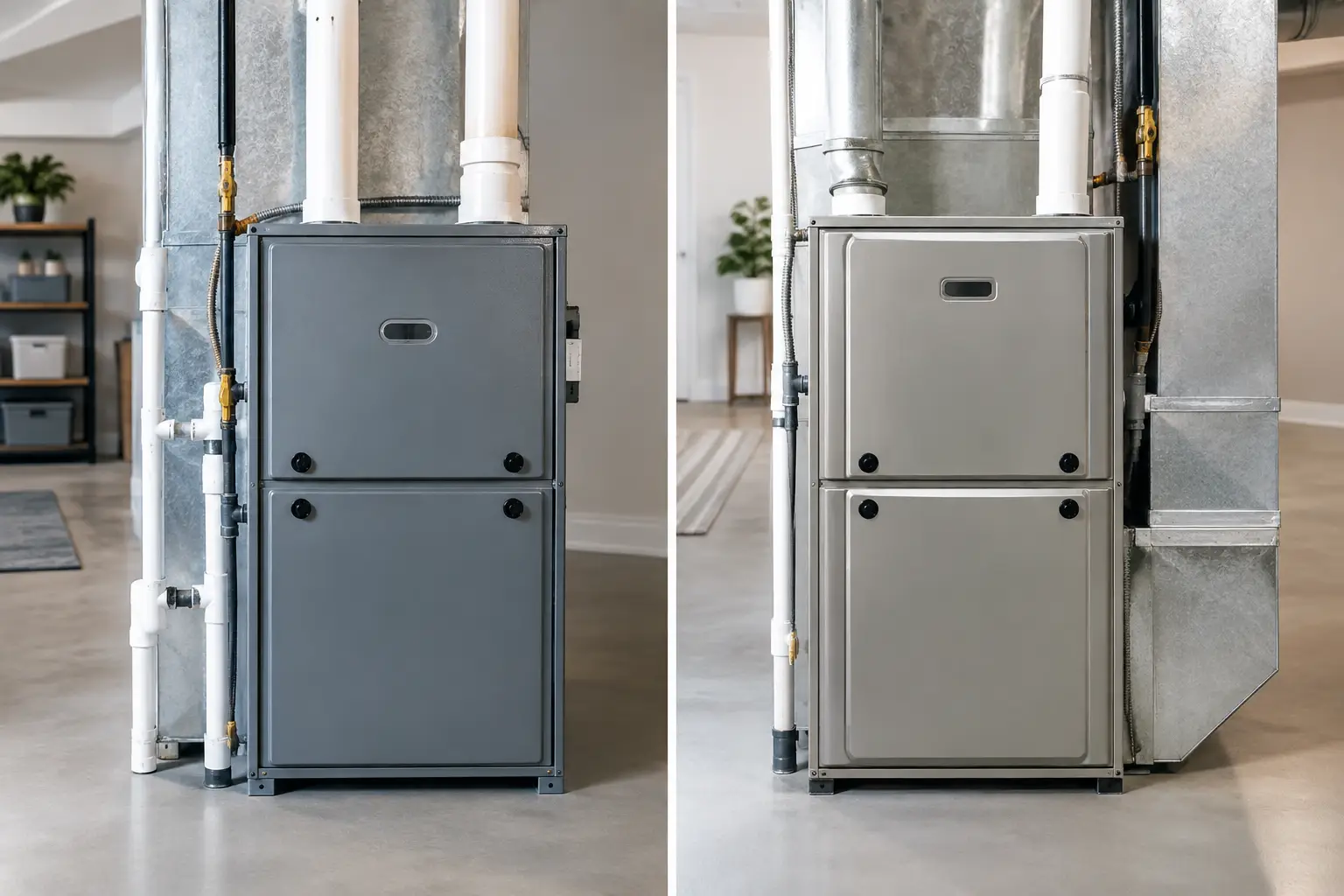
A furnace can look like a simple replacement decision until you compare how it will heat your home at 6 a.m. on a damp January morning. The difference between single stage versus variable furnaces affects more than the equipment price. It can change room-to-room comfort, furnace noise, energy use, and how consistently your home feels warm through a Lower Mainland winter.
For many homeowners, the right answer is not automatically the highest-efficiency model. It depends on your home, your existing ductwork, your budget, and how long you plan to stay in the property. Here is a clear look at what separates these furnace types and where each one makes sense.
How a Single-Stage Furnace Works
A single-stage furnace has one heat setting: full output. When your thermostat calls for heat, the burners turn on at 100% capacity. Once the home reaches the set temperature, the burners shut off. The system waits until the temperature drops again, then repeats the cycle.
This design is straightforward, proven, and common in many homes. A properly sized single-stage furnace can deliver reliable heat and may be a practical replacement when a homeowner needs to control upfront costs.
The trade-off is that full output is not always necessary. On a mildly cold day, a furnace may still deliver its full heating capacity for a shorter period. That can create more noticeable starts and stops, as well as small temperature swings between heating cycles.
Where single-stage systems fit well
A single-stage furnace can be a sensible choice for a smaller home with modest heating demands, a rental property, or a homeowner replacing a failed furnace on a limited budget. It may also work well when the current system has provided acceptable comfort and the priority is dependable operation rather than advanced temperature control.
What matters most is proper sizing and installation. An oversized single-stage furnace can cycle too frequently, while an undersized unit may struggle on the coldest days. Neither issue is solved simply by choosing a more expensive model.
What Makes a Variable Furnace Different
A variable furnace, often called a modulating furnace, can adjust its heating output in small increments. Instead of operating only at full capacity, it can run at a lower level for longer periods when the home needs only a gentle amount of heat. As outdoor conditions change, the furnace can raise or lower its output to better match the demand.
Most variable-capacity models also use a variable-speed blower motor. The blower can run more quietly and circulate air at lower speeds for longer intervals. This is one reason homeowners often notice that a variable system feels less disruptive than an older furnace that starts with a loud rush of air.
Variable operation does not mean the furnace is always running at high cost. In many cases, longer, lower-output cycles use energy more efficiently than repeated full-power starts and stops. The system is designed to maintain a steadier indoor temperature rather than continually correcting larger drops in temperature.
Single Stage Versus Variable Furnaces: Comfort Differences
The biggest day-to-day difference is usually comfort. A single-stage furnace heats in noticeable cycles. You may feel warmer near the end of a heating cycle and slightly cooler before the next one begins. This is not necessarily a problem, but it is a familiar experience in homes with conventional furnaces.
A variable furnace is better at holding a consistent temperature. Because it can deliver only the heat needed at a given time, it tends to reduce those peaks and dips. That can be especially valuable in larger homes, open-concept layouts, or houses with rooms that are regularly too warm or too cold.
Air circulation is another consideration. A variable-speed blower may move air more continuously at a low speed, helping distribute heat more evenly. It can also support better filtration performance because more air passes through the filter over time. For households concerned about dust, pet dander, or uneven temperatures, that added circulation can be meaningful.
Still, a variable furnace cannot correct every comfort issue on its own. Leaky ducts, poor insulation, oversized equipment, closed vents, and an improperly balanced system can all limit results. The furnace should be evaluated as part of the whole home comfort system.
Energy Efficiency and Operating Cost
Efficiency ratings matter, but they do not tell the entire story. Furnace efficiency is commonly measured by Annual Fuel Utilization Efficiency, or AFUE. A high-AFUE furnace converts more of the fuel it consumes into usable heat. Both single-stage and variable models are available in high-efficiency versions.
The difference is how they operate throughout the season. Variable furnaces are often more effective at matching the home’s heating load. They can avoid some of the energy losses associated with frequent full-capacity cycling and may use less electricity for blower operation when equipped with an efficient variable-speed motor.
Actual savings vary. The condition of your home, thermostat settings, local utility rates, insulation levels, and maintenance habits all play a role. A homeowner replacing a 20-year-old inefficient furnace will usually see a larger change than someone replacing a relatively recent high-efficiency unit.
Before choosing a model based on projected savings alone, ask for a complete estimate that considers installation requirements, available rebates, and the expected value over the life of the equipment. A higher initial investment may make sense when it delivers improved comfort and lower operating costs for many years.
Upfront Cost, Repairs, and Long-Term Value
Single-stage furnaces generally cost less to purchase and install than variable models. Their simpler controls and components can also make certain repairs more straightforward. For homeowners who need reliable heat now and prefer the lowest initial cost, that simplicity has real value.
Variable furnaces typically cost more because they include more advanced controls, modulating gas valves, and variable-speed blower technology. If repairs are needed after the warranty period, specialized components may also cost more than parts for a basic single-stage system.
That does not make a variable model a poor investment. A higher-quality system can offer quieter operation, better comfort, and efficiency gains that justify the added cost for the right household. The key is avoiding a one-size-fits-all recommendation. The best furnace is the one that fits your home and priorities, not simply the one with the most features.
Consider Your Thermostat and Ductwork
A variable furnace needs compatible controls to perform as intended. A basic thermostat may operate the system, but a communicating or properly configured smart thermostat can help the furnace use its modulation features more effectively. Controls should be selected as part of the installation, not treated as an afterthought.
Ductwork also deserves attention. Variable-speed equipment can improve airflow management, but it cannot overcome severely undersized, disconnected, or poorly sealed ducts. If bedrooms are consistently cold, return-air pathways are limited, or certain areas feel stuffy, duct adjustments or zoning may be worth discussing during the estimate.
This is why a professional in-home assessment matters. Furnace capacity should be based on the home’s size, layout, insulation, windows, and heat loss, not just the size of the furnace being removed.
Which Furnace Is Right for Your Home?
Choose a single-stage furnace when dependable heating and lower upfront cost are your main goals, especially if your home has modest comfort concerns and the equipment is correctly sized. It remains a practical, reliable option for many households.
Consider a variable furnace when you want steadier temperatures, quieter operation, improved airflow, and potential long-term energy savings. It is often a strong fit for families who plan to stay in their home, homeowners dealing with uneven comfort, and anyone upgrading an older system as part of a broader efficiency plan.
A two-stage furnace may also be worth considering. It sits between these options, with a lower and higher heat setting rather than the fully adjustable output of a variable model. For some homes, it delivers a useful balance of comfort and cost.
Pro West Heating & Air Conditioning can assess your current furnace, explain suitable equipment options, and help you factor in available rebate opportunities before you commit. The most useful next step is a properly sized recommendation based on how your home actually performs, so your new furnace keeps you comfortable when you need it most.