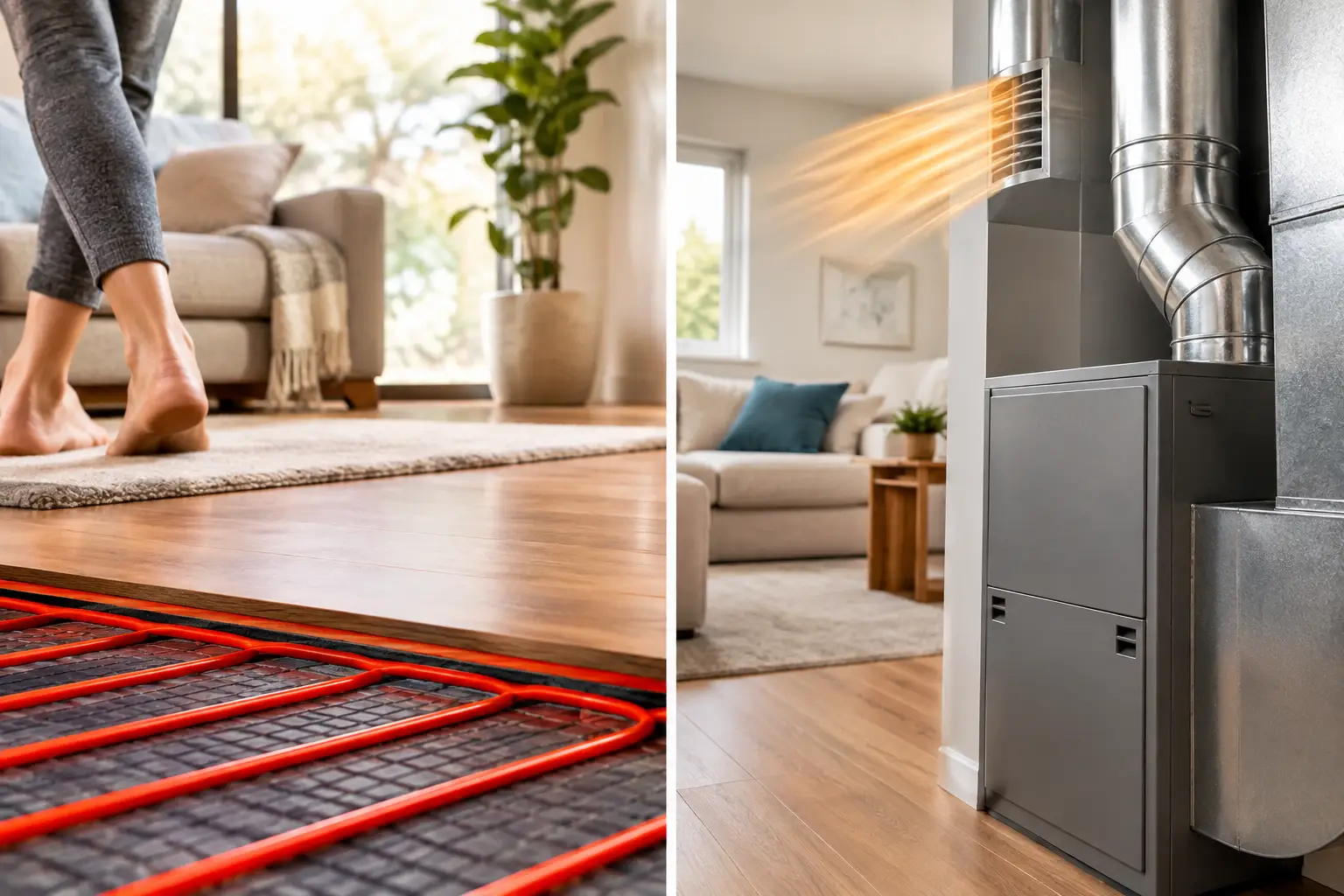
Cold floors in the morning, rooms that never seem to warm evenly, or a furnace that runs constantly can make homeowners reconsider their heating options. When comparing radiant heat versus forced air, the right choice comes down to your home’s layout, existing equipment, comfort priorities, and plans for future upgrades.
Both systems can heat a home reliably. The difference is how they deliver that heat, how they affect indoor comfort, and what is involved when it is time to install or replace equipment.
How Radiant Heat Works
Radiant heating warms people and surfaces directly rather than relying on moving warm air through ducts. In many homes, a boiler heats water that circulates through tubing beneath the floor, through wall panels, or to baseboard radiators. Electric radiant systems are also available, particularly for smaller areas such as bathrooms.
The result is steady, quiet heat that rises gently from the floor or radiates from the heating surface. You do not feel a blast of air when the system starts. Instead, the room gradually feels warm from the ground up.
Radiant heat is especially appealing in homes with tile, stone, or concrete floors that can feel cold underfoot. It is also a strong fit for homeowners who value quiet operation, since there are no large blower motors or ducts pushing air through the house.
The comfort advantage of radiant floors
A radiant floor system can reduce the temperature difference between the floor and the rest of the room. That matters in spaces where you spend time standing, sitting, or playing on the floor. Bathrooms, kitchens, basements, and open-concept living areas are common places to consider it.
Because radiant systems warm surfaces, many homeowners are comfortable setting the thermostat slightly lower than they would with forced air. Actual energy savings depend on insulation, equipment efficiency, controls, and fuel costs, but even heat distribution can make a home feel more comfortable without overheating certain rooms.
How Forced-Air Heating Works
Forced-air systems use a furnace or air handler to heat air and distribute it through ducts. A blower moves that warm air through supply vents, while return vents bring air back to the equipment to be reheated.
This is the most common heating setup in many homes because it responds quickly and can use the same ductwork for central air conditioning. If your home already has well-designed ducts, replacing an aging furnace with a high-efficiency model is often more straightforward and less disruptive than installing a whole-home radiant system.
Forced air also gives homeowners more flexibility to add or upgrade indoor air quality equipment. Filters, air cleaners, humidifiers, UV treatment, and ventilation components can be integrated into the duct system. That does not mean a forced-air system eliminates dust, but proper filtration and regular maintenance can help manage airborne particles.
Fast heat and cooling in one system
Forced air has a clear advantage when you want quick temperature changes. A furnace can bring a chilly room up to temperature faster than a radiant floor system, which is designed for gradual, stable heating.
It also offers a practical path to whole-home cooling. Central air conditioners and many heat pump systems use ductwork to circulate conditioned air. For homeowners planning a heating and cooling upgrade together, keeping or improving a ducted system may provide the best overall value.
Radiant Heat Versus Forced Air: The Key Differences
The best system is rarely determined by one feature alone. Consider how each option performs in the areas that affect daily comfort and long-term ownership costs.
Comfort and temperature consistency
Radiant heat typically delivers more even warmth. There are fewer hot and cold spots because heat is emitted across a broad floor or radiator surface. It can be particularly comfortable in rooms with high ceilings, where forced warm air may collect near the ceiling before circulating down.
Forced air can heat a home very effectively, but comfort depends heavily on duct design, insulation, balancing, and thermostat placement. Leaky, undersized, or poorly routed ducts can leave some rooms too warm and others too cool. These issues can often be corrected without replacing the entire heating system.
Air movement and indoor air quality
Radiant systems do not circulate air through ducts, which means they do not move dust and allergens around the home in the same way. This can be appealing for households sensitive to dry air, dust, or airflow from vents.
A forced-air system moves air by design, but it also provides a central place to filter it. High-quality filtration, clean ducts where appropriate, and scheduled furnace maintenance can make a major difference. If humidity, filtration, and fresh-air ventilation are priorities, ducted equipment provides more built-in options.
Installation cost and disruption
Installing radiant heating throughout an existing home can be a major project. Floors may need to be opened, rebuilt, or raised to accommodate tubing and insulation. A boiler, pumps, controls, and zoning components may also be required. It is often most cost-effective during a new build, a major renovation, or a floor replacement project.
Forced-air replacement is generally less disruptive when ducts are already present. The installer can replace the furnace and make targeted duct improvements as needed. Adding ducts to a home that has never had them, however, can be expensive and may require opening walls and ceilings.
Operating efficiency
Both systems can be efficient when properly selected and installed. Hydronic radiant systems can operate at lower water temperatures, and the even comfort they provide may reduce thermostat settings. High-efficiency boilers and smart zoning controls can improve performance further.
Modern gas furnaces can also achieve high efficiency, especially when paired with sealed combustion, properly sized ductwork, and a programmable or smart thermostat. The system that costs less to operate in your home depends on local utility rates, insulation levels, fuel source, equipment condition, and how you use the space.
Maintenance and repairs
A forced-air furnace needs routine filter changes and annual professional maintenance. Blowers, igniters, heat exchangers, electrical components, and duct connections should be inspected over time.
Radiant systems need maintenance too. Boilers require regular service, and pumps, valves, expansion tanks, and controls can eventually need repair. The tubing itself is designed for a long service life, but finding and repairing a problem under a finished floor is more involved than servicing a furnace in a utility room.
Which System Is Right for Your Home?
Radiant heat is often the better choice when you are renovating, building new, replacing floors, or prioritizing silent and exceptionally even warmth. It can also be a smart solution for additions, basement suites, bathrooms, and individual rooms where running new ductwork would be difficult.
Forced air is often the practical choice when your home already has ducts, you need central air conditioning, or you want fast heating response with a lower upfront replacement cost. It is also a good fit for homeowners who want whole-home filtration and humidity control from one central system.
There is also a middle ground. Many homes use forced air for main heating and cooling, with electric radiant flooring in bathrooms or a hydronic radiant zone in a renovated space. This approach can deliver warm floors where they matter most without requiring a full-house conversion.
Get an Assessment Before You Choose
Do not choose a system based only on a neighbor’s recommendation or the price of the equipment. A professional assessment should consider your home’s insulation, window performance, current ductwork or boiler system, room-by-room comfort issues, electrical capacity, and future cooling needs. Proper sizing matters as much as the type of heating system you select.
Pro West Heating & Air Conditioning can help homeowners compare replacement and upgrade options, identify efficiency opportunities, and explain available rebate support where applicable. A clear estimate should explain what equipment is included, what work is required in the home, and what comfort improvement you can realistically expect.
The best heating system is the one that fits the way your household lives. Start with the rooms that feel uncomfortable now, the upgrades you expect to make next, and the level of control you want for years ahead.