A hot afternoon is a poor time to find out your air conditioner cannot keep up. Knowing how to prepare an air conditioner before summer gives you time to catch small issues, protect your comfort, and avoid the stress of an unexpected breakdown when your home needs cooling most.
For homeowners, spring AC preparation is not about taking apart the system or guessing at repairs. It is about handling the simple checks that make a real difference, then arranging professional maintenance for the work that requires HVAC training and specialized tools.
How to Prepare Your Air Conditioner Before Hot Weather
Start early, ideally several weeks before you expect consistent warm weather. This gives you a chance to test the system without putting it under heavy demand, and it leaves room to schedule service if something does not look or sound right.
Replace or inspect the air filter
Your furnace or air handler filter affects your cooling system just as much as your heating system. A clogged filter restricts airflow, which can make rooms feel unevenly cooled, increase energy use, and put unnecessary strain on the blower and evaporator coil.
Check the filter size and follow the replacement interval recommended for your home. Many standard filters need attention every one to three months, but households with pets, construction dust, allergies, or frequent AC use may need to replace them more often. If you use a reusable filter, clean it fully and allow it to dry before reinstalling it.
Do not run the system without a filter, even for a short test. Dust can collect on critical indoor components quickly, creating a more expensive maintenance problem later.
Clear the outdoor condenser unit
Your outdoor AC unit needs open space to release heat. Leaves, grass clippings, mulch, and overgrown shrubs can block airflow through the coil, forcing the system to work harder for the same indoor temperature.
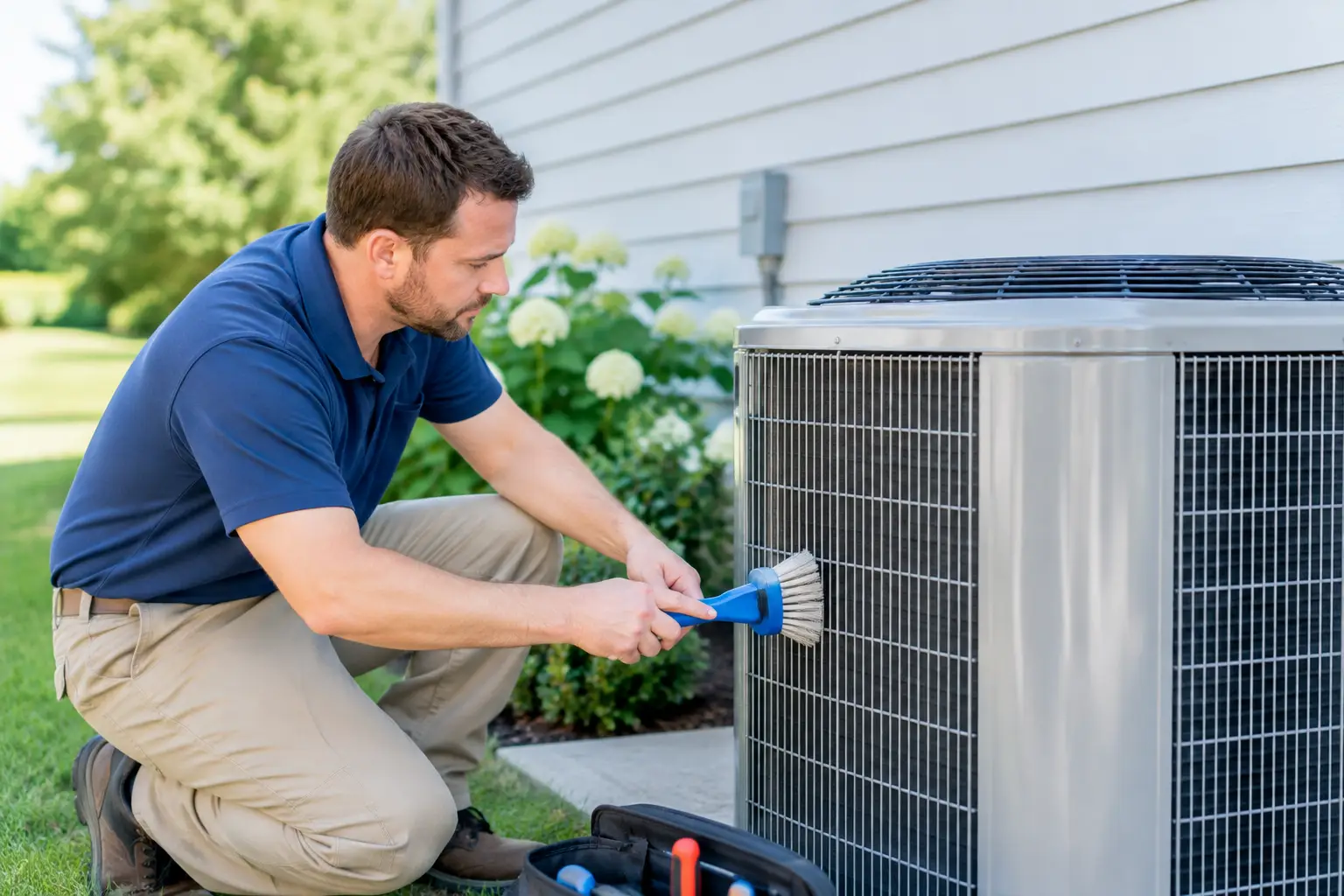
With the thermostat off, remove loose debris from around the unit. Keep plants and stored items at least two feet away from all sides, and make sure nothing is sitting on top. Trim back branches or vines that could interfere with airflow during the season.
Avoid bending the delicate metal fins or spraying the unit aggressively with a pressure washer. Damaged fins restrict airflow, and excessive water pressure can harm the coil. A professional tune-up includes proper coil cleaning when buildup is present.
Check supply vents and return grilles
Walk through the home and confirm that supply vents are open and unobstructed. Furniture, rugs, curtains, and closed interior doors can reduce air circulation and leave some rooms warmer than others. Return grilles also need clear space because they pull air back to the system for cooling.
Closing many vents to force more air into one room is rarely a good solution. It can increase duct pressure and may reduce comfort elsewhere. If certain rooms are consistently hot, the issue may be airflow balance, duct leakage, insulation, window exposure, or a system that needs a professional assessment.
Test the thermostat before the first heat wave
Set the thermostat to cooling mode and choose a temperature a few degrees below the current indoor temperature. The system should begin its cooling cycle after a short delay. Listen for unusual sounds and check whether cool air is coming from the vents.
If your thermostat has batteries, replace them before the season begins. Smart thermostat users should also review schedules, app settings, and Wi-Fi connections. A schedule that raises temperatures while the house is empty and returns to a comfortable setting before you get home can help control cooling costs without sacrificing comfort.
Do not set the thermostat extremely low in an effort to cool the home faster. Most central air conditioners cool at a steady rate. Setting a realistic temperature, often around 78 degrees when occupied, is generally more efficient. Personal comfort, humidity, insulation, and household needs will affect the best setting for your home.
Watch for Warning Signs During Your AC Test
A brief spring test can reveal a problem before it becomes an emergency. Call for professional service if you notice any of the following:
- Air from the vents is warm, weak, or inconsistent from room to room.
- The outdoor unit hums, rattles, bangs, or repeatedly turns on and off.
- Ice forms on refrigerant lines, the indoor coil area, or the outdoor unit.
- Water is pooling near the furnace, air handler, or indoor equipment.
- The system runs for long periods without reaching the thermostat setting.
- You notice musty, burning, or electrical odors when cooling starts.
Some homeowners assume an AC unit that is still running does not need attention. In reality, reduced performance is often the earliest sign of a developing issue. Low airflow may point to a dirty filter or blower concern. Ice can result from airflow restrictions or refrigerant problems. A drain backup can lead to water damage if it is ignored.
Turn the system off if you see ice or smell something burning. Continuing to run it can cause additional damage and make the repair more involved.
Why Professional AC Maintenance Still Matters
Homeowner preparation handles the visible basics. Professional air conditioner maintenance goes further by inspecting electrical connections, testing operating performance, checking refrigerant-related concerns, cleaning components safely, examining the condensate drain, and identifying worn parts before they fail.
This service is especially valuable for systems that are more than a few years old, units that struggled last summer, or homes with uneven cooling. It can also help protect efficiency. A system with restricted airflow, dirty coils, or an overlooked mechanical issue may use more electricity while delivering less comfort.
Maintenance does not guarantee that a part will never fail. Air conditioners contain electrical and mechanical components that wear over time. What regular service does provide is a better opportunity to find concerns early, improve reliability, and make an informed decision about repair versus replacement.
If your AC is older, requires frequent repairs, or cannot cool your home evenly, ask about your options before peak season. A properly sized high-efficiency replacement may lower operating costs and improve comfort, but replacement is not always the right answer. A newer unit with a minor repair need may have many productive years left. The right recommendation depends on system condition, repair history, home size, ductwork, and your long-term plans.
Improve Comfort Without Overworking the System
Air conditioning works best when the home helps retain the cooled air. Close blinds or curtains on sun-facing windows during the hottest part of the day, especially in rooms with large west-facing windows. Check weatherstripping around doors and windows, and seal obvious gaps that let warm outdoor air inside.
Ceiling fans can also make a room feel cooler by circulating air across occupants. In summer, most ceiling fans should rotate counterclockwise. Fans cool people, not empty rooms, so turn them off when no one is using the space.
Humidity matters, too. A home can feel sticky even when the thermostat reads a reasonable temperature. Your AC removes some moisture as it cools, but persistent humidity can signal oversized equipment, airflow issues, drainage concerns, or a need for additional humidity control. It is worth addressing because lowering the thermostat is not always the answer.
A Simple Seasonal Routine That Pays Off
Once summer begins, continue checking the filter, keep the outdoor unit clear, and pay attention to changes in sound or performance. Small habits reduce avoidable strain and help your system deliver steadier cooling through the season.
When something feels off, do not wait for the first major heat wave. A prompt inspection can often turn an inconvenient concern into a straightforward repair. For dependable home comfort and clear guidance, Pro West Heating & Air Conditioning can help you prepare your system for the season ahead.