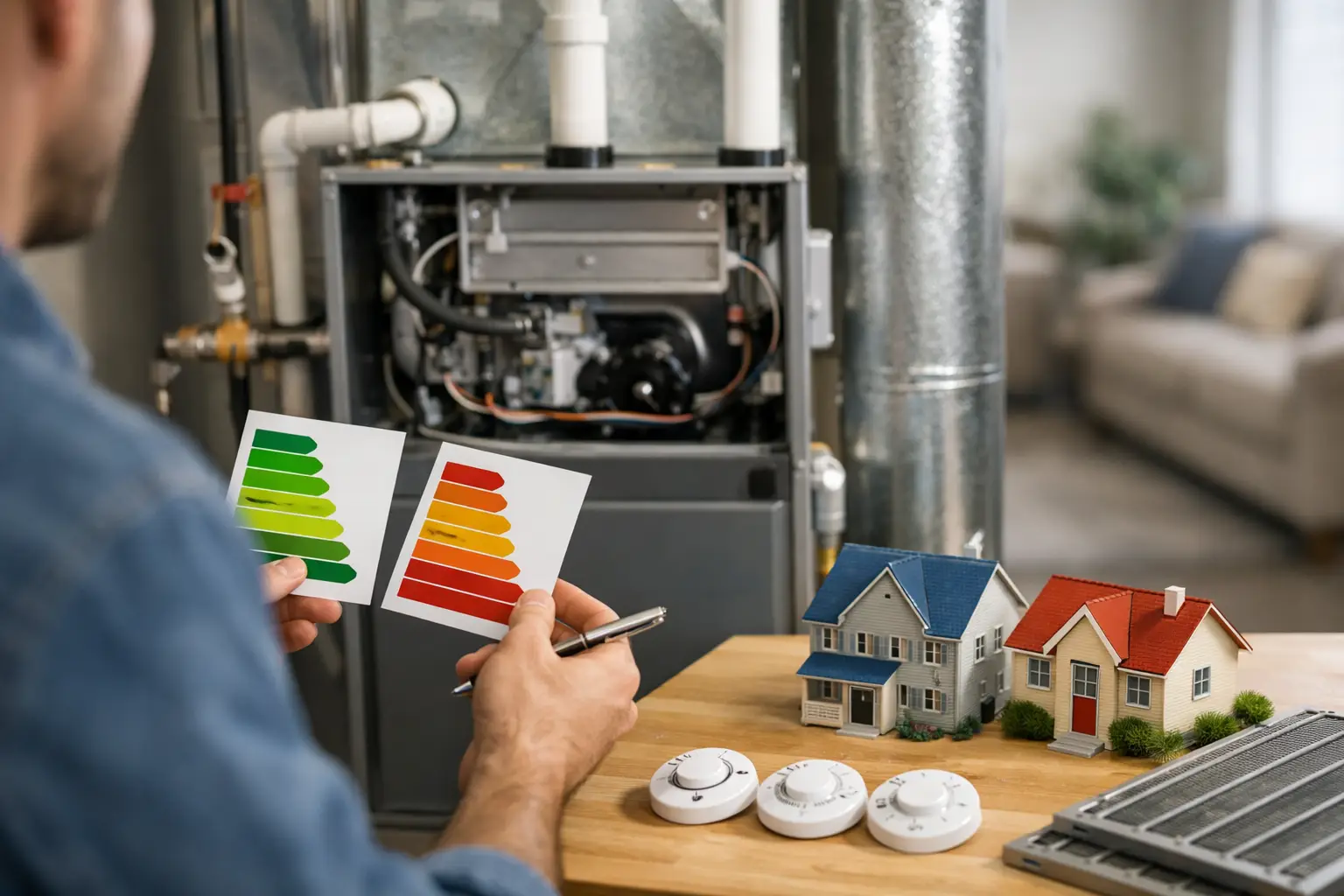
A furnace replacement usually becomes urgent at the worst possible time: when your home is cold, your old system is unreliable, and you need answers quickly. Knowing how to choose furnace efficiency before that moment helps you make a decision based on long-term comfort and operating costs, not pressure. The highest efficiency rating is not automatically the best fit for every home. Your climate, fuel use, ductwork, budget, and existing venting all matter.
For homeowners, furnace efficiency comes down to a practical question: how much of the fuel you pay for is actually converted into heat inside your home? A qualified HVAC professional can assess your house and explain the options clearly, but understanding the fundamentals will help you compare estimates with confidence.
Start With the AFUE Rating
Furnace efficiency is measured by Annual Fuel Utilization Efficiency, or AFUE. This percentage estimates how much fuel a furnace converts into usable heat over a typical year. For example, an 80% AFUE furnace turns about 80 cents of every fuel dollar into heat, while the remaining amount is lost through exhaust gases and normal operation.
A 96% AFUE furnace converts about 96 cents of each dollar into heat. That difference may sound modest, but it can add up over many heating seasons, especially in homes with high winter gas use.
Most gas furnaces fall into three broad efficiency ranges:
- Standard-efficiency furnaces are generally around 80% AFUE.
- High-efficiency furnaces are commonly 90% to 96% AFUE.
- Premium high-efficiency models may reach 97% AFUE or higher.
AFUE is a valuable comparison tool, but it does not predict your exact bill. Thermostat settings, insulation, air leaks, duct condition, home size, and how often the furnace runs all affect real-world energy use.
Compare the Upfront Cost With Long-Term Savings
A higher-AFUE furnace typically costs more to purchase and install. It may also require changes to venting, condensate drainage, electrical connections, or controls. The right decision is not simply choosing the most efficient unit on the spec sheet. It is deciding whether the additional installation cost makes sense for your home and how long you expect to stay there.
If you plan to remain in your home for many years, a high-efficiency furnace can be a strong investment. Lower fuel consumption can reduce monthly heating costs, and newer equipment may improve comfort and reliability compared with an aging unit.
If you expect to move soon, the calculation can be different. A properly sized, dependable mid-range system may meet your needs without paying for upgrades that may take longer to recover through energy savings. That said, a modern high-efficiency system can still be an attractive feature for future buyers.
Ask for a clear comparison between two suitable options, not every furnace available. An estimate should show the installed price, AFUE rating, expected installation requirements, warranty coverage, and any available rebate or incentive. This makes it easier to see the real difference in value.
Consider Your Climate and Fuel Costs
Local weather shapes furnace performance and savings. In areas with long, cold winters, the jump from 80% to 95% or higher AFUE can have a more noticeable impact on seasonal fuel use. In milder winter climates, the payback period may be longer because the furnace operates fewer hours each year.
Fuel rates matter just as much. When natural gas costs rise, greater efficiency becomes more valuable. Your past utility bills can give an HVAC contractor useful information, particularly when compared with your home’s size, insulation level, and the age of your existing furnace.
Do not rely on a simple online savings calculator alone. These tools often assume average weather, fuel pricing, and operating habits that may not reflect your household. A home with poor attic insulation or major duct leaks can lose much of the benefit of a high-efficiency furnace until those issues are addressed.
Understand What High-Efficiency Installation Requires
High-efficiency gas furnaces are also called condensing furnaces. They capture additional heat from exhaust gases, which is how they achieve AFUE ratings above 90%. Because the exhaust is cooler, these systems often vent through approved plastic piping rather than a conventional metal chimney.
This is a benefit, but it also means installation details matter. The contractor must plan the intake and exhaust piping correctly, provide a proper condensate drain, and confirm that the chosen furnace works with your home’s layout. A low installation price is not a bargain if venting, drainage, or commissioning is handled poorly.
An 80% furnace generally uses a metal flue and may be simpler to install when a suitable chimney or vent already exists. In some homes, that lower installation complexity can narrow the financial advantage of moving to a very high-AFUE model. In other homes, replacing an old venting system makes high-efficiency equipment the more sensible path.
This is why an in-home assessment matters. The equipment and the installation are one comfort system, not two separate purchases.
Do Not Confuse Efficiency With Furnace Size
A furnace can have an excellent AFUE rating and still waste energy if it is oversized. An oversized unit heats the home too quickly, shuts off, and starts again repeatedly. This short cycling can create uneven temperatures, increase wear on components, and reduce the comfort you expected from a new system.
A professional should perform a heat-loss calculation rather than selecting capacity based only on the size of your old furnace or the square footage of the house. Insulation, windows, ceiling height, air leakage, sun exposure, and room layout all affect the heating load.
Right-sizing is especially important when you have improved insulation, replaced windows, finished a basement, or made additions since the prior furnace was installed. Your old system may no longer represent what your home needs.
Look Beyond AFUE for Better Daily Comfort
AFUE measures fuel efficiency, but it does not tell the full comfort story. The furnace’s blower motor, heating stages, and controls can make a meaningful difference in how your home feels.
A single-stage furnace runs at full output whenever it turns on. It is often a practical, lower-cost choice for smaller budgets or straightforward heating needs. A two-stage furnace can operate at a lower output during milder weather and increase capacity when temperatures drop. This can support steadier indoor temperatures and quieter operation.
Modulating furnaces make smaller, ongoing adjustments to match heating demand. Paired with compatible controls and properly designed ductwork, they can offer very consistent comfort. They also cost more, so the value depends on your priorities, your home’s layout, and how sensitive your household is to temperature swings.
Variable-speed blower motors are another feature worth considering. They can move air more gradually, reduce noise, improve circulation, and support better airflow with air conditioning or a heat pump. These features do not replace good insulation or ductwork, but they can make a well-designed system feel noticeably better.
Check Ductwork, Airflow, and Ventilation First
A new furnace cannot fully solve comfort problems caused by leaking, undersized, or poorly balanced ducts. Rooms that are always cold, noisy registers, weak airflow, and large temperature differences between floors are signs that the distribution system needs attention.
Before choosing a furnace, ask whether the installer will evaluate static pressure, duct condition, filter access, return-air capacity, and airflow to key rooms. This is especially important when upgrading to a variable-speed or two-stage system. The equipment must be matched to the duct system for the best results.
Combustion safety also deserves attention. A gas furnace should be installed with proper venting, gas connections, drainage, and carbon monoxide protection. Licensed installation and thorough startup testing protect both efficiency and household safety.
Factor in Rebates, Warranties, and Maintenance
Available rebates can change the economics of a high-efficiency upgrade. Incentives often have specific requirements related to AFUE ratings, model eligibility, installation standards, and documentation. Confirm the requirements before buying, not after the furnace is installed.
Warranty terms should be compared carefully as well. Look at both the parts warranty and heat exchanger coverage, then ask what registration is required and what labor coverage is included. A long parts warranty is helpful, but regular maintenance remains essential for reliable performance.
Annual service helps keep filters, burners, condensate lines, electrical connections, and safety controls in proper condition. It also gives you a chance to catch small concerns before they become a no-heat emergency.
How to Choose Furnace Efficiency With Confidence
The best furnace is the one that is properly sized, correctly installed, affordable to operate, and matched to your home’s real heating needs. For many homeowners, a high-efficiency furnace offers worthwhile energy savings and better comfort. For others, installation constraints, budget, or expected length of ownership can make a different option more practical.
A detailed in-home assessment gives you a stronger basis for the decision than a quick quote over the phone. Pro West Heating & Air Conditioning can evaluate your current system, explain efficiency options without unnecessary jargon, and help you weigh available rebates against your long-term comfort goals. A furnace should do more than turn on when it is cold. It should give your household dependable warmth and predictable energy use for years ahead.