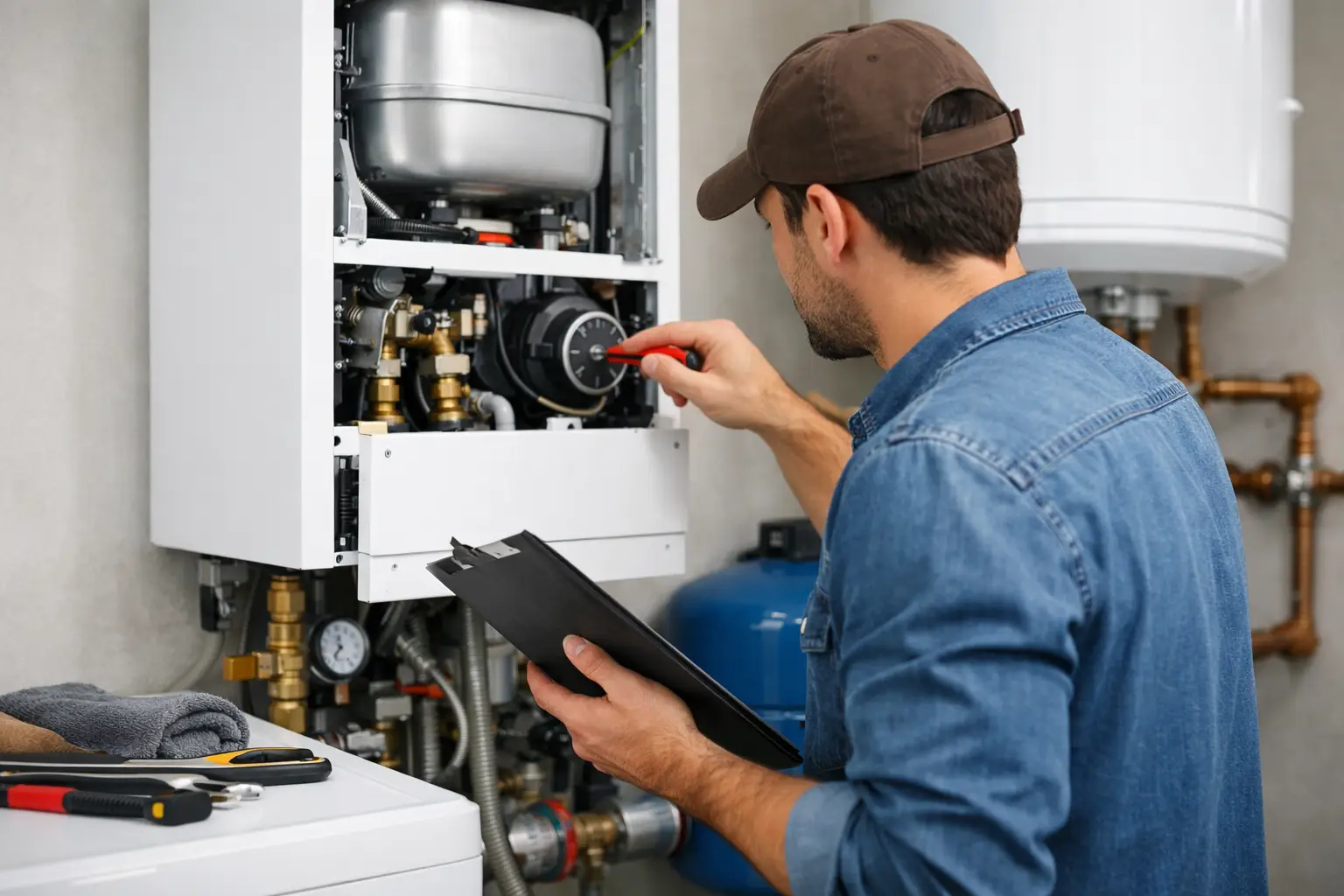
A boiler rarely fails at a convenient time. It tends to happen on the first cold morning of the season, during a family gathering, or when your home needs dependable hot water most. This homeowner guide to boiler maintenance helps you prevent avoidable breakdowns, keep heating costs under control, and recognize when a small issue needs professional attention.
For homeowners with hydronic heating, your boiler is responsible for more than warmth. It supports consistent comfort through radiators, baseboards, in-floor heating, or a combination of systems. A little routine awareness can help protect that investment, but boiler maintenance also has clear safety limits. Anything involving gas, combustion, electrical components, pressure relief devices, or internal repairs belongs with a licensed heating professional.
What Homeowners Can Safely Check
The best maintenance routine is simple and consistent. You do not need to take apart your boiler to notice changes in performance. Start by looking and listening while the system is running normally.
Check the area around the boiler every month during heating season. It should be clean, dry, and clear of boxes, paint, laundry supplies, and other stored items. A boiler room is not extra storage space. Keeping clearance around the equipment improves airflow, makes service easier, and reduces fire risks.
Look for water on the floor, corrosion on exposed piping, or dampness around valves and fittings. A small drip may not stop your heat today, but it can lead to pressure problems, damaged components, and higher repair costs if ignored. Also pay attention to unusual sounds. Gentle operating noise is normal, but banging, whistling, rumbling, repeated clicking, or gurgling from radiators should be checked.
Your thermostat deserves attention too. Confirm that it responds correctly when you raise or lower the setting. If your home has zones, test each zone occasionally. A thermostat that is inaccurate, poorly placed, or programmed inefficiently can make a healthy boiler seem like it is underperforming.
A Homeowner Guide to Boiler Maintenance by Season
Before the heating season
Schedule professional maintenance before you rely on the boiler every day. Early fall is usually ideal because it gives you time to address wear before colder weather arrives. A technician can inspect the burner, combustion process, venting, heat exchanger, controls, circulator pumps, expansion tank, safety devices, and system pressure.
Before that visit, make a few notes about how your system performed last season. Did certain rooms stay cooler than others? Did the boiler cycle on and off more often? Did you hear new noises or notice higher utility bills? Specific details help a technician diagnose issues that may not be obvious during a short appointment.
If you have radiators or baseboard heating, walk through the home and make sure furniture, curtains, and rugs are not blocking heat delivery. For radiant floor systems, pay attention to rooms that are slow to warm or feel noticeably different from nearby areas. Uneven heating may be caused by airflow, zoning, circulation, trapped air, controls, or insulation. The cause depends on the system, so avoid assuming the boiler itself is always the problem.
During the heating season
Check the boiler pressure gauge periodically, following the normal range identified in your owner’s manual or by your heating professional. Pressure that is persistently too low or too high is a reason to call for service. Do not repeatedly add water to the system or adjust unfamiliar valves to make the gauge look normal. That can hide a leak or create a more serious issue.
Pay attention to comfort changes throughout the house. A room that suddenly takes much longer to heat, a radiator that stays cold, or a zone that will not shut off can point to a circulation or control problem. Addressing it early can prevent strain on the boiler and keep energy waste from becoming part of your monthly bill.
Keep exterior intake and exhaust vents clear if your system uses them. Leaves, snow, ice, nests, and landscaping can restrict venting. Check from a safe distance and remove only loose, visible debris. Never alter vent piping, cap openings, or use tools to force out a blockage. Proper venting is essential for safe operation.
After the heating season
When the weather warms, take one more look for leaks, stains, and corrosion. This is also a good time to plan upgrades if your boiler is aging or your comfort has been inconsistent. You have more time to compare options, consider high-efficiency equipment, and ask about available rebate programs instead of making decisions during an emergency.
Warning Signs That Should Not Wait
Some boiler concerns need prompt service rather than a wait-and-see approach. Turn the system off if it is safe to do so, keep people away from the equipment, and contact a qualified professional if you notice any of the following:
- A gas smell, suspected carbon monoxide issue, or a carbon monoxide alarm. Leave the home and contact emergency services or your gas utility according to local safety guidance.
- Water leaking steadily from the boiler, piping, or a relief valve.
- Black soot, scorching, burning smells, or visible damage near the unit.
- A pressure gauge that rises unusually high, drops repeatedly, or triggers a relief discharge.
- No heat or hot water during cold weather, especially in a home with young children, older adults, or vulnerable occupants.
A yellow or lazy flame can also indicate combustion trouble on boilers where the flame is visible. Do not attempt to clean burners or make gas adjustments yourself. Safe combustion requires proper testing equipment and training.
Why Annual Professional Service Pays Off
Annual boiler maintenance is not just a checklist item. It is a chance to catch wear in components that homeowners should not service on their own. A trained technician can test safety controls, confirm proper combustion, inspect venting, clean components where appropriate, evaluate water quality, and identify circulation or efficiency concerns.
The value is often in what does not happen. A maintained boiler is less likely to lose heat unexpectedly, operate with reduced efficiency, or develop a minor leak into a larger repair. Maintenance also gives you a clearer picture of remaining equipment life, which helps you budget for replacement on your schedule.
That said, maintenance cannot make an aging boiler new forever. If repair needs are becoming frequent, your energy bills are climbing, or comfort varies from room to room, it may be time to discuss replacement. High-efficiency boiler options can improve comfort and reduce operating costs, but the right choice depends on your home’s heat load, existing distribution system, venting, and hot water needs. Equipment size and installation quality matter as much as the efficiency rating on the label.
Simple Habits That Support Efficiency
Boiler efficiency is partly about the equipment and partly about the home around it. Set temperatures realistically rather than making large, repeated thermostat adjustments. A programmable or smart thermostat can help, particularly for households with predictable schedules, but it should be set up for hydronic heating. Some systems respond more slowly than forced-air equipment, so aggressive setbacks are not always the best fit.
Seal obvious drafts around doors and windows, use window coverings strategically, and keep heat emitters unobstructed. If certain rooms are consistently uncomfortable, ask a professional to assess zoning, balancing, controls, or insulation before raising the thermostat for the entire house.
For reliable service, Pro West Heating & Air Conditioning can inspect boiler performance, diagnose heating concerns, and help homeowners evaluate efficient replacement options when repair is no longer the practical choice.
Your boiler works quietly in the background until it does not. A clean equipment area, a watchful eye for changes, working carbon monoxide alarms, and yearly professional service give your home the best chance of staying warm, efficient, and ready when cold weather returns.