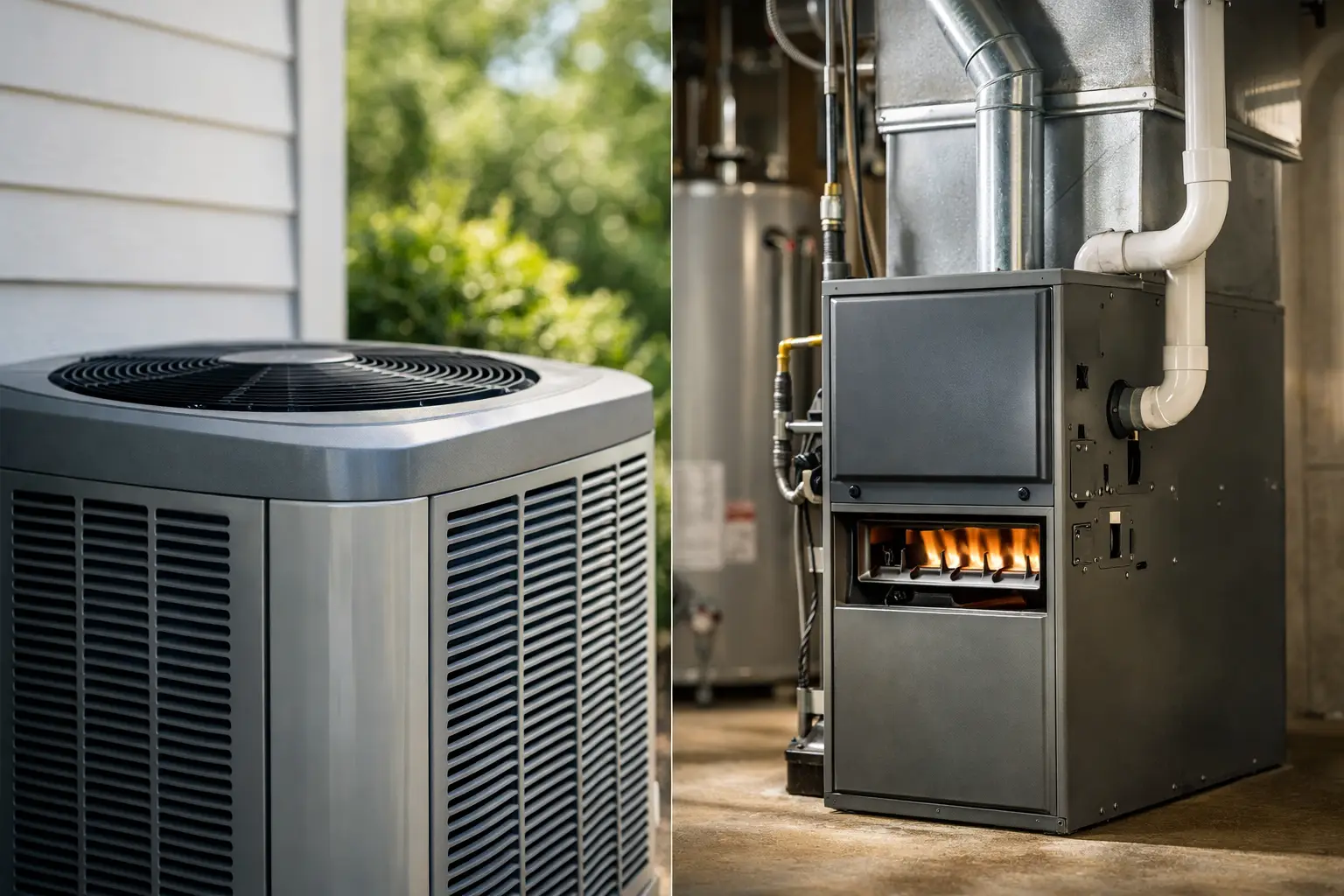
A heating replacement is not just about getting the house warm again. It affects your monthly utility costs, summer comfort, indoor air quality, and long-term plans for the home. When comparing a heat pump vs furnace, the best choice depends on your existing equipment, energy source, budget, and how you want your home to feel throughout the year.
For many Lower Mainland homeowners, a heat pump is an excellent all-season upgrade. For others, a high-efficiency gas furnace remains the most practical and dependable solution. The right answer starts with a clear look at how each system works and where it performs best.
Heat Pump vs Furnace: The Core Difference
A furnace creates heat by burning natural gas, propane, or using electricity. Most homes with gas furnaces use natural gas. The furnace warms air and sends it through ductwork to each room. It is a dedicated heating system, so a separate air conditioner is needed for cooling.
A heat pump does not generate heat in the same way. It moves heat from one place to another. During winter, it draws available heat from outdoor air and transfers it indoors. During summer, it reverses that process to remove heat from your home, operating much like an air conditioner.
That difference matters. A furnace gives you powerful, direct heat when temperatures drop. A heat pump provides both heating and cooling in one system, using electricity to move heat rather than relying entirely on fuel combustion.
When a Heat Pump Makes Sense
A heat pump can be a strong choice for homeowners replacing both their heating and cooling equipment. Instead of installing a new furnace and a separate central air conditioner, you can install one system that handles both jobs.
Year-round comfort from one system
In Metro Vancouver and the Fraser Valley, summers can bring uncomfortable heat, while winters are generally moderate and damp. A properly sized heat pump gives you efficient heating through much of the winter and reliable cooling during warm weather. It can also help remove humidity in summer, which makes indoor spaces feel more comfortable even before temperatures become extreme.
Modern cold-climate heat pumps perform far better in low temperatures than older models. They can continue delivering useful heat well below freezing. However, capacity and efficiency can decline as outdoor temperatures fall, so the system must be selected carefully for the home and local climate.
Lower energy use in the right conditions
Because a heat pump transfers heat instead of producing it, it can deliver more heating energy than the electricity it consumes. That efficiency can reduce operating costs compared with electric resistance heating and may offer savings compared with other options, depending on local utility rates and the equipment being replaced.
The savings are not automatic. Your insulation levels, air leakage, thermostat settings, electricity costs, and the efficiency of your old system all affect the final result. An in-home assessment is the right time to look at those factors instead of relying on a generic savings estimate.
A path away from fossil fuel heating
Homeowners who want to reduce direct natural gas use often consider a heat pump first. It is an electric system and does not burn fuel inside the home. For families planning a long-term efficiency upgrade, that can be an important benefit.
Available rebate programs may also improve the value of a qualifying heat pump installation. Requirements, funding, and equipment eligibility can change, so it is wise to verify current options before making a final equipment decision.
When a Furnace Is the Better Choice
A high-efficiency furnace is still a proven, practical heating solution. It is especially appealing when your home already has a well-functioning duct system, natural gas service, and a separate air conditioner that does not need replacement.
Fast, dependable heat in cold weather
Gas furnaces are designed to provide consistent heat even during the coldest part of winter. They are not dependent on outdoor air temperature to capture heat. If your household prefers strong, fast heat from supply vents, a furnace can deliver the response you expect.
This is also worth considering in homes with high heat loss. Older homes, drafty additions, large open spaces, and properties with limited insulation may need more heating capacity than a heat pump alone can comfortably provide during a cold snap. Improving the home envelope may change that calculation, but it should be part of the conversation.
Lower replacement cost when cooling stays in place
If your furnace has failed but your central air conditioner is relatively new and in good condition, replacing only the furnace may be the most cost-effective move. A heat pump conversion can require replacing the outdoor air-conditioning unit and indoor coil as well, increasing the initial investment.
A new high-efficiency furnace can also work with your existing air conditioner, thermostat, and ductwork when those components are compatible. That makes the project simpler in many homes.
Reliable option for gas-equipped homes
For homeowners with access to natural gas, a furnace can offer predictable winter performance. Modern models with variable-speed blowers and two-stage or modulating operation can improve comfort compared with older single-stage equipment. These features can reduce temperature swings, improve airflow, and help the system run more quietly.
Upfront Cost and Long-Term Value
The purchase price is only one part of a heating decision. Heat pump installations often cost more upfront than a straightforward furnace replacement, particularly if both heating and cooling equipment must be replaced. Electrical upgrades, duct modifications, line-set work, or a new thermostat can also affect the scope.
But a heat pump may eliminate the need to purchase a separate air conditioner. It can also provide value through lower energy use, potential rebates, and year-round operation. The long-term value is strongest when the system is properly sized, installed, and maintained.
A furnace may have a more accessible upfront cost when it is a like-for-like replacement. Still, remember to account for future cooling needs. If the air conditioner is also nearing the end of its service life, replacing the furnace alone may only delay a larger decision.
Comfort, Maintenance, and Backup Heating
Neither system will perform well if it is oversized, undersized, or installed without attention to airflow. Proper sizing requires more than matching the capacity of the old unit. A qualified contractor should consider square footage, insulation, windows, duct design, orientation, occupancy, and heat loss.
Heat pumps need regular filter changes, clean coils, clear outdoor airflow, and professional maintenance. Furnaces also need filter changes and annual service, including inspection of combustion components, venting, safety controls, and the heat exchanger. Routine maintenance protects efficiency and helps catch smaller issues before they become an emergency repair.
Some homeowners choose a dual-fuel system for added flexibility. This setup pairs an electric heat pump with a gas furnace. The heat pump handles heating during milder weather, while the furnace takes over when temperatures reach a set point or when additional capacity is needed. It can be an excellent option for households that want efficient cooling and electric heating without giving up gas-furnace backup.
How to Choose for Your Home
Start with the condition of your current equipment. If both your furnace and air conditioner are aging, a heat pump deserves serious consideration. If only the furnace has failed and the air conditioner still has years of dependable service ahead, a high-efficiency furnace may be the more sensible investment.
Next, consider how you use your home. Families that struggle with hot bedrooms, humid summers, or uneven temperatures can benefit from a heat pump, zoning improvements, or ductwork adjustments. Homeowners focused on strong cold-weather output, gas availability, or a limited replacement budget may lean toward a furnace.
Finally, look beyond the equipment label. The quality of the installation, duct condition, thermostat setup, maintenance plan, and available rebates all influence your result. Pro West Heating & Air Conditioning can assess the full system, explain the trade-offs clearly, and recommend equipment that fits your comfort goals rather than forcing a one-size-fits-all answer.
The best heating system is the one that keeps your family comfortable without creating surprises in the coldest week of winter or the hottest week of summer. A professional home assessment turns that choice from a guess into a plan.