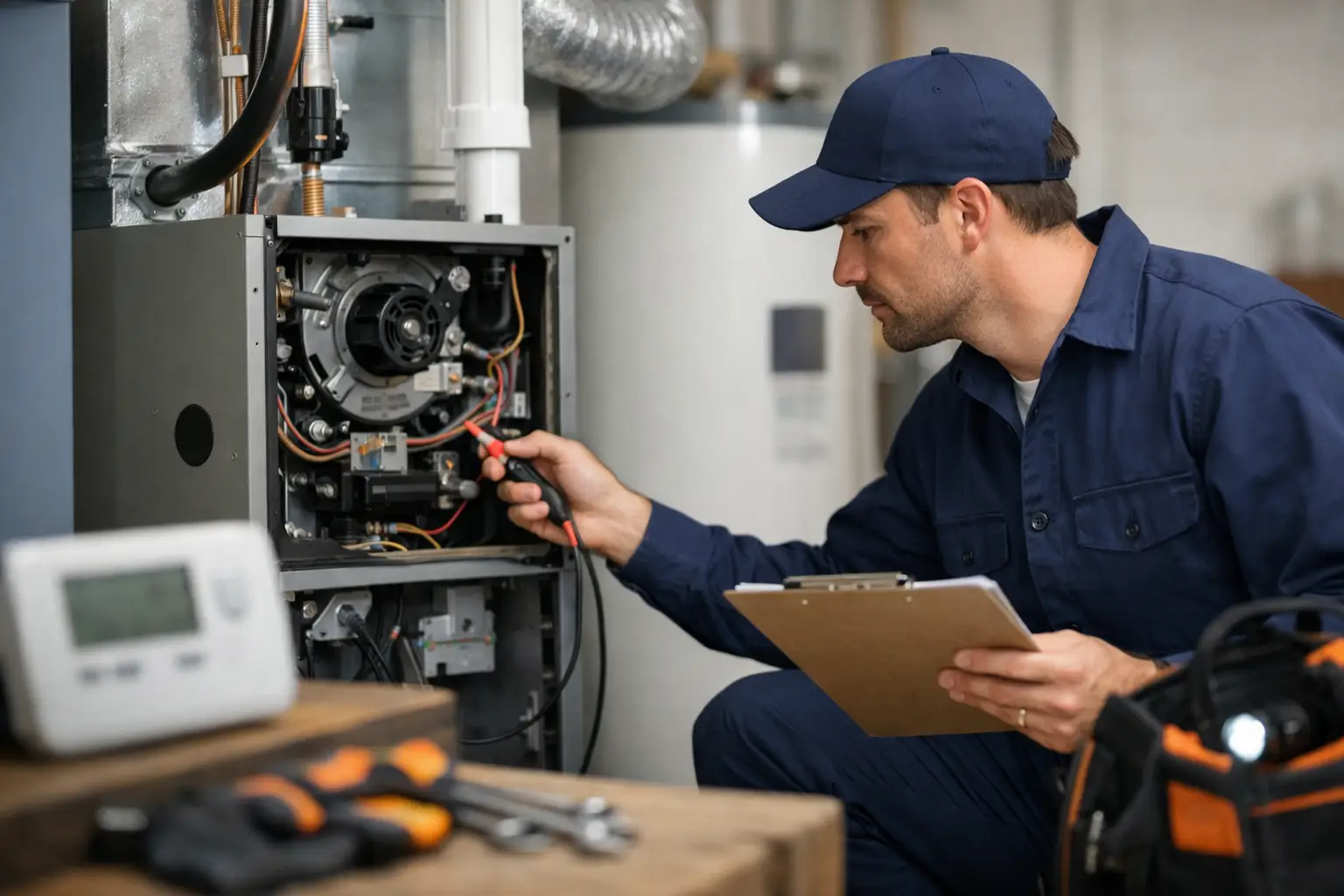
A furnace that quits on a cold night is more than an inconvenience. Rooms cool down quickly, pipes can be at risk in severe weather, and a small issue can become a costly repair if it is ignored. When you search for furnace repair near me, you need a local professional who can identify the problem, explain the options clearly, and restore safe heat without delay.
Before scheduling service, there are a few safe checks homeowners can make. Just as important, you need to know when to stop troubleshooting and call for qualified furnace repair.
Start With the Simple, Safe Checks
Many no-heat calls turn out to be a thermostat setting, a tripped breaker, or a restricted air filter. Checking these basics can save time, but do not remove furnace panels, handle wiring, or attempt work on gas components.
First, confirm that your thermostat is set to Heat and the temperature is several degrees above the current room temperature. If the thermostat uses batteries, replace them. Then check that the furnace switch is on and inspect your electrical panel for a tripped furnace breaker. If a breaker trips again after being reset once, leave it alone and schedule service.
Next, look at the air filter. A clogged filter can restrict airflow, cause overheating, and force the furnace to shut down on a safety limit. Replace a visibly dirty filter with the correct size and type for your system. Also make sure supply registers and return-air grilles are open and not blocked by furniture, rugs, or storage.
For a high-efficiency furnace, check the exterior intake and exhaust vents for snow, ice, leaves, or debris. These pipes need clear airflow to operate safely. Clear only loose, visible material around the exterior opening. If ice keeps forming, the vent is damaged, or you are unsure which pipe is which, call a technician.
When Furnace Repair Is an Urgent Call
Some furnace symptoms should never wait for a convenient appointment. Turn the system off if you smell gas, suspect a carbon monoxide issue, or see signs of electrical damage. Leave the home and contact your gas utility or emergency services if there is a strong gas odor or anyone feels dizzy, nauseated, confused, or unusually tired.
A carbon monoxide detector is an essential part of home safety, particularly in homes with gas furnaces, boilers, fireplaces, or water heaters. If the alarm sounds, get everyone outside immediately and follow local emergency guidance. Do not re-enter to investigate the source.
You should also arrange prompt furnace service if the system is blowing cold air, repeatedly turning on and off, making loud banging or grinding sounds, leaking water, or failing to keep the home warm. These issues can have different causes, from a failing igniter or blower motor to a drainage issue or a problem with the heat exchanger. Accurate diagnosis matters because the right repair depends on the specific fault.
What a Furnace Repair Visit Should Include
A professional repair visit should be more than replacing a part and leaving. A qualified technician should inspect the system, identify the reason for the failure, and explain the recommended repair in straightforward terms.
That typically starts with checking thermostat operation, electrical connections, safety controls, ignition components, airflow, filter condition, and the furnace’s heating cycle. For gas equipment, the technician should also assess combustion-related components and check for conditions that could affect safe operation.
Once the issue is identified, ask what failed, why it may have failed, and whether another component contributed to the problem. For example, a damaged igniter may be a one-time failure. But if a furnace is overheating because of chronic airflow restrictions, simply replacing the failed part without correcting the airflow issue may lead to another service call.
A dependable contractor should provide clear pricing before major work begins and explain whether repair is the sensible choice for your furnace’s age and condition. The goal is not to push replacement when a repair will reliably restore comfort. It is to help you avoid paying repeatedly for an aging system that is becoming unreliable.
Furnace Repair Near Me: How to Choose a Provider
The closest listing is not always the best choice, especially when your home has no heat. Look for a residential HVAC company that services your furnace brand, offers emergency support when needed, and can explain its recommendations without pressure.
Experience with different system types also matters. Homes across Metro Vancouver and the Fraser Valley can have conventional gas furnaces, high-efficiency models, combination heating systems, boilers, heat pumps, or equipment connected to smart thermostats and zoning controls. A technician should understand how the heating system works within the rest of your home’s comfort setup.
When comparing providers, ask about availability, diagnostic fees, repair warranties, and whether the company can source common parts. It is also reasonable to ask whether the technician is licensed and whether the company handles both repairs and replacements. A contractor that can support the full life of your heating system is better positioned to give practical advice rather than a one-size-fits-all answer.
For homeowners who need responsive help with heating, cooling, hot water, and energy-efficient upgrades, Pro West Heating & Air Conditioning provides residential service with 24/7 emergency availability.
Repair or Replace? The Decision Depends on More Than Age
There is no single furnace age at which replacement automatically makes sense. Many well-maintained systems can operate dependably for years, while neglected systems may develop problems earlier. The right decision comes down to repair cost, reliability, efficiency, safety, and your plans for the home.
Repair is often the practical path when the problem is isolated, parts are readily available, and the furnace has otherwise heated the home reliably. A newer system with a failed capacitor, igniter, pressure switch, or thermostat issue may be an excellent repair candidate.
Replacement deserves a closer look when repairs are becoming frequent, the system has trouble maintaining heat, parts are obsolete, or the furnace is inefficient enough to drive up utility costs. A serious safety-related concern, including a compromised heat exchanger, can also change the decision quickly.
A high-efficiency furnace can reduce energy use compared with an older, lower-efficiency model, but savings depend on the home’s insulation, ductwork, thermostat settings, and how the equipment is sized. An oversized or poorly installed furnace can short cycle and waste energy, even if it has an impressive efficiency rating. That is why an in-home assessment is more useful than choosing equipment based on price alone.
Homeowners considering an upgrade should also ask about available rebates and eligibility requirements. Rebate programs can change, and qualifying equipment, installation details, and application timing may affect the savings available.
Prevent the Next No-Heat Emergency
The best time to think about furnace repair is before the first cold stretch of the season. Annual maintenance gives a technician the opportunity to clean and inspect key components, test operation, verify airflow, and identify wear before it becomes a breakdown.
Between maintenance visits, replace filters on schedule, keep vents clear, listen for new sounds, and pay attention to changes in heating performance. A furnace that runs longer than usual, leaves some rooms cold, or cycles frequently is giving you useful information. Addressing those changes early is usually easier than waiting for a complete shutdown.
If your furnace is not heating safely or reliably, do not spend the night hoping it starts again. Arrange professional service, get a clear diagnosis, and make the repair or replacement decision with your home’s comfort, safety, and long-term costs in mind.