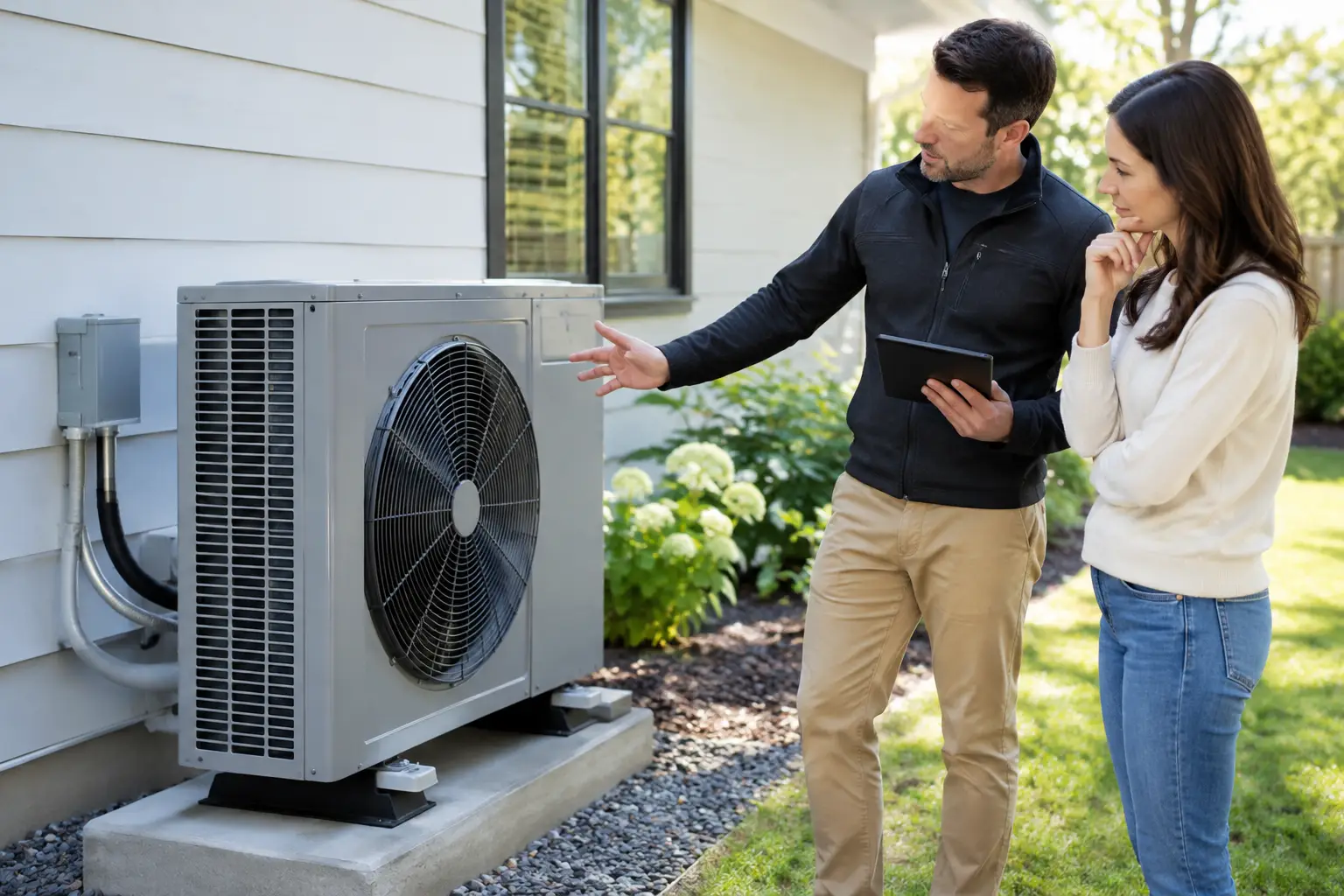
A heat pump retrofit is not simply a matter of replacing a furnace with new equipment. It is a home comfort upgrade that needs to account for your existing heating system, ductwork, electrical capacity, insulation, and the way your family uses each room. Planned properly, it can provide efficient heating and cooling from one system while reducing reliance on fossil fuels.
For homeowners in the Lower Mainland, the appeal is clear. Our moderate climate is well suited to modern cold-climate heat pumps, which can deliver dependable warmth through much of the winter and efficient air conditioning during warm summer days. The best results, however, come from matching the system to the home rather than choosing equipment based on size, price, or a neighbor’s installation.
What Is a Heat Pump Retrofit?
A heat pump retrofit adds or replaces heating and cooling equipment in an existing home. Unlike a new build, where the HVAC system is designed before the walls are closed, a retrofit works within the realities of an occupied home. You may have a gas furnace, boiler, baseboard heaters, an older air conditioner, limited electrical service, or ductwork that was never designed for cooling.
An air-source heat pump moves heat rather than creating it through combustion. In heating mode, it draws available heat from outdoor air and transfers it indoors. In cooling mode, it reverses the process, moving heat out of your home. That dual-purpose operation is why a heat pump can replace both a central air conditioner and some or all of a conventional heating system.
A retrofit can take several forms. Some homes are well suited to a fully ducted central heat pump. Others benefit from ductless wall-mounted units, especially when there is no existing ductwork. Many homeowners choose a dual-fuel approach, pairing a heat pump with an existing gas furnace for backup heating during colder conditions. The right path depends on comfort goals, budget, and the condition of the equipment already in place.
Start With the Home, Not the Equipment
The most common retrofit mistake is sizing a new system according to the output of the old furnace. Older systems are often oversized, particularly in homes that have received new windows, insulation, air sealing, or other efficiency improvements. An oversized heat pump may cycle on and off too often, reduce comfort, and fail to manage humidity effectively during cooling season.
A professional assessment should consider the home’s heat loss, square footage, insulation levels, windows, air leakage, ceiling height, sun exposure, and room layout. It should also account for the local climate and your household’s comfort preferences. A family that wants even temperatures in every bedroom has different needs than a homeowner who primarily wants to cool the main living area.
Ductwork deserves the same attention. Existing ducts may be undersized, leaky, poorly insulated, or unevenly distributed. A heat pump can only perform as well as the air delivery system connected to it. In some cases, duct improvements are the most valuable part of the project. In others, a ductless or mixed ducted and ductless design offers better comfort without extensive renovation.
Electrical Capacity May Need an Upgrade
Heat pumps run on electricity, so the electrical panel must have enough capacity for the new equipment. This does not automatically mean every home needs a panel upgrade, but it needs to be checked early. Homes adding other electric loads, such as EV charging, induction cooking, or electric water heating, may need a more detailed load calculation.
Addressing electrical requirements before installation helps avoid costly surprises. It also gives homeowners a clearer picture of the complete project budget rather than focusing only on the price of the outdoor unit.
Choosing Between Ducted, Ductless, and Dual-Fuel Systems
A ducted central heat pump is often the most familiar option for homes with a forced-air furnace. The indoor coil and air handler work with the existing duct network to deliver heating and cooling throughout the house. If the furnace is in good condition and compatible with the design, it may remain in place as part of a dual-fuel system.
Ductless mini-split systems use one outdoor unit connected to one or more indoor heads. They are a practical solution for homes with radiant heat, boilers, baseboards, additions, converted garages, or rooms that stay uncomfortable despite the main system. Because each indoor unit can be controlled separately, ductless systems can also support better zoning.
Dual-fuel systems provide another useful option. The heat pump handles heating during milder weather, while the gas furnace takes over when outdoor temperatures reach a preset point or when additional capacity is needed. This approach can preserve the reliability of a familiar heating source while lowering gas use and adding air conditioning.
There is no universal winner. A full heat pump replacement may make sense when a furnace is near the end of its service life. Keeping the furnace may be more practical when it is newer, properly sized, and in good condition. A dependable contractor should explain both options, including operating costs, equipment life, and the work required to make each one successful.
Comfort Improvements You Can Expect
A well-designed retrofit does more than lower energy consumption. It can make daily life noticeably more comfortable. Heat pumps typically provide longer, gentler heating cycles than conventional furnaces, helping reduce dramatic temperature swings. During cooling season, they can improve humidity control and make bedrooms, upper floors, and sunny rooms more livable.
Comfort still depends on system design. A single ductless head in a main living room will not heat or cool every closed bedroom equally. A central system with poor return-air pathways may struggle to balance temperatures. Zoning, thermostat placement, duct modifications, and indoor-unit locations all affect the final result.
This is why the lowest equipment quote is not always the lowest-cost choice. A less expensive system that does not reach the rooms you use, creates noise concerns, or requires frequent auxiliary heat can become a frustrating investment.
Plan Around Rebates and Total Project Cost
Available rebates can make an energy-efficient heat pump upgrade more affordable, but programs change and eligibility requirements can be specific. Equipment efficiency ratings, installation details, contractor participation, fuel-switching requirements, and documentation may all affect the incentive amount.
Before committing to a system, ask for a clear breakdown of equipment, labor, electrical work, ductwork, controls, permits, and any recommended efficiency improvements. Homeowners should also understand whether rebate approval or pre-qualification is needed before work begins. Missing a program requirement can mean losing savings that were included in the original budget.
At Pro West Heating & Air Conditioning, the goal is to help homeowners look beyond the sticker price. A thoughtful estimate considers how the system will operate in your actual home, what upgrades are necessary, and which rebate opportunities may apply.
Prepare Your Home for Better Heat Pump Performance
A heat pump can operate in a wide range of homes, but improving the building envelope often strengthens the results. Air leaks around doors, attic hatches, and penetrations can make a home feel drafty regardless of the heating equipment. Inadequate attic insulation can increase heat loss and force the system to work harder.
You do not need to renovate the entire home before installing a heat pump. Still, addressing obvious drafts, maintaining clean filters, keeping outdoor equipment clear of leaves and snow, and ensuring supply vents are not blocked will support performance. If major insulation or window work is planned soon, it is worth discussing the timing with your HVAC professional so the new system is not oversized for the improved home.
Questions to Ask Before You Approve a Retrofit
A contractor should be able to explain why a particular system size and layout suits your home. Ask whether a heat-loss calculation will be completed, whether your ducts need testing or modification, and how the system will perform in the rooms that matter most.
Also ask how backup heat will work, what electrical changes may be required, and what maintenance the equipment needs. Clarify warranty coverage, expected noise levels, thermostat options, and whether your chosen equipment qualifies for current rebates. Straight answers to these questions are a strong sign that the project is being designed for long-term comfort, not just a quick installation.
The right heat pump retrofit should leave you with more than new equipment outside your home. It should give you steady indoor comfort, practical control over operating costs, and confidence that your heating and cooling system is ready for the seasons ahead.