A portable AC can make a bedroom more bearable during a heat wave, but it is rarely the best answer for a home that overheats every summer. When comparing ductless versus portable air conditioners, the real question is not simply which unit blows colder air. It is which option can keep your space comfortable without driving up energy use, disrupting daily life, or creating another problem next season.
For homeowners who need fast relief in one room, portable units have a place. For dependable, quiet, long-term cooling across key living areas, a ductless system is usually the stronger investment. The right choice depends on your home, your budget, and how often you need cooling.
Ductless versus portable air conditioners: the key difference
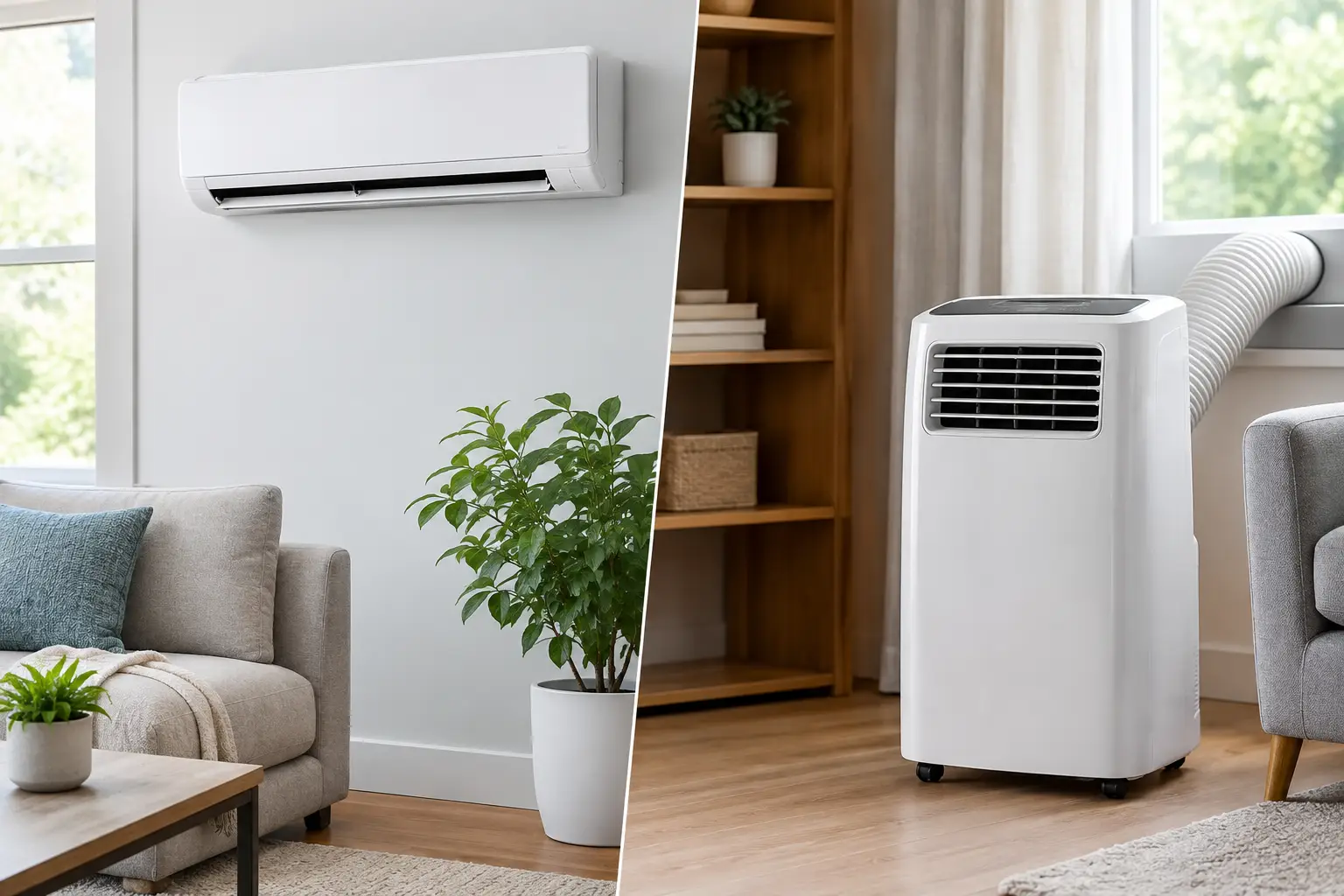
A portable air conditioner is a self-contained appliance that sits inside the room. It removes heat from indoor air and sends that heat outdoors through a hose installed in a window or sliding-door kit. Most models collect moisture in an internal tank, evaporate it through the exhaust, or require a drain hose.
A ductless air conditioner, often called a mini-split, uses an indoor wall-mounted unit connected to an outdoor condenser. Small refrigerant lines pass through an exterior wall, allowing heat to move outside without the large ductwork used by central air systems. Many ductless systems are heat pumps, meaning they can provide efficient heating as well as cooling.
Both options can cool a room. The difference is in how effectively and efficiently they do it. A portable unit is designed for temporary, limited use. A ductless system is designed to become part of your home’s comfort system.
Cooling performance: what actually feels better?
Portable air conditioners work best in smaller, enclosed spaces with a properly fitted window kit. A bedroom, home office, or small apartment room may be a reasonable match. However, performance can drop quickly in sunny rooms, open-concept layouts, rooms with high ceilings, or spaces with frequent foot traffic.
Single-hose portable units have an additional challenge: they exhaust indoor air outside. That can create negative pressure and draw warm outdoor air back into the home through small gaps around doors, windows, and other openings. The unit is cooling the room, but it may also be working against itself.
Dual-hose portable units generally perform better because one hose brings in outdoor air while the other exhausts heat. Even so, they still rely on a window opening, occupy floor space, and are typically less capable than a correctly sized ductless system.
Ductless air conditioners deliver more consistent cooling because the indoor unit and outdoor equipment work together as a dedicated system. The indoor air handler can cool the room quickly, maintain a stable temperature, and distribute air more evenly. With multiple indoor heads, one outdoor unit can serve several rooms or separate zones.
That zoning matters in real homes. You may want the primary bedroom cool at night, the main living space comfortable in the afternoon, and unused rooms set higher to reduce energy use. A ductless system gives you more control than one portable unit moving from room to room.
Efficiency and monthly operating costs
The purchase price of a portable unit is lower, which makes it attractive when cooling is urgent or funds are limited. But the lower upfront cost does not always mean lower cost over time. Portable units typically use more electricity for the amount of cooling they provide, especially when they run for long periods during hot weather.
Ductless systems cost more to install because they require professional design, electrical work, refrigerant lines, outdoor equipment, and proper commissioning. In return, they are highly efficient and can reduce wasted energy by cooling only the rooms you use.
System selection is critical. An oversized unit may cycle on and off too often, while an undersized unit may run continuously and still leave your home uncomfortable. A professional in-home assessment considers square footage, insulation, window exposure, ceiling height, occupancy, and the layout of the space before recommending equipment.
For homeowners considering a ductless heat pump, available rebate programs may help improve the value of an upgrade. Eligibility, equipment requirements, and program availability can change, so it is worth confirming the current options before making a final decision.
Noise, appearance, and day-to-day convenience
Noise is often where the difference becomes obvious after the first few days. A portable air conditioner keeps its compressor and fan inside the room. The sound may be acceptable while watching television, but it can be disruptive in a bedroom, nursery, or home office.
With ductless cooling, the louder compressor is outside. Indoor heads are designed for quiet operation, so you can sleep, work, or hold a conversation without competing with the appliance. For many homeowners, that improvement alone makes the investment worthwhile.
Portable units also take up usable floor space. Their hoses can be awkward, window kits can reduce natural light or access, and the unit may need to be drained or stored once the season changes. If a window does not seal well around the kit, warm air and humidity can still enter.
Ductless indoor units are visible, but they are mounted out of the way and do not block windows. Once installed, they are ready when the weather changes. There is no annual lifting, reassembly, or search for storage space.
Installation: quick setup versus a lasting solution
A portable unit can often be set up the same day. Place it near a window, attach the exhaust hose, seal the window kit, plug it into an appropriate outlet, and let it run. That convenience is useful for renters, short-term situations, or a sudden equipment failure.
Still, portable cooling is not always plug-and-play. Extension cords are not recommended for high-draw air conditioners, and a poor window installation can reduce performance. Some homes also have casement windows, sliding windows, or window layouts that make standard kits difficult to use.
Ductless installation takes more planning, but it is not the same as adding full ductwork. A qualified contractor determines the best location for each indoor head and the outdoor condenser, installs the refrigerant lines, verifies electrical capacity, pressure-tests the system, and confirms that it is operating correctly. Proper installation protects efficiency, reliability, and manufacturer warranty coverage.
For a finished basement, addition, top-floor bedroom, or home without existing ducts, ductless cooling can be especially practical. It delivers targeted comfort without the expense and disruption of opening walls throughout the house for new ductwork.
When a portable air conditioner makes sense
A portable air conditioner can be the right choice if you are renting, need temporary cooling during a repair, only use one small room occasionally, or cannot make changes to the property. It can also serve as a short-term backup during an extreme heat event.
Choose a unit sized for the room rather than relying on the largest model available. Keep doors and windows closed, reduce direct sun with blinds or shades, and seal the window kit carefully. If possible, a dual-hose model is generally a better choice than a single-hose model for sustained use.
The limitation is simple: portable equipment solves a narrow problem. It is not usually the most comfortable or economical way to cool an entire household summer after summer.
When ductless cooling is the better investment
Ductless is often the better fit when your home has recurring hot spots, bedrooms that stay warm at night, no central air, or rooms that are difficult for your current system to cool. It also makes sense when you want both efficient air conditioning and supplemental heating from one system.
A single-zone ductless system can serve one problem area, such as a primary bedroom or family room. A multi-zone system can provide independent comfort in several rooms. This flexibility is useful for families with different temperature preferences and for homeowners looking to avoid cooling empty spaces.
Pro West Heating & Air Conditioning can assess your home’s cooling needs, explain equipment options clearly, and help you plan a system that supports comfort now and efficient operation for years ahead.
The decision comes down to how you live in your home
If you need immediate, temporary relief in one small space, a portable unit may get you through the season. If heat is affecting sleep, work, family comfort, or multiple rooms every year, ductless cooling is the more dependable path.
Before the next hot stretch arrives, think about the rooms you avoid in summer and the times of day your home feels hardest to manage. Those details point to the cooling solution that will make your home feel comfortable when you need it most.