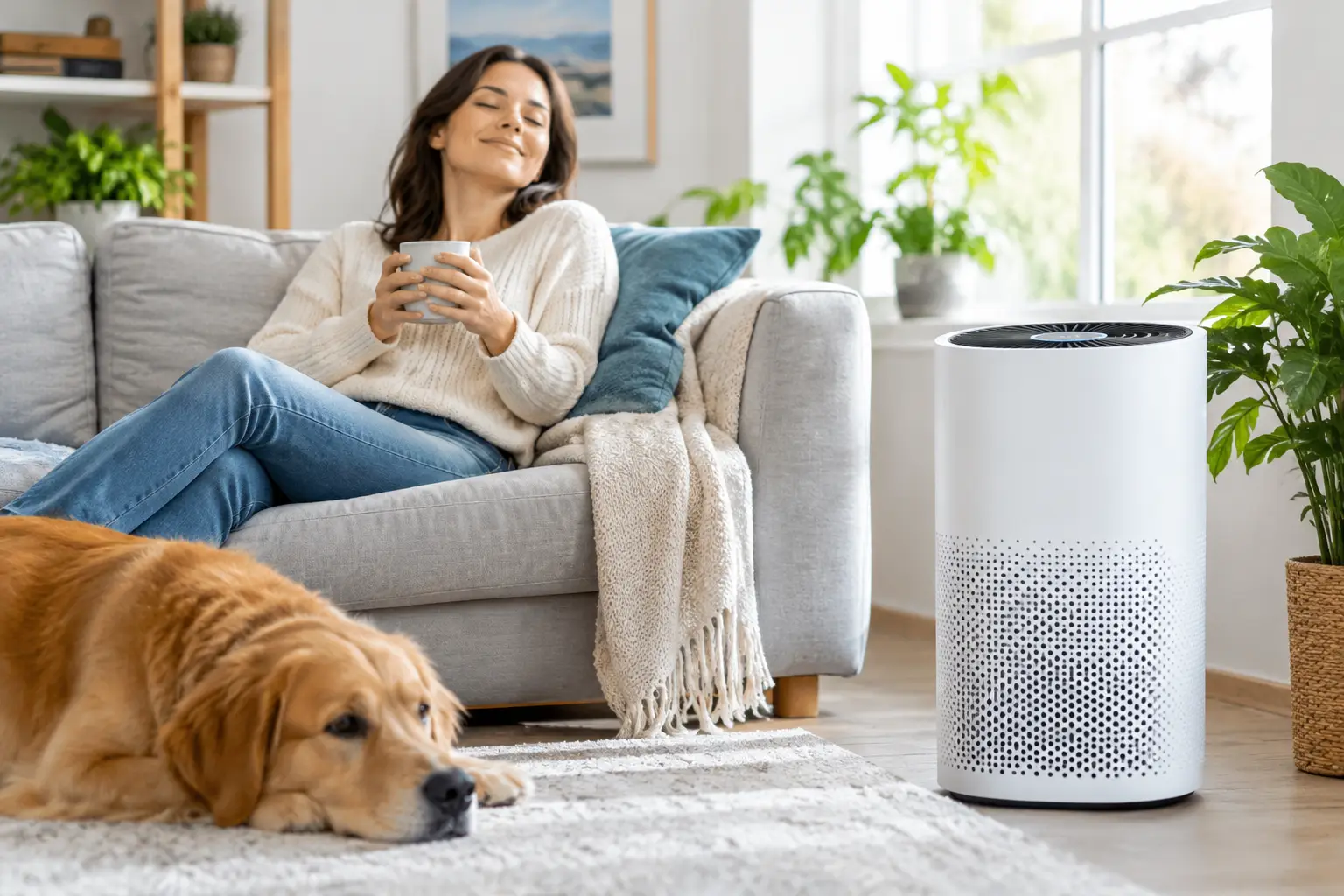
When allergy symptoms follow you indoors, the problem is often more than the pollen on your shoes. Pet dander, dust mites, outdoor smoke, and fine particles can stay suspended in the air or settle into carpets, upholstery, and HVAC filters. The best air purifier for allergies is one that matches the room, captures the particles that trigger your symptoms, and is used consistently enough to make a real difference.
A purifier is not a replacement for cleaning, moisture control, or a properly maintained heating and cooling system. It can, however, be a practical part of a healthier indoor air plan, especially in bedrooms and other rooms where your family spends the most time.
What Makes the Best Air Purifier for Allergies?
Start with particle filtration. For most households, a portable unit with a true HEPA filter is the right baseline. HEPA filters are designed to capture at least 99.97% of particles measuring 0.3 microns under test conditions. That includes many common airborne allergy triggers, such as pollen, pet dander, dust, and mold spores.
The label matters. Look for “true HEPA,” rather than vague marketing terms such as “HEPA-type” or “HEPA-like.” Those descriptions may indicate some level of filtration, but they do not carry the same recognized performance standard.
Allergens are only one part of the indoor air picture. If odors, wildfire smoke, cooking fumes, or volatile organic compounds are also a concern, choose a purifier with a substantial activated carbon filter. A thin carbon sheet can help with mild odors, but it will not perform like a deeper carbon bed. For allergy-focused use, prioritize HEPA performance first, then consider carbon as an added benefit.
Choose for the Room, Not the Box
A purifier that is too small for the room will run continuously without cleaning enough air. Manufacturers often list a maximum room size, but those claims can be based on one air change per hour under ideal conditions. For people with allergies, that is usually not the standard to aim for.
A better target is several air changes per hour in the room where symptoms are most noticeable. In plain terms, the unit should be capable of filtering the room’s air multiple times each hour. Look at the clean air delivery rate, or CADR, when available. A higher CADR generally means the purifier can remove airborne particles more quickly.
Do not choose based solely on the highest advertised square footage. Consider ceiling height, open floor plans, doorways, pets, and whether the unit will be placed in a busy living room or a closed bedroom. A bedroom purifier sized generously for the space is often more useful than one large unit trying to cover an entire multi-level home.
Noise and Operating Costs Are Part of the Decision
The most capable purifier will not help much if it is switched off because it is too loud. Check the sound rating at the speed you expect to use overnight. Many units are quiet on low, but allergy relief may require medium or high speed during peak pollen season, after vacuuming, or when pets are in the room.
Filter replacement cost also deserves attention before you buy. Some units need filter changes every six months, while others may last a year or longer depending on use and air quality. A lower-priced purifier with expensive, hard-to-find replacement filters can become frustrating quickly. Choose a model with clearly listed replacement parts and a maintenance schedule you can realistically follow.
Portable Purifier or Whole-Home Filtration?
Portable air purifiers are effective when used in the rooms that matter most. They are simple to add, need no installation, and allow you to focus filtration where your family sleeps, works, or relaxes. For a renter or a homeowner looking for a targeted solution, this is often the best starting point.
Whole-home filtration works differently. Instead of filtering one room, it improves the air moving through your central furnace or air handler. A higher-efficiency HVAC filter can capture more particles than a basic fiberglass filter, helping reduce dust and allergens throughout the home whenever the system runs.
The trade-off is airflow. A filter with a very high MERV rating can be harder for some systems to move air through, particularly if the filter cabinet, ductwork, or equipment was not designed for it. Restricting airflow can affect comfort, equipment performance, and energy use. That is why the “highest-rated” filter is not automatically the best choice.
An HVAC professional can confirm what filter type and MERV rating your system can handle safely. In many homes, a properly sized media filter paired with a portable HEPA purifier in the bedroom creates a more practical allergy strategy than relying on either option alone.
Features That Help and Features to Skip
A few features can make daily use easier. An air-quality sensor can automatically increase fan speed when particle levels rise. A filter-change indicator helps prevent overdue maintenance. A timer, sleep mode, and child lock are useful for families.
Be cautious with devices that intentionally produce ozone or advertise ionization as their main cleaning method. Ozone can irritate the lungs and may be particularly unwelcome for people with asthma or respiratory sensitivity. If a purifier includes an optional ionizer, it should be easy to turn off. Mechanical filtration through a true HEPA filter remains the straightforward, dependable choice for allergy particles.
UV lights are another feature that can sound more useful than it is in a small portable unit. They may have limited value for certain microorganisms under controlled conditions, but they do not replace particle filtration and are not the deciding factor for typical household allergies.
How to Get Better Results From Your Air Purifier
Placement affects performance. Set the purifier in an open area with several inches of clearance around its intake and exhaust. Do not tuck it behind furniture, place it in a corner, or block it with curtains. In a bedroom, position it near the bed but not directly where the airflow will feel uncomfortable overnight.
Keep doors and windows closed during high-pollen periods if that room is being actively purified. Running a purifier with windows open is not always pointless, but outdoor air can continuously introduce more pollen and particles than the unit can manage. After outdoor activities, changing clothes and showering before bed can also reduce the allergens that make their way into bedding.
Your purifier works best alongside basic source control:
- Vacuum carpets and upholstered furniture regularly with a sealed or HEPA-equipped vacuum.
- Wash bedding weekly in hot water when dust mite allergies are a concern.
- Keep indoor humidity in a moderate range, typically around 30% to 50%, to discourage dust mites and mold growth.
- Replace HVAC filters on schedule and keep return vents clear.
- Address water leaks, damp basements, and visible mold promptly rather than trying to filter around the problem.
If pets trigger symptoms, keep them out of bedrooms whenever possible. No purifier can fully offset a pet sleeping on the pillow or dander building up in fabrics, but a HEPA unit can reduce the airborne particles that circulate in the room.
When Indoor Air Problems Need More Than a Purifier
A purifier can capture airborne particles, but it cannot correct poor ventilation, excess humidity, combustion concerns, or an HVAC system that is not filtering properly. If you notice recurring musty odors, uneven airflow, unusually dusty rooms, condensation, or allergy symptoms that seem worse whenever the heating or cooling system runs, it is worth looking at the full system.
Dirty coils, neglected filters, duct leaks, and an incorrectly fitted filter can all affect indoor comfort. A professional assessment can identify whether a higher-capacity media filter, humidity solution, ventilation improvement, or HVAC maintenance service would provide more lasting results. Pro West Heating & Air Conditioning can help homeowners evaluate indoor air quality options that fit their equipment and comfort goals.
The right purifier should quietly support your home, not become another appliance you have to manage. Start with a true HEPA model sized for the room where symptoms are strongest, keep up with filter changes, and treat persistent allergy issues as a whole-home comfort question rather than a single-product problem.