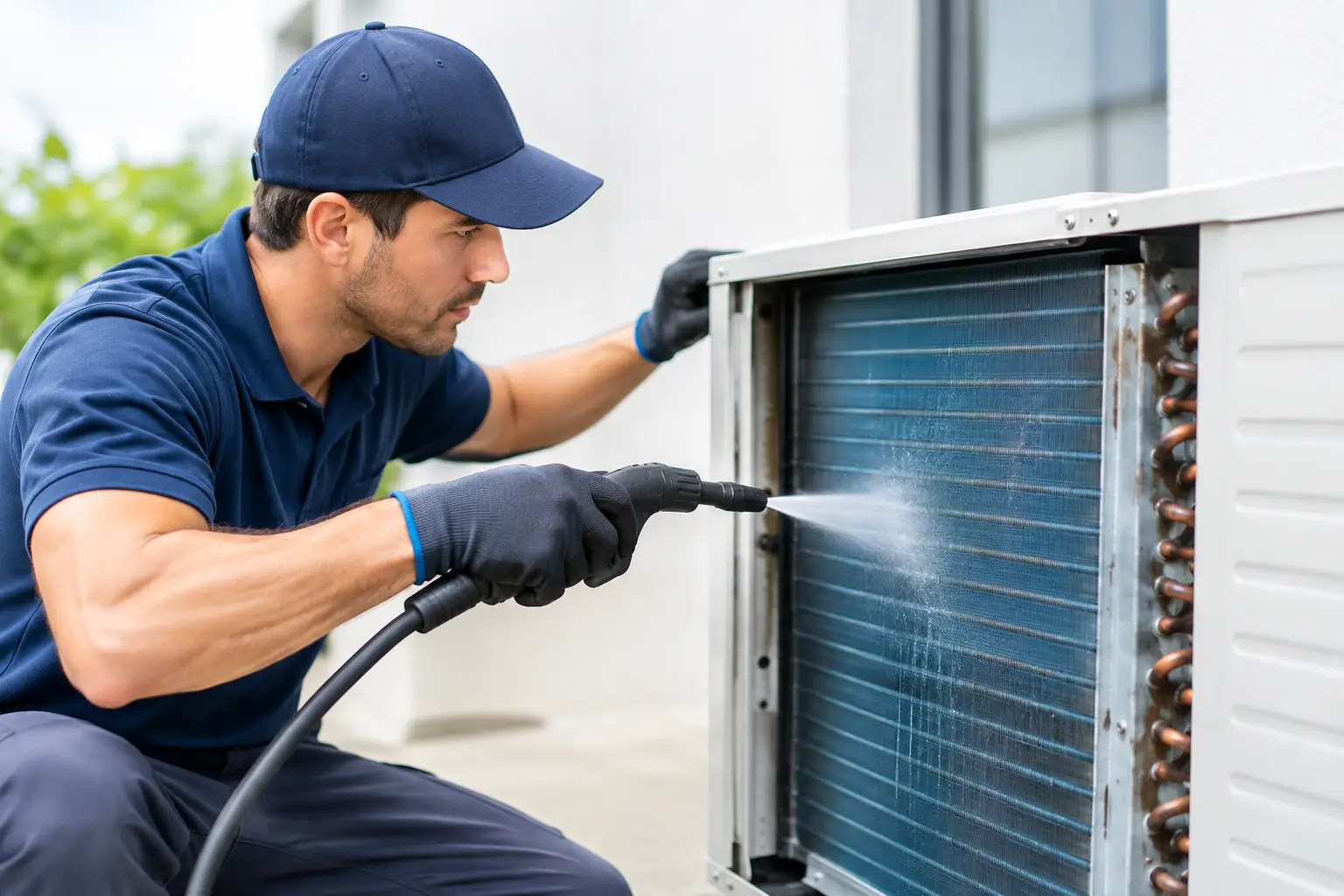
A cooling system can be running all day and still leave certain rooms warm, feel unusually humid, or drive up your utility bill. Often, the issue is not the thermostat. Air conditioner coil cleaning can restore the heat-transfer process your system depends on, helping it cool your home more efficiently without placing unnecessary strain on expensive equipment.
Your air conditioner has two key coils: the indoor evaporator coil and the outdoor condenser coil. Both need to stay relatively clean to do their jobs well. When dust, pollen, cottonwood, pet hair, lawn clippings, or indoor debris build up, the system has to work longer to deliver the same comfort.
Why Air Conditioner Coil Cleaning Matters
Air conditioning does not create cold air. It removes heat from inside your home and releases it outdoors. The evaporator coil inside absorbs heat from your indoor air, while the condenser coil outside releases that heat. Dirty coils create a barrier between the refrigerant and the air moving across them.
That barrier may seem minor, but it affects the entire system. A dirty evaporator coil can restrict airflow, reduce cooling, and contribute to ice buildup. A dirty condenser coil makes it harder for heat to escape outdoors, which can raise energy use and put additional stress on the compressor.
For homeowners, the warning signs are usually practical: the house takes longer to cool, rooms feel sticky, airflow seems weaker, or the outdoor unit runs for extended periods. You may also notice utility costs climbing during warm weather even though your habits have not changed.
Cleaning coils is not a cure for every cooling problem. Low refrigerant, a failing capacitor, duct leakage, electrical issues, and an incorrectly sized system can create similar symptoms. Still, coil condition is one of the first areas a qualified HVAC technician should assess during maintenance or a cooling service call.
The Difference Between Indoor and Outdoor Coils
The evaporator coil needs clean air and drainage
The evaporator coil is usually located inside your indoor air handler or above the furnace. Because it sits in the path of household air, it can collect dust over time, especially when filters are neglected. A clogged filter does more than reduce airflow. It allows more debris to reach the coil, where it is much harder to remove.
When the evaporator coil becomes dirty, the system may not absorb heat effectively. In more severe cases, restricted airflow can cause the coil to freeze. If you see ice on refrigerant lines or around the indoor unit, turn the cooling system off and arrange professional service. Continuing to run a frozen system can lead to more significant damage.
Technicians also check the condensate drain while servicing the indoor coil. Your air conditioner removes moisture from the air as it cools. If the drain line is blocked, water can back up, trigger a safety switch, or create a leak around the equipment.
The condenser coil faces outdoor debris
The condenser coil is located in the outdoor unit, where it is exposed to the elements. Pollen, dirt, leaves, grass clippings, and dryer lint can settle on the coil fins. In the Lower Mainland, seasonal pollen and damp conditions can make outdoor equipment especially prone to buildup.
A condenser coil needs open space around it to release heat. Shrubs pressed against the unit, stacked storage items, or a buildup of leaves around the base can restrict airflow even if the coil itself is not heavily soiled. Keeping the area clear supports better performance and gives a technician safer access when service is needed.
The aluminum fins surrounding the outdoor coil are delicate. They bend easily, and bent fins reduce airflow. This is one reason a high-pressure washer is a poor choice for do-it-yourself cleaning. It can force debris deeper into the coil or damage fins that are costly to repair.
What Homeowners Can Do Safely
A few simple habits help prevent premature coil contamination. Replace or clean your HVAC filter on the schedule recommended for your system and household. Homes with pets, renovations, allergy concerns, or frequent HVAC use may need more frequent filter checks.
Outside, keep at least two feet of open space around the condenser unit. Gently remove leaves, branches, and loose debris from around the cabinet. Avoid mowing directly toward the unit, since grass clippings can be pulled into the coil surface.
You can also inspect the outdoor unit visually with the power turned off. If the coil looks coated with dirt or lint, or if you see visibly bent fins, schedule service rather than attempting an aggressive cleaning. A light rinse from a garden hose may be appropriate for minor surface debris in some situations, but it should be done carefully, with low pressure and proper attention to electrical components. If you are unsure, leave the work to a trained technician.
Do not open the indoor coil compartment, use chemical coil cleaners without knowing the correct product, or handle refrigerant lines. Indoor coils are often difficult to access, and incorrect cleaning methods can damage the coil, cabinet insulation, wiring, or drain system.
When Professional Coil Cleaning Is the Right Call
Professional maintenance is the better option when your system is not cooling properly, has frozen up, is leaking water, or has not been serviced in more than a year. It is also wise after a major renovation, when construction dust can move through the return-air system and settle on components.
A proper service appointment is more than spraying off the outdoor unit. A technician can inspect the condition of both coils, verify airflow, assess the blower and filter, clear the condensate drain, check electrical components, and look for signs of refrigerant or performance issues. That broader inspection matters because a dirty coil may be the result of another problem rather than the only problem.
The exact cleaning method depends on the coil location and buildup. Technicians may use specialized cleaning solutions, low-pressure rinsing, fin-straightening tools, and protective measures to keep water and debris away from sensitive components. The goal is to improve heat transfer without damaging the equipment.
For older systems, service may also reveal a larger decision. If the compressor is struggling, refrigerant repairs are becoming frequent, or cooling costs remain high after maintenance, it may be time to compare repair with replacement. A newer high-efficiency air conditioner or heat pump can improve comfort, though the right choice depends on your system condition, home layout, budget, and available rebate opportunities.
How Often Should Coils Be Cleaned?
There is no single schedule that fits every home. For many households, annual professional air conditioner maintenance is a sensible baseline, ideally before the cooling season begins. During that visit, the technician can determine whether the coils need cleaning or simply inspection.
Some homes need more attention. You may benefit from more frequent checks if you have multiple pets, live near heavy traffic or construction, have lots of cottonwood or pollen around the property, run the system heavily, or regularly see debris collecting around the outdoor unit.
Annual maintenance is usually less disruptive and less costly than waiting for reduced cooling or a midsummer breakdown. It also gives you time to address small concerns before your family is relying on the system during a heat wave.
Protect Your Comfort Before the Next Heat Wave
Clean coils help your equipment move heat the way it was designed to, but the biggest benefit is simple: more dependable comfort when you need it. If your system is running longer, cooling unevenly, freezing up, or showing signs of outdoor buildup, arrange a professional assessment before a minor maintenance issue turns into an urgent repair. Pro West Heating & Air Conditioning can help homeowners identify the cause, protect their equipment, and keep their homes comfortable through the warmest days.