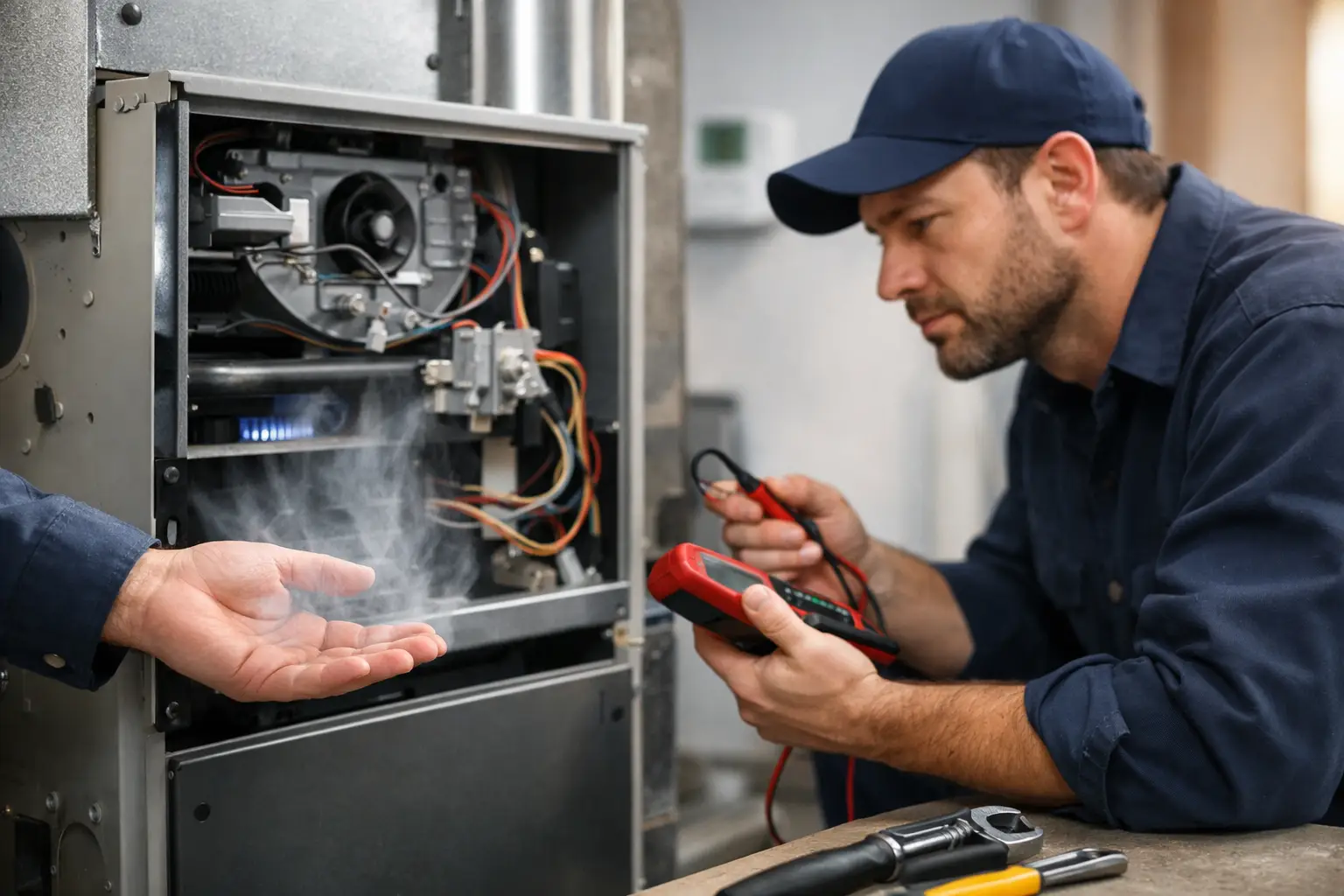
A furnace that starts up, runs for a few minutes, and then sends cold air through the vents is more than frustrating on a cold Lower Mainland night. If you are asking, “why is my furnace blowing cold,” the cause may be as simple as a thermostat setting or clogged filter. It can also point to an ignition, airflow, or safety-control issue that needs professional repair.
The good news is that a few safe checks can help you narrow down the problem. The key is knowing when to stop troubleshooting. Gas furnaces rely on combustion, electrical controls, ventilation, and moving parts working together. If you smell gas, notice a burning odor that does not fade quickly, see water around the furnace, or hear loud banging, turn the system off and arrange service right away.
Why Is My Furnace Blowing Cold Air?
Your thermostat tells the furnace to heat, the burners create heat, the heat exchanger transfers that heat to the air, and the blower moves warm air through your home. Cold air can result when any part of that sequence is interrupted.
Sometimes the furnace is producing heat but the blower is running at the wrong time. In other cases, the burners never ignite or shut down shortly after starting. A trained technician can identify the exact failure, but homeowners can often rule out a few common, low-risk causes first.
The thermostat is set incorrectly
Start at the thermostat. Confirm it is set to Heat, not Cool or Fan Only, and set the temperature at least three to five degrees above the current room temperature. If the fan setting is switched from Auto to On, the blower may run continuously between heating cycles. That air will feel cool because the furnace is not actively heating it.
Switch the fan back to Auto and wait several minutes for a normal heating cycle. If you have a smart thermostat, check its schedule and battery level as well. A schedule change, weak batteries, or incorrect wiring configuration can cause confusing heating behavior.
The filter is dirty and airflow is restricted
A clogged furnace filter is one of the most common reasons for intermittent cold air. Restricted airflow causes heat to build up inside the furnace. To prevent overheating, a safety limit switch shuts the burners off. The blower may continue running, pushing unheated air through the ductwork.
Turn the furnace off before checking the filter. If it is gray, heavily coated with dust, or has not been replaced within the manufacturer’s recommended interval, install the correct replacement. Very high-efficiency filters can also restrict airflow if they are not suited to your system. The best filter choice depends on your furnace, ductwork, indoor air quality needs, and household factors such as pets or allergies.
After changing the filter, restore power and see whether the furnace completes a normal cycle. If it still overheats or blows cold air, do not keep resetting it. There may be a dirty blower, blocked return duct, failing limit switch, or another issue requiring service.
The furnace has not finished warming up
When a furnace first starts, it takes a short time for the heat exchanger to warm before the blower begins. Most systems delay the fan automatically. If you stand at a vent immediately after startup, the air may feel lukewarm for a moment.
That is normal only if warm air follows quickly and the system maintains a steady cycle. Air that stays cold, or turns cold after being warm, is not a normal warm-up delay.
Common Furnace Problems That Need Repair
If the thermostat and filter are not the issue, the problem may be within the furnace itself. Modern furnaces display diagnostic codes through blinking indicator lights, but those codes are only a starting point. The underlying cause still needs to be tested properly.
Ignition or pilot light failure
Older furnaces may use a standing pilot light, while newer models typically use an electronic igniter and flame sensor. If the pilot is out or the igniter fails, the burners cannot light. The blower may still operate, making it seem as though the furnace is working even though it is not producing heat.
A dirty flame sensor is another frequent culprit. The burners may light briefly, then shut off because the control board cannot verify a stable flame. This is a repair best handled by a licensed HVAC technician. Repeatedly cycling or attempting to relight a gas furnace without finding the cause can create bigger problems.
A tripped limit switch
The high-limit switch protects the furnace from overheating. It may trip because of a dirty filter, blocked vents, a closed return grille, a failing blower motor, or buildup on internal components. Once the burners shut down, the blower can keep running to cool the unit, which leaves you with cold air at the registers.
Avoid blocking supply vents or return air grilles with furniture, rugs, or storage. Closing too many vents to redirect heat can also disrupt airflow and strain the system. If the limit switch trips repeatedly, professional diagnosis is needed to correct the reason it is overheating.
Condensate drain or venting trouble
High-efficiency furnaces create condensation during operation. That moisture drains through a condensate line. If the line, trap, or drain system becomes blocked, a safety switch may shut down heating operation.
Venting issues can cause a similar shutdown. Snow, debris, insect nests, or improper venting can prevent combustion gases from leaving the home safely. Do not attempt to modify furnace vent pipes yourself. A technician should inspect the venting and confirm the furnace is operating safely.
A malfunctioning blower motor or control board
A blower motor that is weak, failing, or running at the wrong speed can prevent proper heat circulation and trigger overheating. Electrical issues in the control board, relays, or wiring can also cause the fan to run when it should not, or stop the heating sequence before warm air reaches the rooms.
These problems are not always obvious from the outside. A furnace may make humming noises, cycle rapidly, run continuously, or show no clear symptoms beyond cold air. Accurate testing protects you from replacing the wrong part and helps prevent a repeat breakdown.
Safe Checks to Make Before Calling for Furnace Repair
You do not need to take apart your furnace to complete a few helpful checks. Confirm the thermostat is on Heat with the fan set to Auto. Replace a dirty filter, make sure the furnace power switch is on, and check whether the circuit breaker has tripped.
Walk through the home and make sure supply vents and return grilles are open and unobstructed. If your furnace has an exterior intake or exhaust pipe, look from a safe distance for obvious snow or debris blockage. Do not insert tools or hands into the pipe.
Then observe one heating cycle. Does the furnace start but never ignite? Do you hear it ignite and then shut down? Does it heat briefly before turning cold? Those details help a technician diagnose the issue faster.
Do not repeatedly press the reset button, bypass safety switches, remove sealed panels, or try to repair gas valves and electrical components. A furnace safety shutdown is a signal to investigate, not an inconvenience to override.
When Cold Air Is an Emergency
Call for urgent HVAC service if your furnace will not heat during cold weather, especially if children, older adults, or vulnerable family members are in the home. You should also act immediately if you smell natural gas, suspect carbon monoxide, see soot near the furnace, or have a carbon monoxide alarm activate.
If you smell gas, do not operate switches, appliances, or phones inside the home. Leave the area, move to a safe location, and contact your gas utility or emergency services as directed. For a suspected carbon monoxide issue, get everyone outside and seek emergency assistance.
For a no-heat problem without those warning signs, a qualified residential HVAC team can inspect the furnace, explain the repair options clearly, and help you decide whether repair or replacement makes better long-term sense. Age, repair history, efficiency, and the condition of the heat exchanger all matter. An older unit with a minor sensor issue may be worth repairing, while a system with repeated failures and high energy use may justify an efficient upgrade.
Pro West Heating & Air Conditioning provides responsive furnace service for homeowners who need dependable heat restored without guesswork. A properly repaired and maintained furnace delivers more than warm air – it gives your household a safer, more comfortable place to come home to when temperatures drop.