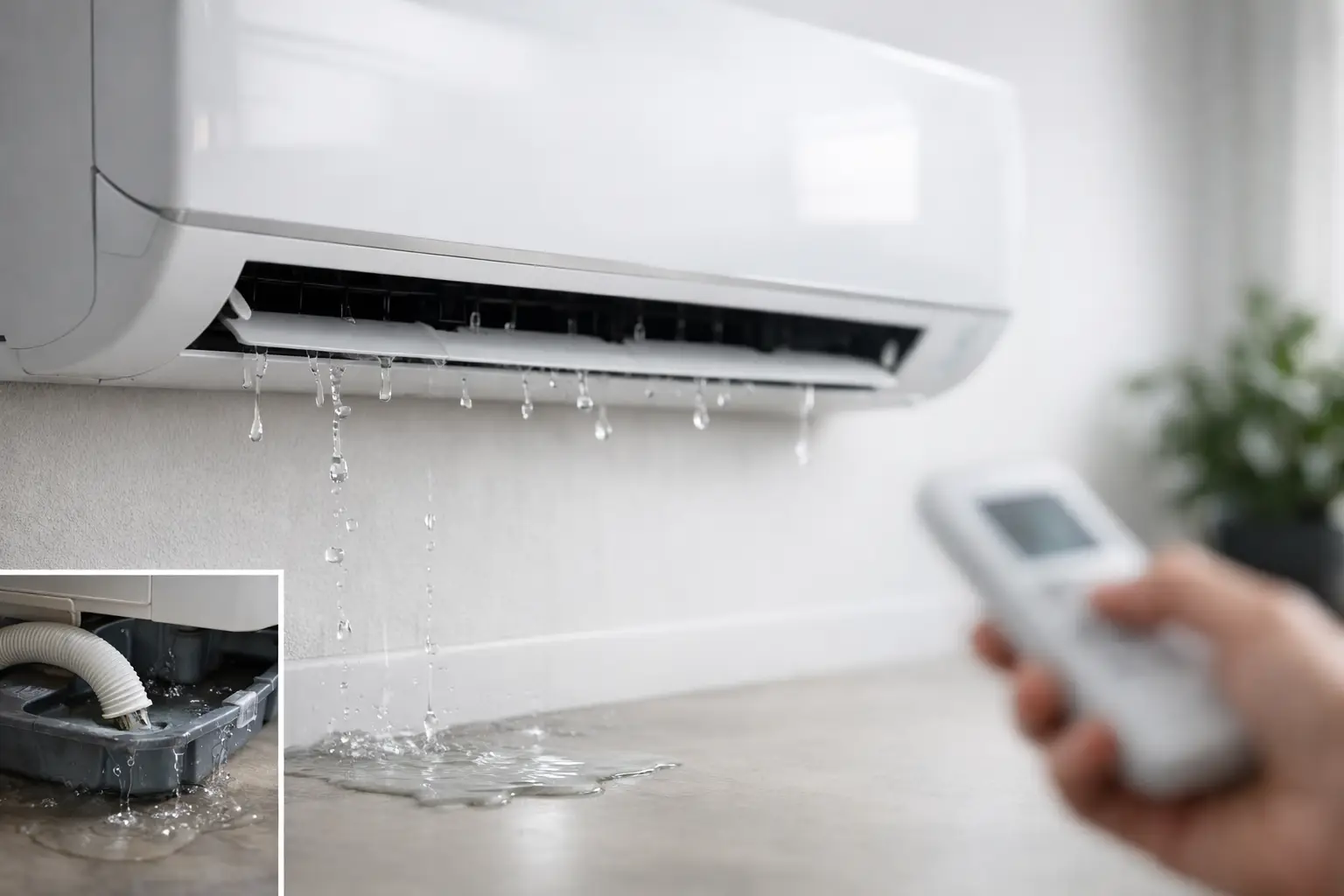
A puddle near your indoor AC equipment is never something to ignore. If you are asking, why is my AC leaking water, the answer may be as simple as a clogged drain line or as urgent as a frozen coil. Acting quickly can help prevent ceiling damage, mold growth, electrical issues, and a more expensive repair.
Your air conditioner removes humidity as it cools your home. That moisture has to go somewhere, so the system collects it and sends it outside through a condensate drain line. Water is normal inside the system. Water on your floor, around the furnace or air handler, or dripping through the ceiling is not.
Why Is My AC Leaking Water Inside the House?
Most indoor AC leaks begin with a drainage problem, but several components work together to manage condensation. The location of the water, the condition of the system, and whether the AC is still cooling can help narrow down the cause.
A Clogged Condensate Drain Line
This is one of the most common reasons an AC leaks water indoors. Dust, algae, dirt, and debris can build up in the condensate drain line over time. When the line becomes blocked, water backs up into the drain pan and eventually spills out.
You may notice standing water near the indoor unit, a musty smell, or the system shutting off if it has a safety float switch. In some homes, the leak may first appear as a stain on a ceiling below an attic air handler.
A minor clog can sometimes be cleared, but the drain system should be inspected if water has overflowed. Simply removing visible water does not address what caused the backup or confirm that the pan and safety controls are still working properly.
A Dirty Air Filter Causing a Frozen Coil
A clogged air filter restricts airflow across the evaporator coil. Without enough warm household air moving over that coil, it can become cold enough to freeze. When the system shuts off or the ice melts, a large amount of water can overwhelm the drain pan and create a leak.
Other signs of a frozen coil include weak airflow from vents, reduced cooling, ice on refrigerant lines, or an AC that runs for long periods without bringing down the indoor temperature. Turn the cooling system off if you see ice. Running it while frozen can strain the compressor and increase the risk of damage.
Replace a dirty filter, then allow the system to thaw fully before restarting it. If the coil freezes again, the problem may involve low refrigerant, a blower issue, or another airflow restriction that needs professional service.
A Cracked, Rusted, or Misaligned Drain Pan
The drain pan sits beneath the evaporator coil and catches condensation before it enters the drain line. Older metal pans can rust through, while plastic pans can crack. A pan may also shift out of position after service, vibration, or an installation issue.
Many systems have a primary pan and a secondary overflow pan. Either one can leak if it is damaged or not draining correctly. Because the pan is often difficult to access, this repair is best handled by an HVAC technician who can inspect the coil area and drainage path without damaging surrounding equipment.
A Disconnected or Improperly Installed Drain Line
A condensate line must be securely connected, properly sloped, and set up to drain correctly. If a fitting comes loose, the line sags, or the pipe was installed without the right trap, water may spill before it reaches the drain.
This can happen after renovations, equipment replacement, or work performed around the air handler. It can also affect newer systems if the drain configuration was not matched to the unit’s requirements. A technician can correct the setup and verify that water flows freely during operation.
Low Refrigerant or a Refrigerant Leak
Low refrigerant pressure can make the evaporator coil too cold, leading to ice buildup and a water leak when the ice melts. Unlike a dirty filter, refrigerant does not get used up under normal operation. Low refrigerant often means there is a leak that needs to be located and repaired.
Warning signs can include hissing noises, warm air from vents, longer cooling cycles, rising energy bills, and repeated coil freezing. Adding refrigerant without fixing the leak is only a temporary solution. Proper repair requires diagnosing the source, repairing it when feasible, and charging the system to the manufacturer’s specifications.
A Failed Condensate Pump
Some homes use a condensate pump because gravity cannot carry water to the nearest drain. The pump collects water in a small reservoir and pumps it away when the level rises. If it loses power, becomes clogged, or fails mechanically, the reservoir can overflow.
You may hear the pump running continuously, hear no pump activity at all, or see water around the pump near the indoor unit. Do not assume the pump will start working again on its own. A failed pump can create a fast, recurring leak.
What to Do When Your AC Is Leaking Water
Start by protecting your home and staying safe. Turn off the AC at the thermostat. If water is near electrical wiring, the furnace control board, or other electrical components, turn off power to the equipment only if you can do so safely. Avoid standing water around electrical equipment.
Place towels or a shallow container beneath the leak to limit floor damage, then remove soaked materials such as rugs or cardboard. If the leak is coming through a ceiling, move furniture away from the area and contact a professional promptly. A bulging ceiling can hold a significant amount of water and may become a safety hazard.
Next, check the air filter. If it is visibly dirty, replace it with the correct size and type for your system. Look for obvious ice on the refrigerant line or coil access area, but do not chip at the ice or force open panels. Let the system thaw with cooling turned off.
Avoid pouring harsh chemicals into the drain line. Some products can damage drain components, create fumes, or move a clog deeper into the system. A qualified technician can clear the line, flush it safely, inspect the pan, test the float switch, and determine whether the leak is part of a larger cooling problem.
When an AC Water Leak Needs Professional Repair
Call for service if the leak returns after changing the filter, if the AC is freezing, or if the unit is not cooling properly. You should also schedule prompt service if water is leaking from the ceiling, the drain pan is cracked, the condensate pump has failed, or you suspect refrigerant trouble.
An AC leak is especially urgent when it affects a finished basement, hardwood flooring, drywall, insulation, or electrical components. The longer water remains in concealed areas, the greater the chance of material damage and mold growth.
For homeowners dealing with an active cooling problem, Pro West Heating & Air Conditioning can assess the full system, not just the visible water. That matters because a cleared drain line will not solve a recurring freeze-up, refrigerant leak, or blower problem.
How to Help Prevent Future AC Leaks
Regular maintenance is the most reliable way to reduce the risk of condensate problems. During a professional tune-up, the technician can clean the condensate drain, inspect the pan and pump, check airflow, examine the evaporator coil, and catch developing issues before water reaches your living space.
At home, replace filters on schedule based on the filter type, household conditions, pets, and system use. Keep supply and return vents open and unobstructed so the system can maintain proper airflow. During humid weather, pay attention to unusual odors, reduced cooling, or water around the indoor equipment.
Is Water Dripping Outside From My AC Normal?
Usually, yes. Water dripping from a properly connected condensate drain outside the home is often a normal result of humidity removal, particularly during hot and humid weather. The concern is water leaking indoors, pooling around equipment, or coming from places where the drain should not discharge.
Can I Run My AC If It Is Leaking Water?
It depends on the cause and location of the leak, but shutting the system off is the safest choice until the issue is understood. Continued operation can worsen overflow damage, and a leak caused by a frozen coil or electrical issue should not be ignored.
A small amount of condensation is part of normal cooling. A visible indoor leak is your system telling you that drainage, airflow, or cooling performance needs attention. Addressing it early is the best way to protect your home and get back to dependable comfort.