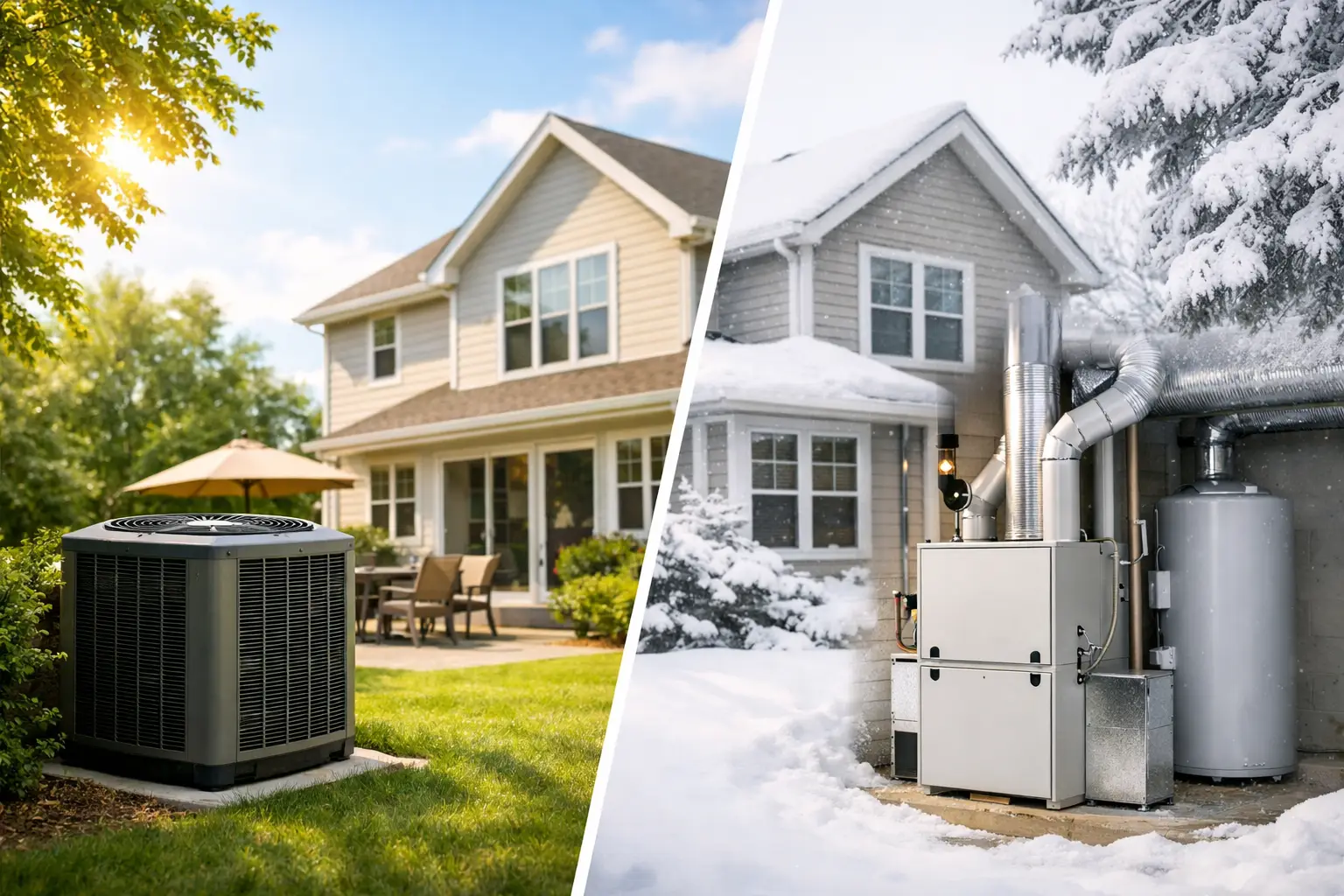
A furnace that starts making new noises on a cold night, an air conditioner that cannot keep up during a heat wave, or hot water that runs out halfway through a shower all point to the same issue: your home comfort system needs attention. Residential heating and cooling is not just about choosing equipment. It is about creating dependable, efficient comfort for your household through every season.
For homeowners across the Lower Mainland, the right solution depends on the home, the existing equipment, energy goals, and the budget for repairs or upgrades. A clear assessment helps you avoid replacing equipment too soon, while also preventing repeated repair costs on a system that is nearing the end of its useful life.
What Residential Heating and Cooling Covers
Your home comfort system is often more connected than it appears. Heating equipment, air conditioning, ventilation, thermostats, zoning controls, hot water systems, and indoor air quality all affect how your home feels and how much energy it uses.
A forced-air furnace moves warmed air through ductwork. A boiler heats water and circulates it through radiators, baseboards, or in-floor radiant heating. Air conditioners remove heat and humidity from indoor air, while heat pumps can provide both heating and cooling from one outdoor unit. Each system has strengths, but the best choice is the one that fits your home and daily needs.
For example, a heat pump can be an excellent year-round option for many homeowners who want efficient cooling along with lower-carbon heating. However, an older home with a boiler and radiant heat may be better served by maintaining or upgrading that system instead of undertaking a major ductwork conversion. There is no one-size-fits-all answer, and that is why an in-home evaluation matters.
The Signs Your System Needs Service
Many heating and cooling failures give homeowners warning signs before the equipment stops completely. Acting early can help protect your comfort, reduce the chance of emergency damage, and make repair decisions less stressful.
Call for professional service if you notice uneven temperatures between rooms, weak airflow, unusual banging or grinding sounds, frequent cycling, unexplained increases in energy bills, water around heating equipment, or a thermostat that does not seem to control the home accurately. A system that runs but cannot maintain the temperature you set also deserves attention.
With boilers and hot water equipment, watch for pressure issues, leaking valves, rusty water, fluctuating water temperatures, or a pilot light that will not stay lit. With furnaces, recurring ignition problems, burning smells, or a yellow burner flame instead of a steady blue flame should be addressed promptly. If you suspect a gas leak or carbon monoxide issue, leave the area and contact the appropriate emergency service immediately.
Not every issue requires a full replacement. A failed capacitor, dirty filter, worn igniter, blocked drain line, faulty thermostat, or refrigerant-related problem may be repairable. The value of a professional diagnosis is knowing what failed, why it failed, and whether repairing it is the sensible long-term choice.
Repair or Replace? Make the Decision With the Full Cost in Mind
A repair is often the right move when the equipment is relatively new, has been maintained, and needs a straightforward part replacement. It can restore reliable performance without the cost and disruption of installing a new system.
Replacement becomes more practical when breakdowns are frequent, repair costs are increasing, energy bills are high, or parts are becoming difficult to source. Age matters too. Furnaces, boilers, air conditioners, and water heaters do not all have identical service lives, but older equipment typically loses efficiency and becomes more expensive to maintain over time.
The lowest immediate price should not be the only factor. A less efficient replacement may cost less on installation day but provide fewer comfort improvements and higher operating costs for years. On the other hand, the highest-efficiency system is not automatically the best value if it is oversized, poorly matched to the home, or does not qualify for the incentives you expect.
A good estimate should explain equipment options in plain language, include installation requirements, and identify expected efficiency benefits. It should also account for details such as electrical capacity, duct condition, venting, drainage, controls, and whether your current setup can support a heat pump or other upgraded technology.
Better Comfort Starts With Proper Sizing
One of the most common residential heating and cooling mistakes is assuming bigger equipment will deliver better performance. Oversized equipment can heat or cool the home too quickly, then shut off before air is distributed evenly. This short cycling can increase wear, create temperature swings, and reduce humidity control during cooling season.
Undersized equipment has the opposite problem. It may run continuously during the coldest or hottest periods without reaching the desired indoor temperature. The goal is not maximum output. It is properly matched output based on the size and layout of the home, insulation levels, window exposure, air leakage, occupancy, and local weather conditions.
Installation quality is just as important as the equipment itself. A high-efficiency furnace cannot perform as intended with leaking ductwork, restricted airflow, or incorrect gas setup. A heat pump needs proper refrigerant charging, electrical work, drainage, and controls. A boiler needs correct piping, venting, and water pressure. Skilled installation protects both comfort and manufacturer warranty requirements.
Maintenance Helps Prevent the Worst Timing
Heating and cooling equipment tends to fail when it is working hardest. That means a furnace problem often appears during a cold stretch, while an air conditioning issue may surface during the first serious summer heat.
Regular maintenance gives a technician the chance to clean components, inspect safety controls, test performance, identify worn parts, and catch small concerns before they become inconvenient failures. It also helps maintain airflow, which is essential for both comfort and energy efficiency.
Homeowners can support system performance between service visits with a few simple habits. Replace or clean filters on schedule, keep outdoor heat pump and air conditioning units clear of leaves and debris, avoid blocking supply and return vents with furniture, and pay attention to changes in sound or performance. For homes with smart thermostats, review schedules periodically so the settings still match how the household uses the space.
Maintenance cannot guarantee that a component will never fail, but it can reduce avoidable problems and provide useful information about what to plan for next.
Efficiency Is About More Than the Equipment Label
Energy efficiency can lower utility costs, but it should also improve how your home feels. An efficient system that delivers even temperatures, quieter operation, and better humidity control adds value every day, not just when the bill arrives.
Start by addressing the biggest source of waste. In some homes, that is aging equipment. In others, it is duct leakage, poor insulation, an outdated thermostat, or rooms that are consistently over- or under-conditioned. Zoning systems can help households with different temperature preferences or multi-level layouts by directing heating and cooling where it is needed.
Rebate programs may make qualifying upgrades more affordable, especially for homeowners considering high-efficiency heating systems, heat pumps, or hot water improvements. Eligibility requirements can change, and equipment must typically meet specific performance standards. Reviewing available rebates before selecting a system can help you make a more informed investment rather than discovering potential savings after installation.
When 24/7 Service Matters
Some problems cannot wait for a convenient appointment. No heat during cold weather, no hot water for a household with young children or older adults, a major leak, or a system that repeatedly shuts down calls for a fast response.
Emergency service should still include clear communication. You need to know what caused the issue, what can be done immediately to restore safety or comfort, and what follow-up work may be required. A temporary repair can be appropriate in an emergency, but homeowners should understand whether it is a lasting solution or a short-term measure while replacement options are considered.
Pro West Heating & Air Conditioning provides full-service support for furnaces, boilers, air conditioners, heat pumps, hot water equipment, radiant heating, gas fireplaces, and home comfort controls. That broad experience matters when an issue involves more than one piece of equipment.
A comfortable home should not require constant troubleshooting. Whether you need a timely repair, seasonal maintenance, or guidance on an energy-efficient upgrade, start with a professional assessment that puts your household’s comfort, safety, and long-term costs first.