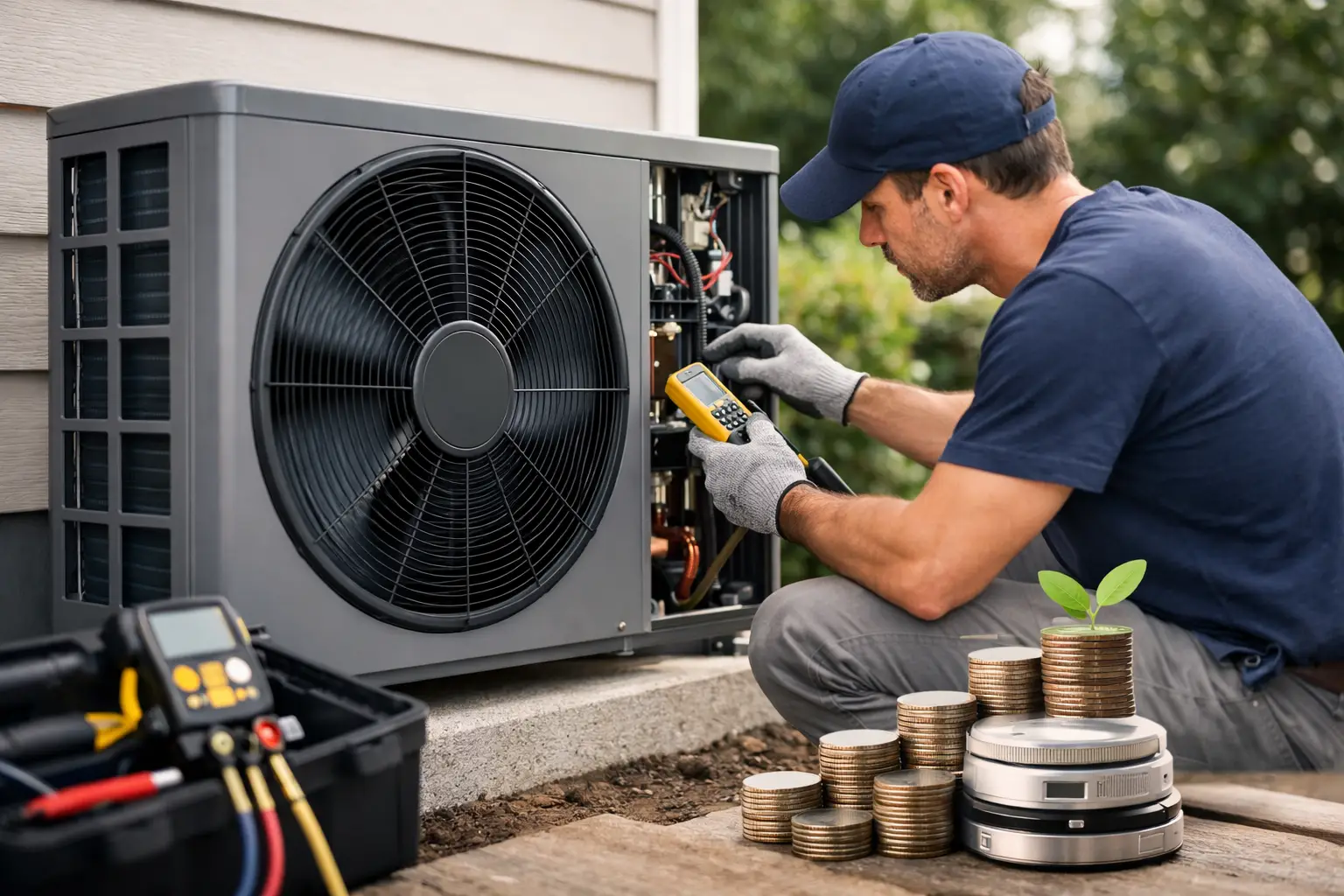
A heat pump that runs constantly, blows uneven air, or sends utility bills climbing is often asking for maintenance before it is asking for a major repair. Knowing how to maintain a heat pump helps protect the comfort of your home in every season, especially when the system handles both heating and cooling.
Most routine care is simple: keep air moving freely, keep the equipment clean, and catch changes in performance early. Professional service fills in the technical work homeowners should not attempt, including electrical checks, refrigerant testing, and full system calibration.
How to Maintain a Heat Pump at Home
A heat pump moves heat rather than creating it through combustion. That makes it highly efficient, but it also means airflow and clean components matter. A dirty filter, blocked outdoor unit, or neglected drain can make the system work harder than necessary.
Check and replace the air filter
Start with the filter. A clogged filter restricts airflow through the indoor unit, which can reduce comfort, increase operating costs, and put unnecessary strain on the blower motor.
Check the filter monthly during periods of heavy use. Many standard filters need replacement every one to three months, while high-efficiency filters may last longer. The right schedule depends on the filter type, the number of people in the home, pets, indoor air quality concerns, and how often the heat pump runs.
If the filter looks gray, dusty, or visibly loaded with debris, replace it. Do not assume a filter is clean simply because it has not reached the date printed on the package. Always install the replacement with the airflow arrow pointed in the correct direction.
Keep the outdoor unit clear
The outdoor condenser needs open space to draw in and release air. Leaves, grass clippings, mulch, branches, patio furniture, and snow can block airflow around the cabinet and reduce efficiency.
Walk around the unit every few weeks. Remove loose debris from the top and sides, and keep shrubs and plants trimmed back. A clear area of about two feet around the unit is a practical goal, though equipment requirements can vary by model and installation.
Do not cover an operating heat pump with a solid cover. It can trap moisture and restrict airflow. In winter, gently remove heavy snow buildup from around the unit, but never chip at ice with a sharp tool or pour hot water on the equipment. You could damage the coil or wiring.
Watch for ice, but do not panic over normal frost
A light layer of frost on an outdoor heat pump during cold, damp weather can be normal. The system periodically enters a defrost cycle to clear the coil. During that cycle, you may see steam rising from the unit or hear a temporary change in sound. Both are usually expected.
Thick ice that remains on the coil, fan, or cabinet is different. It can point to a defrost problem, drainage issue, restricted airflow, or refrigerant-related concern. Turn the system off if ice is preventing the fan from operating, then schedule service rather than trying to force the ice loose.
Keep supply and return vents open
Closing vents in unused rooms may seem like an easy way to save energy, but it can disrupt airflow and create pressure problems in a ducted system. Keep supply registers and return grilles open, clean, and free from rugs, furniture, or curtains.
Vacuum dust from vent covers as needed. If certain rooms are consistently too warm or too cool, the answer may be airflow balancing, ductwork improvements, zoning, or thermostat placement – not simply closing more vents.
Check the condensate drain during cooling season
When a heat pump cools your home, it removes moisture from indoor air. That water drains through a condensate line. If the line becomes clogged, water can back up, trigger a safety switch, or cause damage near the indoor air handler.
Look around the indoor unit for moisture, staining, musty odors, or a full drain pan. If you notice any of these signs, arrange service promptly. A technician can safely clear the line, inspect the drain components, and make sure the system is removing moisture as it should.
Set the Thermostat for Steady Comfort
Heat pumps generally perform best with steady thermostat settings. Large temperature setbacks can cause some systems to rely on auxiliary heat to recover quickly, which may raise energy use. This is especially relevant in colder weather.
Choose a comfortable temperature and make modest adjustments when needed. If you use a programmable or smart thermostat, make sure it is configured for a heat pump. The wrong settings can bring on backup heat too often or shorten normal heating cycles.
Avoid switching back and forth repeatedly between heating and cooling during mild weather. Give the system time to respond. If it cannot maintain the set temperature, runs nonstop, or frequently switches to auxiliary heat, it is time for a professional inspection.
Schedule Professional Heat Pump Maintenance Twice a Year
Homeowner care keeps the system cleaner, but a professional tune-up protects the components you cannot see. For a heat pump that provides both heating and air conditioning, service twice a year is the most reliable approach: once before the cooling season and once before the heating season.
During a maintenance visit, a qualified technician can inspect electrical connections, test safety controls, clean indoor and outdoor coils, check the blower, verify thermostat operation, inspect the condensate system, and evaluate refrigerant performance. The technician can also identify worn components before they turn into a no-heat or no-cooling emergency.
Maintenance does not guarantee that a part will never fail. It does reduce avoidable strain and gives you a clearer picture of the system’s condition, efficiency, and expected repair needs. That information is useful when deciding whether a repair makes sense or whether a high-efficiency replacement is the better long-term investment.
Signs Your Heat Pump Needs Service
A heat pump can make some normal operating sounds, including a brief whoosh during defrost or a low steady fan sound. New, loud, or persistent changes deserve attention. Schedule service if you notice any of the following:
- Air from the vents is consistently lukewarm when the system should be heating, or not cool enough during summer.
- The outdoor unit is coated in heavy ice or repeatedly fails to defrost.
- The system turns on and off frequently, runs continuously, or cannot reach the thermostat setting.
- You hear grinding, squealing, rattling, or loud buzzing.
- Your electric bill rises sharply without a clear change in weather or household use.
- Water is leaking near the indoor unit, or you notice burning smells, electrical odors, or a tripped breaker.
For burning odors, repeated breaker trips, or unusual electrical sounds, turn the system off and call for professional help. Those issues should not wait for a routine appointment.
Avoid the DIY Fixes That Create Bigger Problems
Basic cleaning and filter changes are appropriate for homeowners. Refrigerant work, electrical repairs, coil cleaning with harsh chemicals, and opening sealed components are not. Heat pumps contain high-voltage parts and refrigerant systems that require the right tools, training, and safety procedures.
Be careful with pressure washers as well. High-pressure water can bend the delicate aluminum fins on the outdoor coil, reducing airflow. If the coil looks dirty, a technician can clean it properly without damaging it.
It also helps to keep a simple record of filter changes, service visits, repairs, and unusual behavior. That history gives your HVAC technician useful clues and makes it easier to spot a pattern before comfort problems become more expensive.
A well-maintained heat pump should fade into the background: steady temperatures, manageable bills, and dependable operation when your family needs it. If yours is getting louder, less comfortable, or harder to run, Pro West Heating & Air Conditioning can help you get ahead of the problem with professional heat pump service and clear recommendations for your home.