A home can feel clean and still have air that works against your comfort. Cooking fumes, pet dander, dust, wildfire smoke, excess moisture, and everyday household products can all build up indoors. Knowing how to improve indoor air starts with finding the source of the problem, then choosing practical improvements that fit your home and HVAC system.
For homeowners in the Lower Mainland, indoor air quality often changes with the season. Damp weather can encourage mold and mildew, while closed windows during cold snaps or smoky summer days can trap pollutants inside. The goal is not to make your home completely sterile. It is to create cleaner, fresher air while keeping heating and cooling efficient.
How to Improve Indoor Air With Source Control
The most effective air-quality upgrade is often removing pollutants before they circulate. Air cleaners and furnace filters can help, but they work better when they are not asked to solve every problem on their own.
Start in the kitchen. Use the range hood whenever you cook, especially when frying, searing, or using a gas cooktop. A hood that vents outdoors is far more effective than one that only recirculates air through a small filter. Keep the hood clean so grease does not reduce airflow.
Take a close look at cleaning products, air fresheners, candles, and scented sprays as well. Strong fragrances can be irritating for people with asthma, allergies, or chemical sensitivities. Choose low-odor products where possible, and avoid using heavily scented products to cover up a musty smell. A persistent odor usually points to a moisture, drainage, plumbing, or ventilation issue that needs to be addressed.
Shoes, pets, and open windows also bring particles indoors. Placing quality mats at entryways, vacuuming regularly with a sealed or HEPA-equipped vacuum, and grooming pets can reduce the dust and dander that settle in carpets and furniture. If outdoor smoke or pollen levels are high, keep windows closed and use filtration instead of relying on open-window ventilation.
Use the Right Filter for Your HVAC System
Your furnace or air handler filter is a first line of defense, but it must be matched to the equipment. A higher MERV rating can capture smaller particles, including finer dust, pollen, and some smoke particles. However, a filter that is too restrictive for an older system can reduce airflow, increase strain on the blower, and affect heating or cooling performance.
For many homes, a properly fitted MERV 8 to MERV 11 filter is a practical balance between filtration and airflow. Homes with allergies, pets, or recurring dust concerns may benefit from a higher-efficiency option, but the system should be evaluated first. Filter upgrades are not one-size-fits-all.
Check the filter monthly and replace it as needed. A filter may need attention sooner during wildfire season, renovations, heavy heating use, or if you have multiple pets. Do not wait until it looks completely blocked. Restricted airflow can lead to uneven temperatures, higher utility costs, and unnecessary wear on your equipment.
If your home uses radiant heating or a boiler and does not have ductwork, a central furnace filter is not an option. In that case, portable air cleaners, bathroom and kitchen exhaust, and balanced ventilation can play a larger role.
Choose portable air cleaners carefully
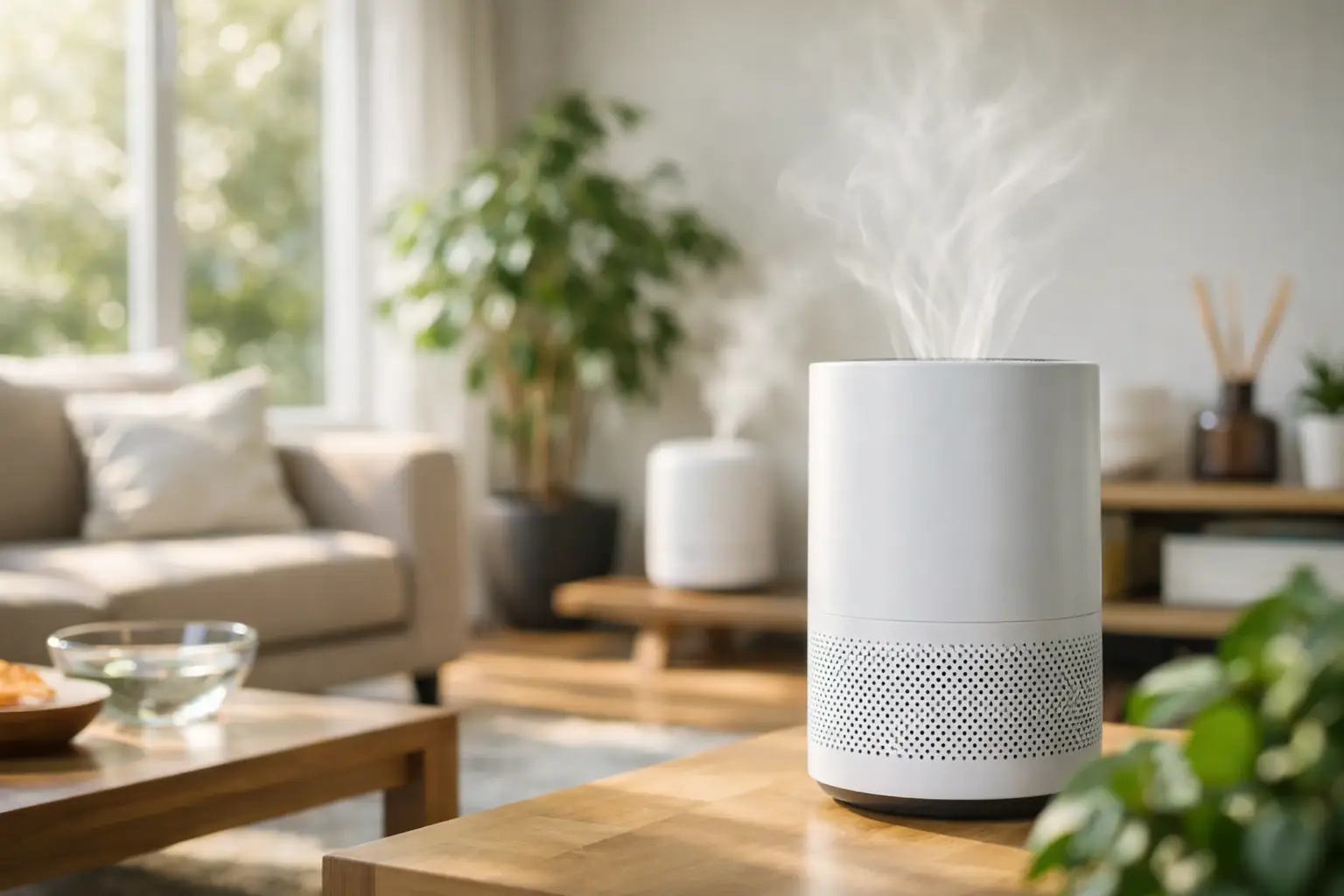
A portable air purifier can make a real difference in bedrooms, nurseries, home offices, or other rooms where people spend long periods of time. Look for a unit with a true HEPA filter and a recommended room size that matches the actual space. If the purifier is too small for the room, it will run constantly without delivering the expected results.
Place it where air can circulate freely, not behind furniture or tight against a wall. For smoke events, run it continuously in the room you are using most. Avoid devices that intentionally produce ozone. Ozone can irritate lungs and is not a suitable substitute for mechanical filtration.
Balance Ventilation Without Wasting Energy
Fresh outdoor air dilutes indoor pollutants, but ventilation needs to be managed thoughtfully. Opening windows can help on mild, low-pollution days. It is less helpful when outdoor air is smoky, heavily polluted, very humid, or full of seasonal pollen.
Bathroom fans and kitchen exhaust fans are essential. Run the bathroom fan during showers and for at least 20 minutes afterward to move moisture outside. If mirrors stay fogged long after a shower, the fan may be undersized, poorly vented, dirty, or failing. A fan that vents into an attic instead of outdoors can create a much bigger moisture problem.
For homes that are tightly sealed for energy efficiency, consider a heat recovery ventilator or energy recovery ventilator. These systems bring in controlled outdoor air while reducing the heating or cooling energy lost in the process. The right choice depends on your home’s layout, existing HVAC equipment, and moisture conditions. A professional assessment can identify whether improved exhaust, a dedicated ventilation system, or simple airflow adjustments will provide the best value.
Keep Indoor Humidity in the Comfort Zone
Humidity has a direct effect on comfort and air quality. Air that is too dry can aggravate dry skin, sore throats, and static electricity. Air that is too damp can support dust mites, mold, and mildew.
Aim for indoor relative humidity between 30% and 50% in most homes. A simple indoor air quality monitor or hygrometer can help you see what is happening instead of guessing. In damp Lower Mainland weather, use bathroom fans, repair leaks quickly, and consider a properly sized dehumidifier for basements or rooms that regularly smell musty.
Do not assume more humidity is always better in winter. If condensation forms on windows, walls, or vents, humidity may already be too high for outdoor conditions. Lowering it can protect your home from moisture damage. If your home is consistently dry, a whole-home humidifier may help, but it should be installed and maintained correctly to avoid creating standing water or mold growth.
Maintain the Equipment That Moves Your Air
Your HVAC system affects more than temperature. A neglected furnace, heat pump, air conditioner, or air handler can circulate dust, operate inefficiently, or struggle to maintain proper airflow.
Annual maintenance gives a technician the opportunity to inspect filters, blower components, drain lines, coils, electrical connections, and safety controls. For air conditioning and heat pump systems, clean coils and clear condensate drains help prevent moisture problems. For gas furnaces, boilers, fireplaces, and water heaters, professional service supports safe combustion and reliable operation.
Carbon monoxide deserves special attention. Install carbon monoxide alarms near sleeping areas and follow the manufacturer’s replacement schedule. Never use a gas oven to heat your home, and do not ignore soot, yellow flames, headaches, dizziness, or combustion odors. If you suspect a gas or carbon monoxide issue, leave the area and contact emergency services or a qualified professional.
Duct cleaning can be useful after major renovations, pest issues, water damage, or visible contamination. It is not automatically necessary for every home with dust. Before scheduling duct cleaning, check the basics first: filter condition, return-air placement, supply vents, humidity, and household sources of dust. A reliable contractor should explain why a service is recommended rather than using fear-based claims.
Know When Indoor Air Problems Need Professional Help
Some air-quality concerns are clear signs that the issue goes beyond routine cleaning. Persistent musty odors, visible mold, repeated condensation, rooms that are always stuffy, worsening allergy symptoms indoors, or uneven airflow deserve a closer look. The problem may involve ventilation, ductwork, drainage, insulation, equipment sizing, or a hidden moisture source.
Pro West Heating & Air Conditioning can assess the HVAC side of indoor comfort, including filtration options, ventilation performance, humidity concerns, and equipment upgrades that support cleaner air without sacrificing efficiency. A clear evaluation helps homeowners invest in the right solution instead of adding products that do not address the underlying cause.
Cleaner indoor air is built through small habits and smart system choices: use exhaust when moisture or fumes are created, keep filters current, control humidity, and maintain the equipment your family depends on. If your home still feels stale, damp, dusty, or uncomfortable after those steps, treat that as useful information. Your home is telling you it needs a better air-quality plan.