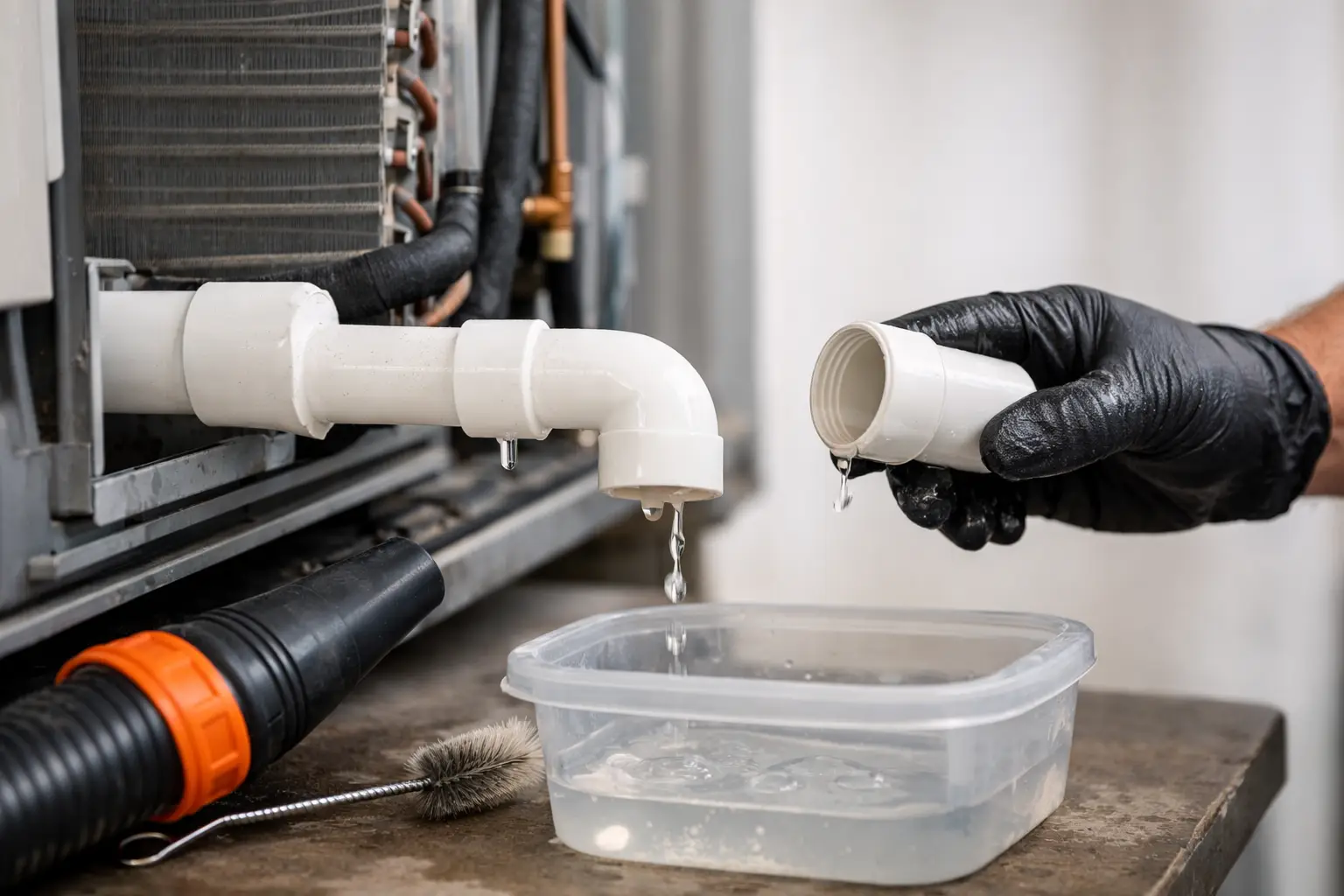
A small drain line can create a big mess. When an air conditioner, heat pump, or high-efficiency furnace cannot drain condensation properly, water may back up into the unit, stain ceilings, damage flooring, or shut your cooling system down. Knowing how to clean condensate drain lines gives homeowners a practical way to prevent one of the most common warm-weather HVAC service calls.
The job is usually straightforward when the clog is minor and the drain is accessible. Still, condensate systems vary by equipment type and installation. If water is leaking near electrical components, overflowing from a secondary drain pan, or returning soon after cleaning, stop and schedule professional service. The drain may not be the only issue.
What a Condensate Drain Does
Your cooling system removes humidity from indoor air as it operates. That moisture collects on the indoor evaporator coil and drips into a pan below it. From there, it flows through a PVC drain line to a safe discharge point outside the home, into a plumbing drain, or to a condensate pump.
Because the line carries water, it can develop algae, mold-like buildup, dust, and sludge over time. A partially blocked line drains slowly. A fully blocked line can cause water to overflow the drain pan. Many newer systems have a float safety switch that shuts the equipment off before water damage occurs, but not every system has one, and safety switches can also fail.
High-efficiency furnaces create condensate during heating season as well. Their drain setups can be more complex than a standard air conditioner drain, so homeowners should be more cautious when cleaning them. If you are unsure which line belongs to which appliance, have an HVAC technician inspect it.
Signs Your Condensate Drain Needs Attention
A clogged drain does not always announce itself with a visible puddle. Watch for water around the indoor unit, moisture in the drain pan, a musty odor from supply vents, or an air conditioner that stops running even though the thermostat is calling for cooling.
You may also notice water dripping from a pipe outside when the system is off, bubbling at an indoor drain connection, or a condensate pump that runs constantly or makes unusual noise. In an attic, closet, utility room, or crawlspace installation, check the area around the equipment regularly during peak cooling weather. Catching a slow drain early is far easier than repairing a wet ceiling later.
How to Clean Condensate Drain Lines Step by Step
Before you begin, turn the thermostat to Off and switch off power to the indoor HVAC equipment at the service switch or breaker. This protects you from moving parts and electrical components while you work. Let the system sit for a few minutes.
You will typically need a wet/dry vacuum, white distilled vinegar, a small funnel, a clean cloth, and possibly a screwdriver. Avoid using compressed air at high pressure. It can separate glued drain fittings, force debris deeper into the line, or push dirty water back into the unit.
1. Find the drain line and cleanout opening
Locate the PVC drain pipe leaving the indoor air handler, furnace, or evaporator coil cabinet. Many installations include a vertical capped section near the unit called a cleanout or access tee. Remove the cap carefully. If the pipe has a trap, do not take apart fittings unless you know how they go back together and can confirm they are sealed afterward.
Look into the opening with a flashlight. Standing water, dark slime, or debris near the top points to a restriction. Wipe accessible buildup from the opening and drain pan area with a cloth. Do not scrape the evaporator coil or reach into the cabinet around wiring.
2. Clear the drain from the discharge end
Find where the drain line terminates. It may exit near the outdoor condenser, run to a plumbing drain, or feed into a condensate pump. If it ends outdoors, place the hose of a wet/dry vacuum over the drain outlet and create a snug seal with your hand or a cloth.
Run the vacuum for one to two minutes. You may pull out water, algae, and sludge. This method is generally safer and more effective than blowing air into the line from inside. If the termination is connected to household plumbing or difficult to access, do not force the issue. A technician can clear and test the line without risking a plumbing backup.
3. Flush the line with vinegar
Return to the cleanout near the indoor unit. Pour about one cup of white distilled vinegar slowly into the opening using a funnel. Vinegar helps break down light biological buildup without the harshness of bleach. Give it 20 to 30 minutes to work, then flush with a small amount of clean water.
Avoid bleach, drain cleaner, and boiling water. Bleach fumes can be unpleasant indoors, harsh chemicals may damage parts of the system, and boiling water can affect plastic piping or fittings. Vinegar is suitable for routine maintenance, but it will not solve a crushed pipe, an incorrect drain slope, or a heavy blockage farther down the line.
4. Check the pan, trap, and float switch
Inspect the primary drain pan beneath the coil if it is visible. It should not be holding water after the line is cleared. If your system has a secondary pan, often found beneath attic equipment, check for standing water there as well. A wet secondary pan is a warning that the primary drain is not working correctly.
Some systems have a float switch on the drain line or pan. This safety device turns the equipment off when water rises too high. Do not bypass it to get the air conditioner running. If the switch has tripped, cleaning the line may restore normal operation, but the switch and drain should still be checked if the problem repeats.
5. Restore power and confirm proper drainage
Replace the cleanout cap securely, restore power, and set the thermostat to Cool. Let the system run long enough to produce condensation, especially on a humid day. Then check for steady drainage at the outlet or verify that water is moving through the line.
If the system immediately shuts off, water continues to collect in the pan, or the drain still does not flow, turn it off again. The clog may be stubborn, the trap may be dry or improperly installed, or the system may have a pump or drain design issue that needs professional repair.
When a Condensate Pump Is Involved
A condensate pump is used when gravity cannot carry water from the indoor unit to a drain. It collects water in a small reservoir and pumps it through tubing to a suitable discharge point. These pumps need occasional maintenance, too.
First, confirm the pump has power and that its reservoir is not overflowing. Clean accessible debris from the reservoir according to the equipment instructions, then test whether the pump activates as water enters. Do not open electrical sections or disconnect pump wiring. A failed pump can allow water to overflow quickly, so call for service if it will not run, runs without moving water, or leaks from the housing.
How Often Should You Clean a Condensate Drain?
For most homes, cleaning the condensate line once each cooling season is a sensible preventive step. Homes with long cooling seasons, high indoor humidity, pets, dusty conditions, or recurring algae buildup may benefit from checking it every two to three months while the air conditioner is in use.
Routine HVAC maintenance is the best time to have the entire condensate system inspected. A technician can check the drain pan, trap, float switch, pump, pipe slope, insulation, and discharge location while also servicing the coil and confirming the system is operating efficiently.
When to Call an HVAC Professional
DIY cleaning is appropriate for a visible, minor clog in an accessible line. Professional help is the better choice when water has reached ceilings, walls, or electrical equipment; the drain line is hidden; the system is in an attic; or the same clog returns repeatedly. A recurring blockage can point to improper installation, a damaged drain line, a dirty evaporator coil, or a missing trap.
Call promptly if your air conditioner is not cooling, a safety switch keeps shutting the system down, or you suspect a condensate leak from a high-efficiency furnace. Fast service can protect both your equipment and your home from a much more expensive water-damage repair.
A clean condensate drain is a small maintenance task with real payoff: fewer interruptions, less risk of leaks, and more dependable home comfort when you need cooling most.