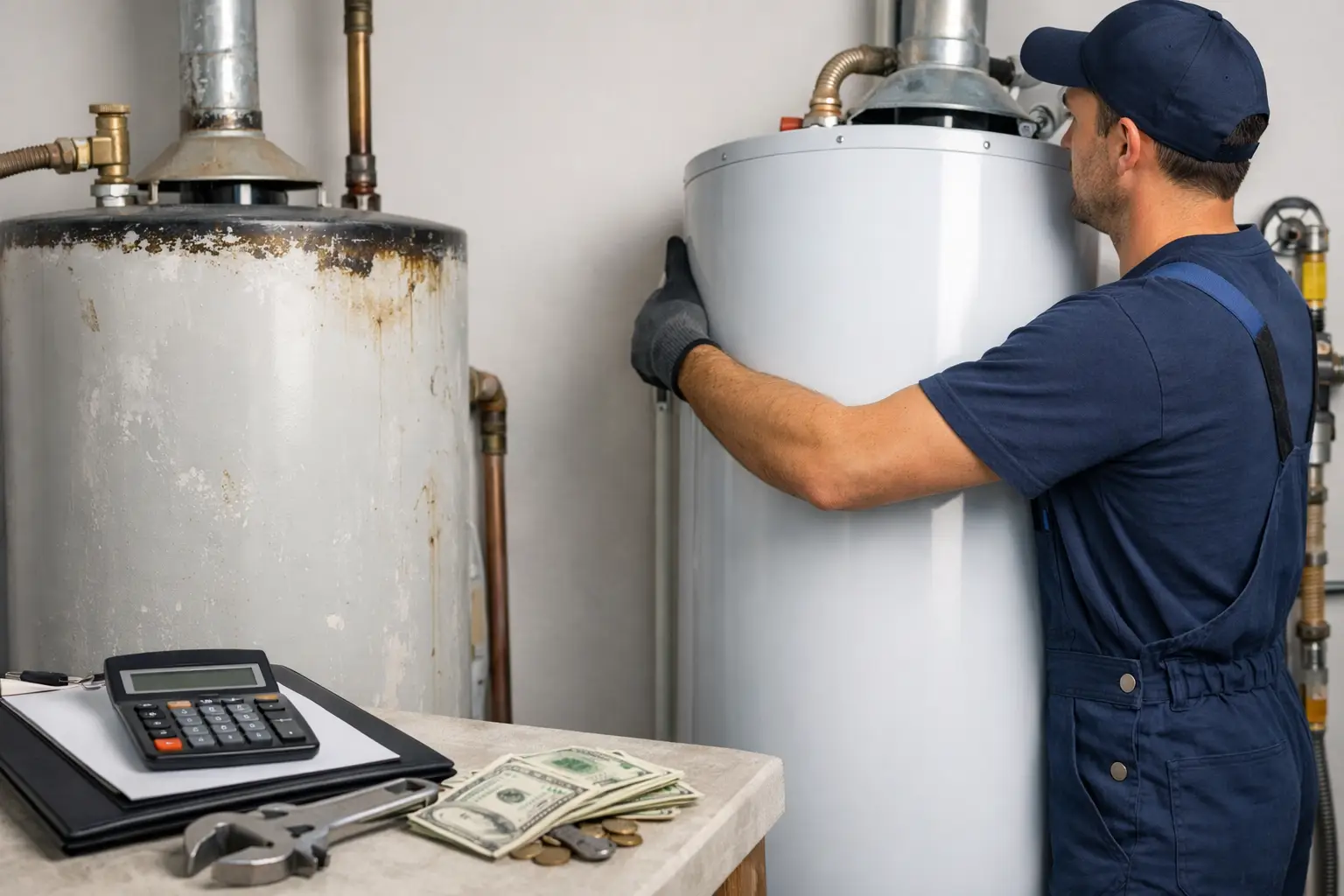
A cold shower makes one thing clear fast: delaying a failing water heater rarely saves money. Hot water tank replacement cost depends on far more than the price of a new tank. The fuel source, tank capacity, venting setup, condition of your existing plumbing, and required permits can all change the final installed price.
For homeowners in the Lower Mainland, a professional replacement is an investment in dependable daily comfort. A qualified contractor can identify whether a straightforward tank swap is possible or whether your home needs safety, venting, or efficiency upgrades at the same time. That distinction matters when comparing quotes.
What Does Hot Water Tank Replacement Cost?
For a standard residential installation, hot water tank replacement commonly ranges from about $1,500 to $3,500 for an electric or conventional gas model, including basic installation. Higher-capacity units, power-vented gas tanks, difficult access, or required code updates can raise the total to $3,000 to $5,500 or more.
These are useful planning figures, not a substitute for an in-home assessment. Every home has different connections, venting paths, and hot water demands. A low initial quote may not include the work needed to safely complete the installation, while a more complete estimate should clearly explain what is included.
Typical installed cost ranges
A conventional electric tank is often the most straightforward replacement when the electrical supply and plumbing are already in good condition. Conventional atmospheric-vent gas tanks can also be cost-effective when existing venting meets current requirements.
Power-vented gas tanks generally cost more because they use a fan and specialized venting. They are often a practical choice where a standard chimney vent is unavailable or unsuitable. High-efficiency condensing units and tankless water heaters usually have a higher upfront cost, but may reduce energy use and provide other long-term benefits.
The right choice is not always the least expensive tank on installation day. It is the unit that safely meets your household’s demand, works with your home, and makes sense for your expected length of ownership.
What Changes the Price of a Water Heater Replacement?
Equipment is only one part of the bill. Installation conditions often account for the difference between a simple replacement and a larger project.
Tank fuel source and capacity
Gas and electric tanks are not interchangeable without changes to your home. Switching fuel sources can involve electrical upgrades, gas piping, venting, or permits, which can significantly increase the project cost. Most homes are best served by replacing like for like unless there is a strong reason to upgrade.
Capacity also matters. A smaller tank costs less, but it can leave a busy household without enough hot water during back-to-back showers, laundry, and dishwashing. A larger tank has a higher equipment cost and can use more energy to maintain stored water. An experienced technician will size the system around your family’s real usage rather than simply matching the old tank.
Venting requirements
Venting is one of the biggest cost variables for gas water heaters. A conventional tank may use an existing chimney-style flue, while a power-vented or condensing model may need new PVC vent piping and an exterior termination.
Older venting systems may not meet current safety requirements. If the vent route must be modified, extended, or moved, that work should be included in the estimate. Proper combustion air and venting are not optional details – they protect your home and help the equipment operate as designed.
Installation location and access
A tank in an open utility room is typically easier to replace than one in a tight crawlspace, finished basement, attic, or cramped mechanical closet. Narrow stairs, limited clearance, and difficult routes for removing the old tank can add labor time.
The location may also require a drain pan, upgraded shutoff valves, seismic strapping where applicable, or changes to meet local code. These items can add cost, but they also reduce the risk of water damage and make future service safer and easier.
Plumbing, electrical, and gas line upgrades
Corroded water lines, outdated valves, undersized gas piping, and inadequate electrical circuits should be addressed before a new tank is installed. Connecting new equipment to failing components can create avoidable problems soon after replacement.
A professional estimate should separate essential safety or code work from optional improvements whenever possible. That gives you a clear view of what is needed now and what can be planned for later.
Permit, disposal, and warranty coverage
Permits and inspection requirements vary by municipality. They may add to the project price, but they help ensure the work follows local safety standards. The old tank must also be drained, removed, and disposed of properly.
Ask what warranty applies to both the equipment and the labor. A long manufacturer warranty is valuable, but dependable installation and responsive service matter just as much when a problem occurs.
Repair or Replace: Which Makes More Sense?
A repair can be the smart decision when the tank is relatively new and the issue is limited to a replaceable part, such as a thermostat, heating element, thermocouple, or pressure relief valve. Regular maintenance can also extend the service life of a water heater.
Replacement is usually the better value when the tank is leaking, heavily corroded, near the end of its expected service life, or repeatedly requiring repairs. Most conventional tanks last roughly 8 to 12 years, although water quality, installation conditions, and maintenance can shorten or extend that timeline.
Do not wait for a small leak to become a flooded utility room. Rust around the base, discolored hot water, rumbling sounds, inconsistent temperatures, or moisture near the tank are all reasons to schedule an inspection. A technician can assess the issue and explain whether repair remains reasonable.
Can a More Efficient System Lower Long-Term Costs?
Efficiency upgrades can change the conversation from replacement price to total cost of ownership. A standard tank may have the lowest upfront price, while a higher-efficiency gas model, heat pump water heater, or tankless unit may use less energy over time.
There are trade-offs. Heat pump water heaters need suitable space and operating conditions, and they can cool the room around them. Tankless systems provide continuous hot water when sized correctly, but their installation can require substantial gas, electrical, and venting changes. For some households, a quality conventional tank remains the most practical and cost-effective choice.
Available rebates can also affect the economics of an upgrade. Programs and eligibility requirements change, so it is worth asking about current options before selecting equipment. Pro West Heating & Air Conditioning can help homeowners compare suitable systems, installation requirements, and available rebate opportunities during a free estimate.
How to Compare Replacement Estimates
When comparing quotes, make sure each one describes the same scope of work. The lowest number is not always the lowest final cost if it excludes permit fees, removal of the old tank, venting modifications, new valves, code upgrades, or labor.
A detailed estimate should identify the proposed make, model, capacity, fuel type, warranty, and all included installation work. It should also explain any assumptions, such as whether existing venting or gas lines are suitable. Clear answers upfront help prevent unpleasant surprises once work begins.
It is also wise to ask how quickly the contractor can respond if your tank fails completely. Hot water is a daily necessity, and prompt service can make a stressful breakdown much easier to manage.
A new hot water tank should give your household reliable comfort, not another item to worry about. If your unit is aging, leaking, or struggling to keep up, an in-home assessment can give you a clear replacement price and a practical path forward before a breakdown forces the decision.