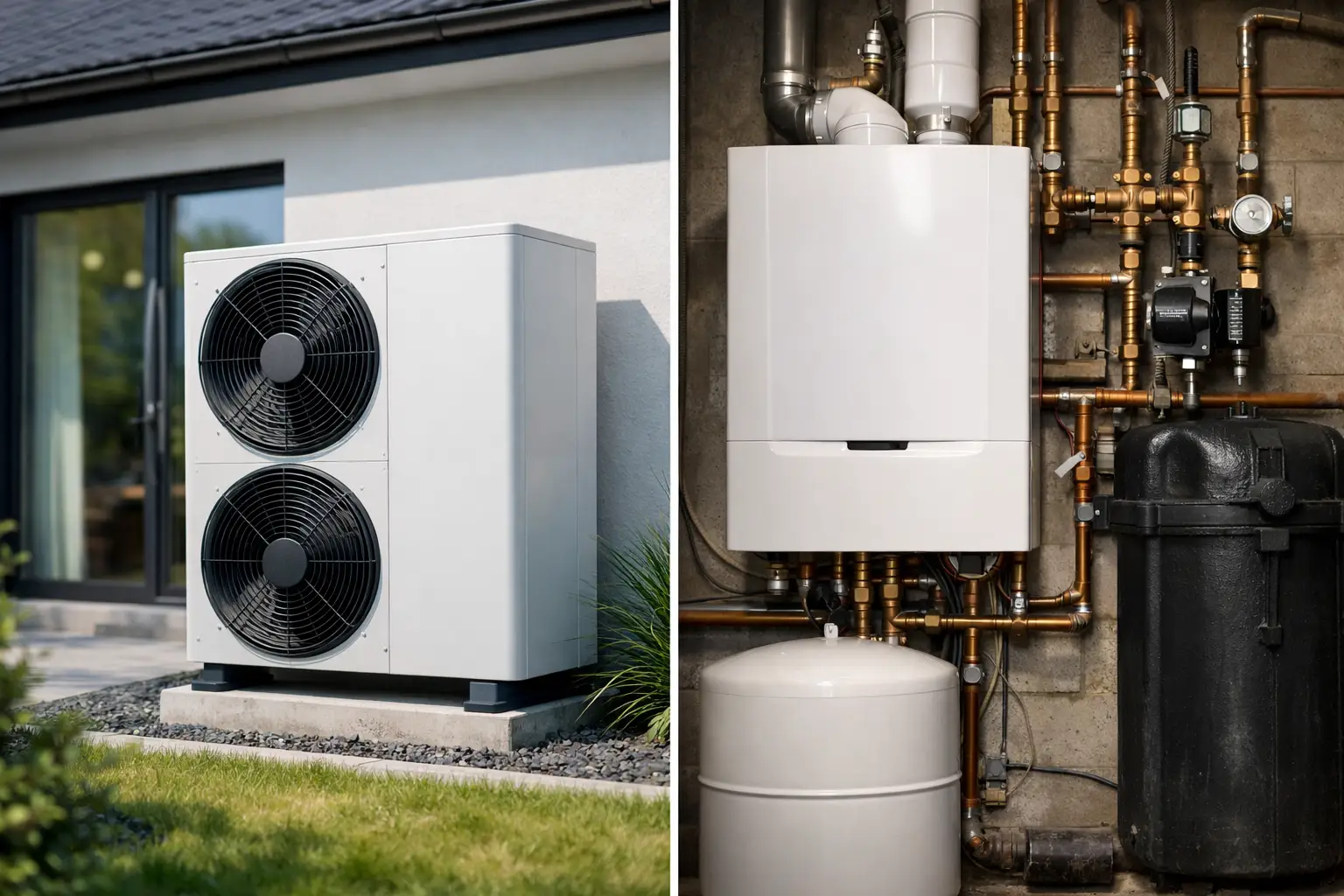
A heat pump versus boiler decision is not simply about choosing the newest equipment. It is about how your home is built, how you like it to feel on a cold morning, what heating system is already in place, and what a practical upgrade will cost over time. For homeowners in Metro Vancouver and the Lower Mainland, both can be excellent solutions. The right answer depends on your home and priorities.
A heat pump can provide efficient heating and air conditioning from one system. A boiler delivers steady, quiet heat through radiators, baseboards, or in-floor tubing, and may also support your home’s hot water. Comparing the two starts with understanding what each system does best.
Heat Pump Versus Boiler: The Core Difference
A heat pump moves heat rather than creating it through combustion. In heating mode, it draws available heat from outdoor air and transfers it indoors. In cooling mode, it reverses that process to remove heat from your home. Modern cold-climate heat pumps are designed to operate efficiently in cool weather, making them a strong option for the relatively moderate winters common across much of the Lower Mainland.
A boiler heats water, typically using natural gas, electricity, or another fuel source. That hot water travels through a hydronic system, such as radiant in-floor loops, radiators, or baseboard units. Boilers are valued for even, comfortable heat and can be paired with indirect water heaters for domestic hot water.
The key distinction is simple: a heat pump is usually an all-season heating and cooling system, while a boiler is a dedicated hydronic heating system. A boiler does not provide air conditioning on its own.
When a Heat Pump Is the Better Choice
A heat pump is often the most appealing choice for homeowners who want both heating and cooling without maintaining separate systems. If your home currently relies on electric baseboards, an older furnace, or an aging air conditioner, a heat pump upgrade can improve year-round comfort while reducing energy use.
You want heating and cooling in one system
Summer comfort matters. Heat waves are no longer unusual in the Lower Mainland, and many homes that were built without air conditioning now need it. A ducted central heat pump can work with existing ductwork, while ductless mini-split systems can heat and cool specific rooms or areas without major renovations.
This dual purpose can make a heat pump especially valuable in homes that would otherwise need both a heating replacement and a new air conditioning system.
Your home does not have a hydronic system
Installing a boiler in a home without radiators, baseboards, or radiant tubing can be a major project. It may require opening walls and floors to install piping and heat emitters. In that situation, a heat pump is often the more straightforward path to efficient heating.
A ductless heat pump can be particularly practical for additions, suites, older homes, and homes where adding ductwork is not realistic. The indoor units provide zoned comfort, so you can avoid heating or cooling empty rooms as heavily.
You want to lower electricity use from resistance heat
Electric baseboards create heat directly from electricity. A heat pump transfers heat, so it can deliver more heating energy than the electricity it consumes under the right conditions. For homeowners replacing electric resistance heating, that efficiency difference can be significant.
Actual savings depend on your electricity rates, insulation, thermostat settings, equipment size, and how the system is used. A professional load calculation is more reliable than choosing a system based on square footage alone.
When a Boiler Is the Better Choice
A boiler remains an outstanding heating option, especially in homes already designed around hydronic heat. Replacing a reliable boiler system with a heat pump just because heat pumps are popular can create unnecessary expense and compromise the comfort you already enjoy.
You have radiant floors or radiators you love
Radiant heating delivers warmth from the floor upward, while radiators and hydronic baseboards provide gentle, consistent heat without the sound or airflow of a forced-air system. Many homeowners prefer this comfort, particularly in bedrooms, bathrooms, and open living areas.
If your existing piping and heat emitters are in good condition, installing a high-efficiency boiler can preserve that comfort while improving performance. It is usually far less disruptive than converting an entire home to a different distribution system.
You need dependable hot water integration
A boiler can be designed to support space heating and domestic hot water through an indirect tank. This setup can provide strong hot water recovery for households with multiple bathrooms, frequent showers, or high demand at the same time of day.
A standard air-source heat pump generally does not replace a boiler’s role in a hydronic heating system. Heat pump water heaters are available, but they are a separate product with different installation requirements. Homeowners should compare the heating system and hot water system together, not as isolated purchases.
You prefer a familiar, focused heating system
For a home that does not need central cooling, a boiler can be a clear, durable choice. Modern condensing boilers are compact and highly efficient when properly sized, installed, and maintained. They also work well with zoning, allowing different areas of the home to be controlled independently.
Comfort, Noise, and Air Quality
The type of comfort you want should carry real weight in this decision. A boiler provides radiant or convective heat with very little air movement. That can feel calm and even, especially when paired with radiant floors. It also does not circulate air through ductwork, which some homeowners prefer.
A heat pump supplies warm air through ducts or indoor wall units. It is not the same sensation as a warm floor, but it offers fast temperature adjustment and cooling in summer. With the right equipment and installation, it can operate quietly. Proper placement of outdoor units and indoor heads matters, particularly near bedrooms and patios.
Neither option automatically solves indoor air quality concerns. Ducted heat pump systems can use filtration and may be paired with air quality accessories. Hydronic homes can improve ventilation and air quality with dedicated solutions. The best approach is to look at the home as a complete comfort system.
Installation Cost and Long-Term Value
Upfront cost varies widely because the equipment is only one part of the job. A heat pump installation may involve electrical upgrades, new ductwork, refrigerant lines, indoor air handlers, or multiple ductless heads. A boiler replacement may require venting changes, circulator pumps, zone controls, piping repairs, and an indirect hot water tank.
The least expensive quote is not always the best value. Correct sizing, quality workmanship, safe venting, clean piping practices, controls setup, and warranty support all affect whether a system performs as expected.
Energy rebates may be available for qualifying high-efficiency upgrades, but programs, eligibility rules, and funding levels can change. Check requirements before purchasing equipment, and make sure the proposed model and installation meet the applicable standards. Rebate guidance can help turn a confusing upgrade into a more manageable investment.
Do Not Ignore Cold-Weather Performance
Modern heat pumps can heat effectively in cold weather, but capacity and efficiency change as outdoor temperatures drop. Some homes benefit from a dual-fuel setup or supplemental heat source for the coldest periods. The right design depends on the equipment, your home’s heat loss, and your desired backup plan.
Boilers are less affected by outdoor temperature in this way, provided the system is properly maintained and has a dependable fuel supply. That predictability is one reason hydronic heating remains popular in larger homes and homes with existing radiant systems.
A contractor should assess insulation, windows, air leakage, duct condition, existing equipment, electrical capacity, and your hot water needs before recommending either option. Replacing equipment without addressing a poorly insulated or drafty home can limit the benefit of any upgrade.
Can You Combine a Heat Pump and Boiler?
Yes. In some homes, the best answer is not heat pump or boiler, but both. A heat pump can handle efficient heating and cooling for the main living areas, while a boiler continues to serve radiant floors, specialty zones, or high-demand hot water needs.
This approach is especially useful during renovations or phased upgrades. For example, a homeowner may keep a well-functioning radiant system while adding a ductless heat pump for cooling upstairs bedrooms. It can deliver better summer comfort without removing an existing heating system that still serves the home well.
The right heating upgrade should make your home more comfortable, not more complicated. Whether that means a high-efficiency boiler, a heat pump, or a carefully planned combination, an in-home assessment gives you a clear path forward based on your home’s real needs.