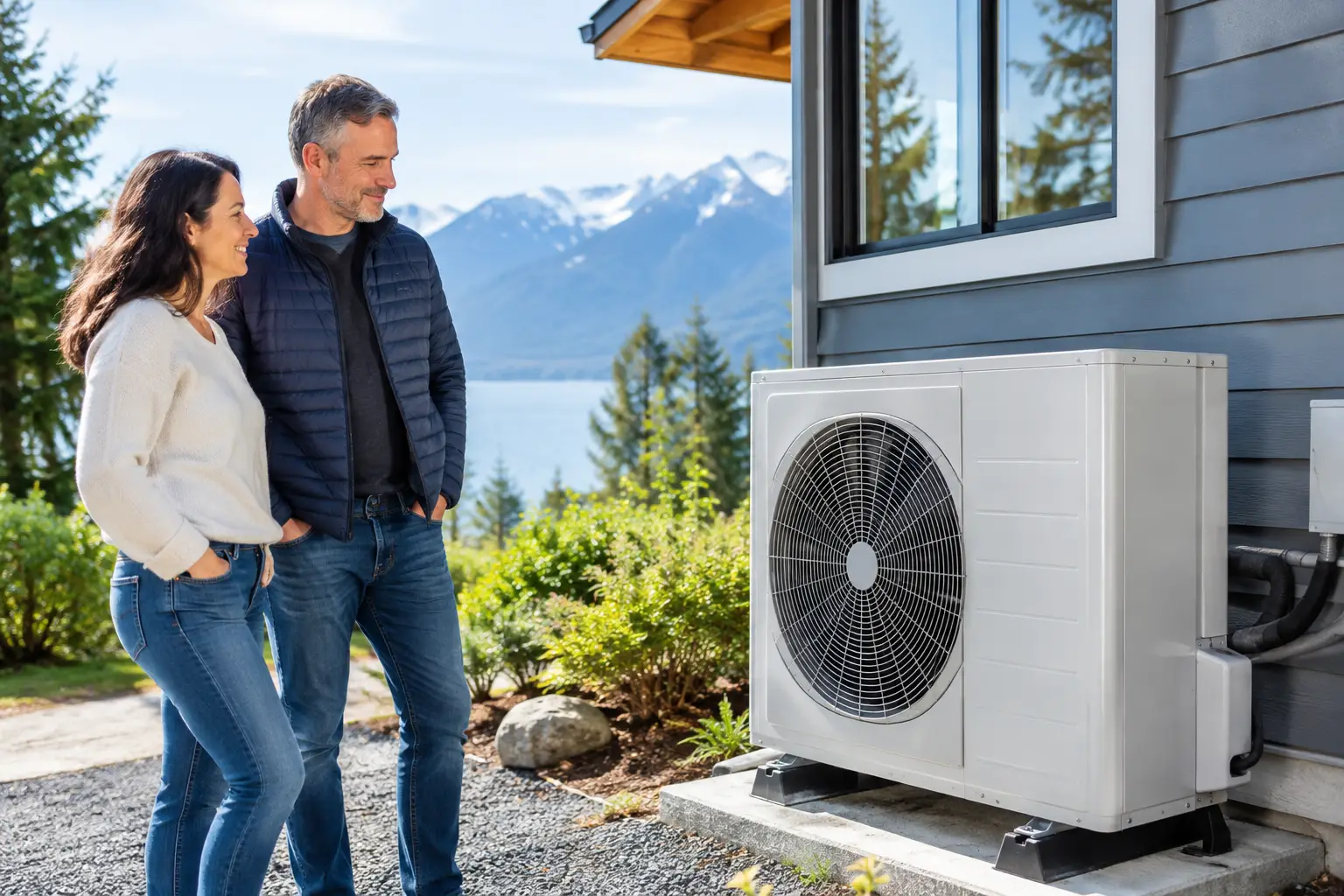
A heat pump upgrade homeowner example is often more useful than a list of equipment specifications. The question most Lower Mainland homeowners really want answered is simple: will this make my home more comfortable without creating a surprise on my utility bill? For one family in an older Coquitlam detached home, the answer came down to matching the right heat pump, backup heat, and installation plan to the house they already had.
Their gas furnace still ran, but it was loud, uneven, and costly during the coldest stretches of winter. Upstairs bedrooms were warmer than the main floor, summer heat lingered indoors, and the air conditioner was nearing the end of its service life. Rather than replace one aging component at a time, they chose to evaluate the entire heating and cooling system.
The starting point: comfort problems, not just equipment age
The homeowners lived in a two-story, approximately 2,100-square-foot home with an unfinished basement. Their existing furnace was more than 15 years old, and the central air conditioner had required several repairs over the previous two summers. Neither problem was an emergency yet, but waiting for a breakdown would have limited their options and put them under pressure during a busy season.
Their goals were practical. They wanted dependable winter heat, air conditioning for summer, quieter operation, and lower energy use where possible. They were also interested in available rebate programs, but they did not want to select a system based on a rebate alone.
That last point matters. A rebate can reduce upfront cost, but it does not fix an oversized system, poor ductwork, or a heat pump that is not suited to the home’s heating load. The right upgrade begins with an in-home assessment, not a guess based on square footage.
Heat pump upgrade homeowner example: the recommended plan
After reviewing the home’s layout, insulation conditions, existing ductwork, electrical capacity, and comfort concerns, the recommended solution was a cold-climate, ducted heat pump paired with a new high-efficiency gas furnace. The furnace would provide supplemental heat during the coldest weather and serve as a reliable backup, while the heat pump would handle much of the heating season and provide efficient cooling in summer.
This type of dual-fuel setup can be a strong fit for many Metro Vancouver homes. It allows the system to use electricity efficiently when outdoor temperatures are moderate and switch to gas heat when conditions make that the more practical choice. Exact changeover settings depend on the equipment, electricity and gas rates, and the home’s performance.
The family also chose a variable-speed indoor air handler and a communicating thermostat. These additions were not simply upgrades for the sake of technology. Variable-speed operation helped reduce the noticeable bursts of hot or cold air associated with their old single-stage equipment. The thermostat made it easier to manage schedules, monitor temperatures, and keep the system operating as intended.
A few duct adjustments were included as well. One undersized return path was contributing to uneven airflow upstairs. Addressing that restriction was a smaller part of the project, but it protected the value of the larger equipment investment.
What changed after installation
The most immediate difference was comfort. Instead of waiting for the furnace to cycle on at full output, the heat pump ran longer at a lower level, maintaining more even temperatures through the main floor and upstairs. The house felt less drafty, even though no single mechanical system can eliminate every cold spot caused by windows, insulation gaps, or open stairways.
Summer comfort improved too. The heat pump provided central air conditioning, and its variable-speed operation removed humidity more steadily than the old air conditioner. The homeowners noticed less temperature swing between rooms and quieter operation near the bedrooms.
Their energy costs did not follow a single, simple pattern. Electricity use increased because the heat pump now provided much of the heating. Gas use decreased significantly over much of the season. The total financial result depended on weather, thermostat settings, energy rates, and how often supplemental gas heat was needed. That is why responsible contractors should avoid promising a specific dollar amount before reviewing the home and current utility usage.
Still, the homeowners gained something that is easy to overlook: control. They had a system designed for year-round comfort rather than a furnace and air conditioner that were both approaching failure. They also had new equipment under warranty, modern controls, and a clear maintenance plan.
Why the homeowner did not choose a heat pump-only system
A heat pump-only installation may be an excellent option for some homes, especially where electrical capacity, building envelope upgrades, and homeowner goals align. It is not automatically the best answer for every property.
In this example, the family preferred the reassurance of gas backup. Their home had existing gas service, a ducted furnace setup, and several areas where further insulation and air sealing could still improve performance. Keeping a high-efficiency furnace as part of the system gave them dependable supplemental capacity without forcing a major electrical upgrade at the same time.
A fully electric system might have made more sense if the home had stronger insulation, sufficient panel capacity, and a homeowner committed to removing gas appliances. Conversely, a standard furnace replacement could have been appropriate if the existing air conditioner was relatively new and the household had no interest in changing how it heated and cooled the home.
The best choice depends on the house, not a sales script.
Rebates helped, but planning made the difference
The homeowners explored applicable rebate opportunities before approving the project. Programs can change, and eligibility can depend on the equipment model, installation details, home type, and required documentation. Some incentives may also have application steps that need to happen before installation.
For that reason, rebate guidance should be part of the estimate process. A qualified contractor can help homeowners understand which options may apply, what paperwork is needed, and how the rebate affects the overall budget. It is still wise to evaluate the project on total value: equipment quality, installation scope, warranty coverage, expected comfort, and long-term operating needs.
In this case, the rebate reduced the upfront investment, but the family’s decision rested on more than the incentive. They were replacing two aging systems, improving airflow, and avoiding the risk of an untimely winter or summer failure.
What this heat pump upgrade homeowner example teaches
This project worked because the solution addressed the home’s actual problems. The equipment was sized and selected around the property, the ductwork received attention, and the homeowners understood why a dual-fuel arrangement fit their priorities.
If you are considering a heat pump upgrade, start with your own comfort concerns. Are some rooms too warm or too cold? Is your current furnace becoming unreliable? Do you need cooling as well as heating? Are utility costs rising, or are you planning renovations that will change the home’s load? Those answers shape the right recommendation.
It also helps to gather a full year of gas and electricity bills before an estimate. They give your HVAC professional useful context and help you compare future performance more realistically. A home assessment should also account for insulation, windows, duct condition, thermostat location, electrical panel capacity, and any existing hot water or gas appliance plans.
A practical next step for Lower Mainland homeowners
A heat pump is not a one-size-fits-all purchase. It is a home comfort decision that affects heating, cooling, airflow, electrical use, and future maintenance. The right system can deliver quieter operation and more consistent temperatures, but only when it is properly designed and installed.
Pro West Heating & Air Conditioning can assess your current heating and cooling equipment, explain heat pump and dual-fuel options clearly, and help you review available rebate pathways. A free estimate gives you room to compare the investment before an aging furnace or air conditioner makes the decision for you.
The best time to plan an upgrade is while your current system still gives you choices. That is when you can focus on comfort, efficiency, and the right fit for your home instead of settling for the fastest replacement available.