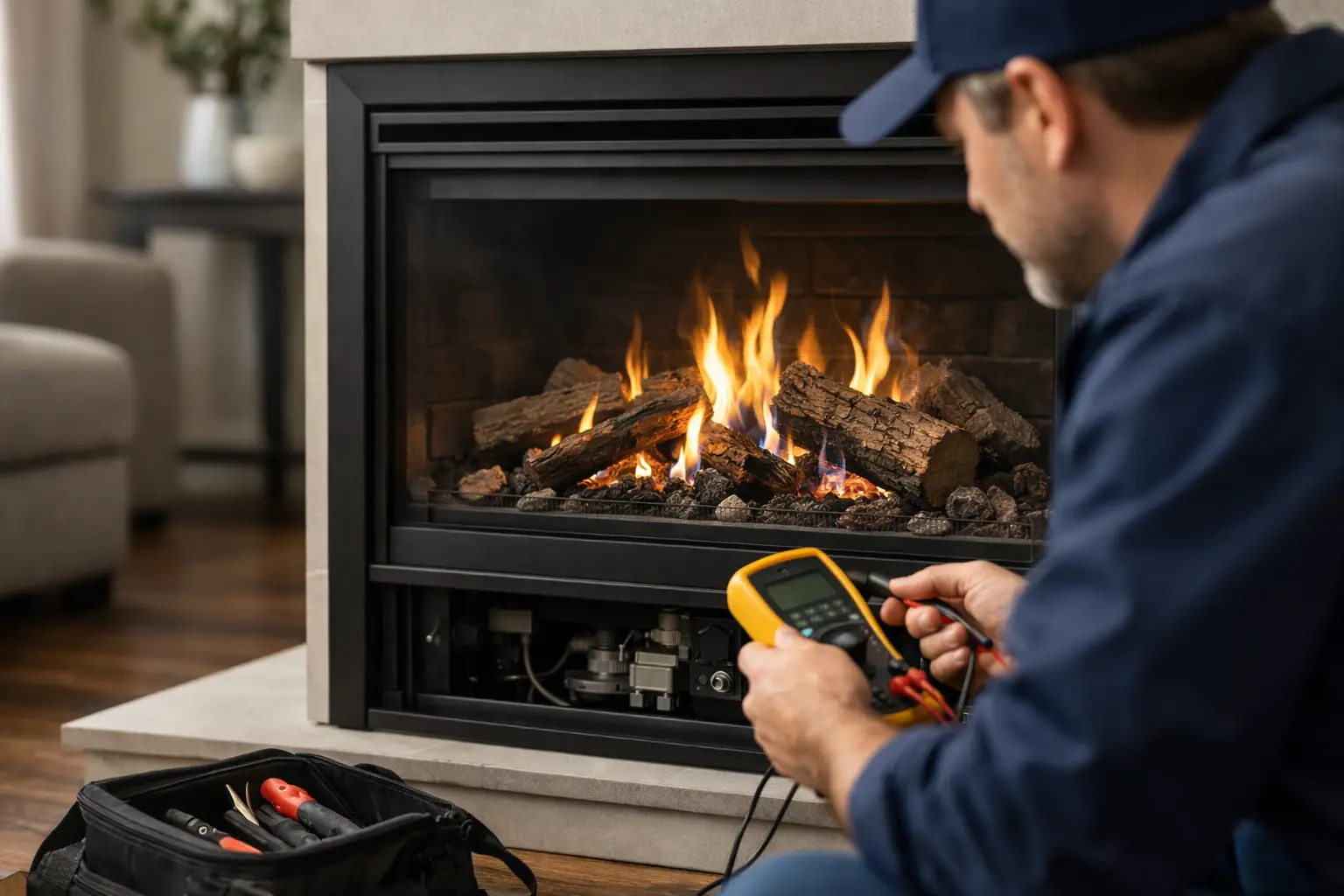
A gas fireplace should bring dependable warmth and a comfortable focal point to your home, not leave you wondering whether it is safe to turn on. If the unit will not ignite, produces an unusual smell, shuts off without warning, or leaves soot where it should not, a professional gas fireplace repair service is the right next step. Small performance changes can point to issues with ignition, ventilation, fuel delivery, or safety controls, and those are not problems to put off until the next cold spell.
For homeowners throughout Coquitlam, Metro Vancouver, and the Fraser Valley, a fireplace may not be the main heating system, but it still plays a meaningful role in home comfort. Timely service protects that comfort while helping prevent an inconvenient breakdown, unnecessary fuel use, or a more involved repair later.
Signs You Need a Gas Fireplace Repair Service
The clearest sign is a fireplace that does not turn on. You may hear the system click repeatedly, see the pilot light fail to stay lit, or get no response at all from the wall switch, remote, or thermostat. A dead battery or a tripped breaker can occasionally be the simple answer, but repeated ignition trouble requires a qualified technician to inspect the system.
Flame appearance also matters. A healthy gas fireplace generally produces a steady flame with natural blue and yellow tones, depending on the model and burner design. Weak flames, delayed ignition, flames that lift away from the burner, or heavy black soot on the glass are reasons to schedule service. These symptoms can result from dirty burner ports, an incorrect air-to-fuel mixture, a venting concern, or a component that is no longer operating correctly.
Pay attention to odors as well. A slight odor when a fireplace first runs after months of disuse may be dust burning off. A persistent gas smell, however, is different. Leave the area, avoid operating electrical switches or using open flames, and contact your gas utility or emergency service provider as appropriate. Do not try to locate or repair a gas leak yourself.
Other signs are less dramatic but still worth addressing. These include glass that fogs quickly, a pilot that goes out often, unusual ticking or banging noises, a fireplace that cycles on and off too frequently, or a room that feels noticeably colder despite the unit running. Your fireplace may still produce some heat, but it is not necessarily operating safely or efficiently.
What a Professional Fireplace Repair Visit Includes
A proper repair appointment is more than getting a flame to appear. The goal is to identify why the problem occurred and confirm that the fireplace can operate safely under normal conditions. The exact process depends on the make, model, age, and type of unit, but a licensed professional typically begins with a complete visual and functional assessment.
The technician may inspect the ignition system, pilot assembly, thermocouple or flame sensor, gas valve, burner, control module, wiring, remote receiver, and safety switches. They will also check the condition of the glass, gasket, logs, and firebox. In direct-vent fireplaces, the venting system is a critical part of the inspection because it brings in combustion air and directs exhaust outdoors.
Cleaning is often part of the solution, but it is not always the full solution. Dust, pet hair, and debris can affect pilot performance and burner operation. At the same time, a dirty component may be a symptom rather than the root cause. For example, recurring soot could indicate an air adjustment issue or a venting restriction that needs correction.
A qualified technician should test operation after repairs are completed. That means confirming dependable ignition, stable flame patterns, proper cycling, and the safe operation of built-in controls. If parts are worn or obsolete, the technician can explain whether repair is practical or whether replacement will offer better reliability and value.
Why fireplace glass and vents deserve attention
The glass panel on a sealed gas fireplace is not decorative alone. It is part of the unit’s designed combustion system. Cracked glass, a damaged gasket, or an improperly secured panel can affect performance and safety. Never operate a fireplace with damaged or removed glass unless the manufacturer specifically permits it.
Vents need the same level of care. Bird nests, outdoor debris, deteriorated vent components, or changes made during exterior renovations can interfere with safe exhaust flow. A fireplace that worked well last winter can develop a venting concern over time, especially when it has not been professionally inspected.
Repair, Maintenance, or Replacement: How to Decide
Not every issue calls for a new fireplace. Many common problems, including failed igniters, faulty switches, worn sensors, dirty pilots, and remote-control issues, can be repaired efficiently. Regular maintenance also resolves many performance concerns before they turn into failures.
Replacement becomes more worth considering when a unit has repeated breakdowns, requires discontinued parts, has major corrosion or venting damage, or no longer provides the heat and features your household needs. Older fireplaces may also lack the efficiency, flame control, and safety features available in current models.
The best decision depends on repair cost, the fireplace’s condition, and how you use it. If an otherwise dependable unit needs a straightforward component replacement, repair is usually sensible. If repair costs keep adding up or the unit is approaching the end of its expected service life, a new model can provide a more dependable long-term solution.
A trusted contractor should explain both paths clearly. You deserve to know what is required now, what may need attention later, and whether an upgrade could improve comfort or reduce operating costs. There is no one-size-fits-all answer, particularly for homeowners balancing a fireplace project with furnace, boiler, heat pump, or water-heating needs.
Safe Steps Homeowners Can Take Before Service
There are a few safe checks you can make before booking an appointment. Confirm that the fireplace has power, replace remote batteries if needed, and verify that the gas shutoff has not been accidentally turned off. If your model has a standing pilot, follow the manufacturer instructions exactly when checking whether it is lit.
Do not remove the glass, disassemble the burner, alter gas connections, or attempt to bypass a safety switch. Gas fireplaces are engineered systems, and a quick online fix can create a real hazard or damage components that a technician could otherwise repair.
Keep the area around the fireplace clear of furniture, decorations, and combustible materials. If the unit has not been serviced recently, avoid assuming an annual first use will be trouble-free. Scheduling maintenance before the heating season gives you time to address concerns without waiting for a cold-weather service rush.
Get Reliable Help Before a Small Issue Grows
A gas fireplace is one of the few home systems that combines open-flame warmth, gas controls, electrical components, and venting in a single appliance. That is why a repair should focus on safety and lasting performance, not just getting the unit to light once.
Pro West Heating & Air Conditioning provides licensed service for gas fireplaces and other essential home comfort equipment. Whether your fireplace is failing to ignite, showing soot, losing its pilot, or simply due for professional maintenance, prompt attention can restore the comfort you expect from your home.
If something about your fireplace looks, sounds, or smells different, trust that instinct. Arrange a professional inspection before the next evening you are counting on it for warmth.