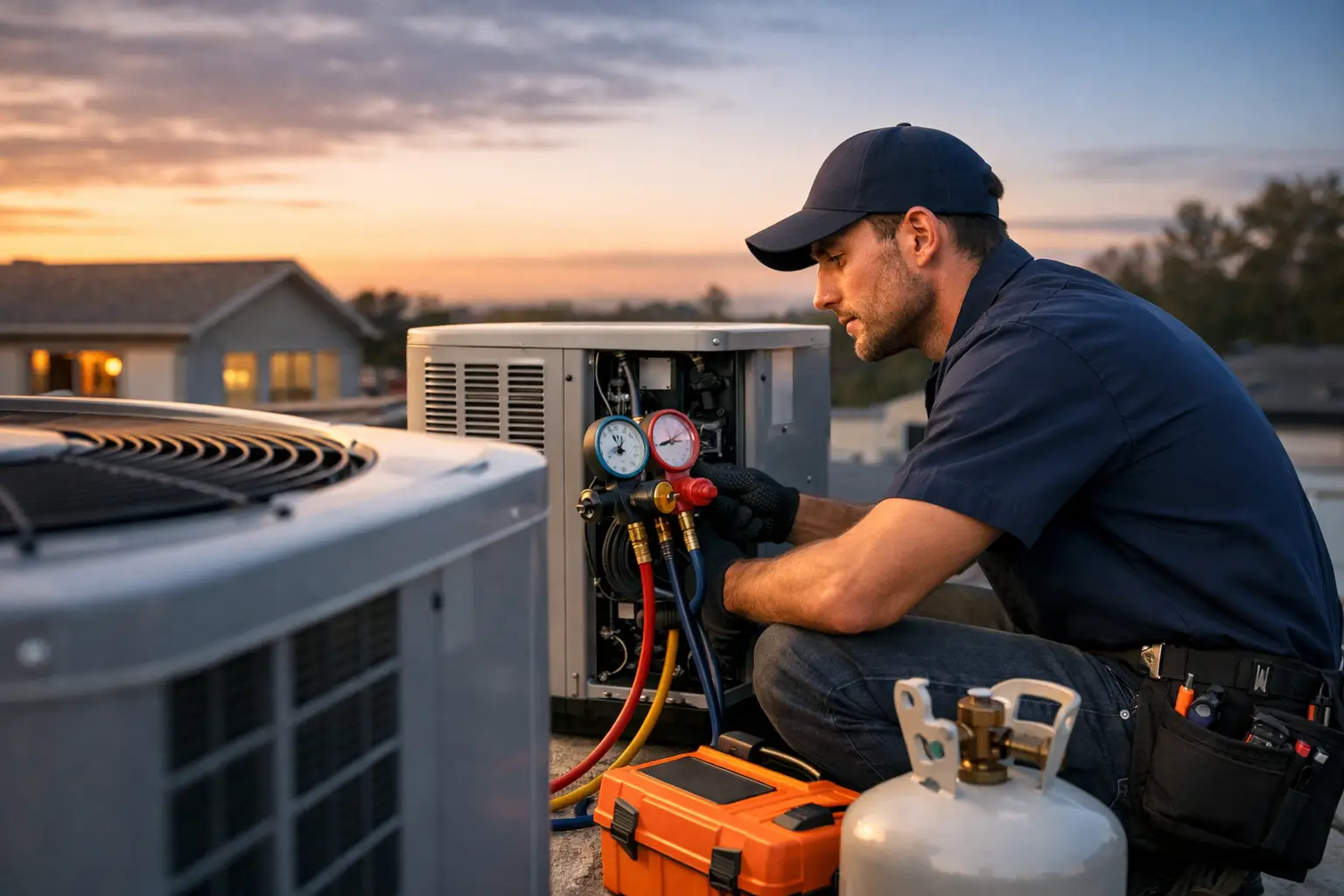
A cooling system rarely fails at a convenient time. It quits during a heat wave, starts leaking before guests arrive, or blows warm air when a child, older adult, or pet needs a safe place to cool down. Emergency air conditioner service helps restore comfort quickly while addressing the problem safely, not just temporarily.
For homeowners, the goal is simple: get clear answers, protect the home, and bring the system back online without risking further damage. A qualified technician can diagnose the issue, explain the repair in plain language, and help you decide whether a repair is the right move or whether an aging system deserves a closer look.
When Is an AC Problem an Emergency?
Not every air conditioner issue requires an after-hours visit. A unit that is running a little louder than usual or cooling less evenly can often wait for a scheduled appointment. But some problems should be handled right away, particularly when indoor temperatures are rising quickly or the system is showing signs of an electrical or water-related failure.
Call for emergency air conditioner service when the system has stopped cooling during extreme heat, especially if someone in the household is vulnerable to heat. You should also act quickly if you smell burning, see smoke, hear loud buzzing or grinding, find water pooling around the indoor equipment, or notice that the breaker repeatedly trips.
A refrigerant leak also deserves prompt professional attention. Refrigerant is not something to handle yourself, and a low charge can indicate a leak that will continue to affect performance until it is located and repaired. If the indoor coil freezes, turn the system off and call for service rather than continuing to run it. Operating a frozen system can strain the compressor and turn a manageable repair into a larger expense.
What to Do Before the Technician Arrives
A few safe checks can sometimes reveal a simple issue and can help the technician diagnose the problem faster. Start by checking the thermostat. Confirm it is set to cool, the temperature setting is below the current room temperature, and the batteries are working if the thermostat uses them.
Next, look at the air filter. A heavily clogged filter restricts airflow and may cause poor cooling or coil freeze-ups. If it is visibly dirty, replace it with the correct size and type for your system. Also confirm that supply vents are open and that furniture, rugs, or curtains are not blocking returns.
If the outdoor unit is not running, check the electrical panel for a tripped breaker. You may reset it once if it has tripped. If it trips again, leave it off. Repeated trips can point to an electrical fault, failing component, or compressor issue that requires professional diagnosis.
For safety, avoid these common mistakes:
- Do not remove electrical panels or attempt wiring repairs.
- Do not add refrigerant or use leak-sealing products.
- Do not keep restarting a unit that is making severe noises or tripping breakers.
- Do not ignore water near electrical equipment or a burning odor.
If water is leaking from the indoor unit, switch the cooling system off at the thermostat. Place towels or a shallow container under the affected area only if it is safe to do so. A blocked condensate drain, frozen evaporator coil, or damaged drain component may be the cause, and each requires a different repair.
Common Reasons Air Conditioners Fail Suddenly
Air conditioners are a connected system. A problem with airflow, drainage, electrical controls, or refrigerant can all result in the same homeowner experience: warm air and an uncomfortable house. Accurate diagnosis matters because replacing a part without finding the cause can lead to another failure soon after.
Dirty Filters and Airflow Restrictions
Restricted airflow is one of the most preventable causes of cooling trouble. When a filter is clogged, the system has to work harder to move air. The evaporator coil can become too cold and freeze, while rooms may feel humid or unevenly cooled. Changing the filter on schedule is a small task that helps protect larger components.
Thermostat, Capacitor, and Electrical Issues
A thermostat problem may prevent the system from receiving the signal to cool. A failed capacitor can keep the outdoor fan or compressor from starting. Worn contactors, damaged wiring, and circuit issues can create similar symptoms. These are not DIY repairs, but they are often repairable when caught early.
Frozen Coils and Refrigerant Leaks
Ice on refrigerant lines or the indoor coil is a warning sign, not the problem itself. It may result from low airflow, low refrigerant, or both. A technician will inspect the system, identify the underlying cause, and verify that the equipment is operating at the manufacturer’s specifications after the repair.
Condensate Drain Problems
Your air conditioner removes moisture as it cools. That moisture needs a clear path out of the home. If the drain line clogs, water can back up and trigger a safety switch, shut the system down, or damage nearby finishes. Regular maintenance helps catch drain issues before they become a late-night leak.
What a Professional Emergency Visit Should Include
Fast service should still be thorough service. A proper emergency visit begins with questions about what happened, when the problem started, and what you noticed before the failure. Those details help narrow the diagnosis and avoid wasted time.
The technician should inspect the thermostat, filter, electrical connections, safety controls, drain system, indoor coil, and outdoor unit as appropriate. They may test capacitors, motors, voltage, refrigerant performance, and airflow. The exact process depends on the symptoms and the type of equipment in the home.
Once the issue is identified, you should receive a clear explanation of the recommended repair, expected cost, and any relevant options. Sometimes the most sensible answer is a focused repair that gets a dependable system running again. Other times, particularly with an older unit that has recurring breakdowns or a major compressor problem, replacement may offer better long-term value.
The right decision depends on the unit’s age, repair history, efficiency, available parts, and the cost of the current repair compared with replacement. A trustworthy contractor will not treat every service call as a replacement opportunity. They will help you understand the trade-off so you can make a confident decision for your home.
Repair Now or Plan for Replacement?
A newer system with a failed capacitor, clogged drain, or electrical control issue is often a strong repair candidate. These repairs can restore reliable cooling without requiring a major investment. If the system is well maintained and has otherwise performed consistently, repairing it usually makes sense.
Replacement becomes more worth considering when the system is near the end of its expected service life, uses outdated refrigerant, has a major leak, or needs expensive repairs repeatedly. A properly sized high-efficiency air conditioner or heat pump may reduce energy use, improve humidity control, and provide more consistent comfort throughout the home.
Sizing is especially critical. Bigger is not automatically better. An oversized unit can cycle on and off too quickly, which may leave humidity behind and increase wear. A professional home assessment considers the home’s layout, insulation, windows, ductwork, and cooling needs before recommending equipment.
Preventing the Next After-Hours Breakdown
Emergency repairs are sometimes unavoidable, but maintenance reduces the odds of a sudden failure. Replace filters regularly, keep leaves and debris away from the outdoor unit, and schedule seasonal service before peak cooling weather arrives. During a maintenance visit, a technician can clean components, check electrical connections, inspect drainage, test performance, and spot worn parts before they fail.
Pay attention to smaller changes, too. Longer cooling cycles, uneven temperatures, higher utility bills, new noises, or excess humidity are early signals worth checking. Addressing them during regular business hours is usually easier and may be less costly than waiting for a complete shutdown.
When cooling fails, a quick response and a careful diagnosis make all the difference. Pro West Heating & Air Conditioning provides responsive residential support to help homeowners protect their comfort, equipment, and peace of mind when the temperature cannot wait.