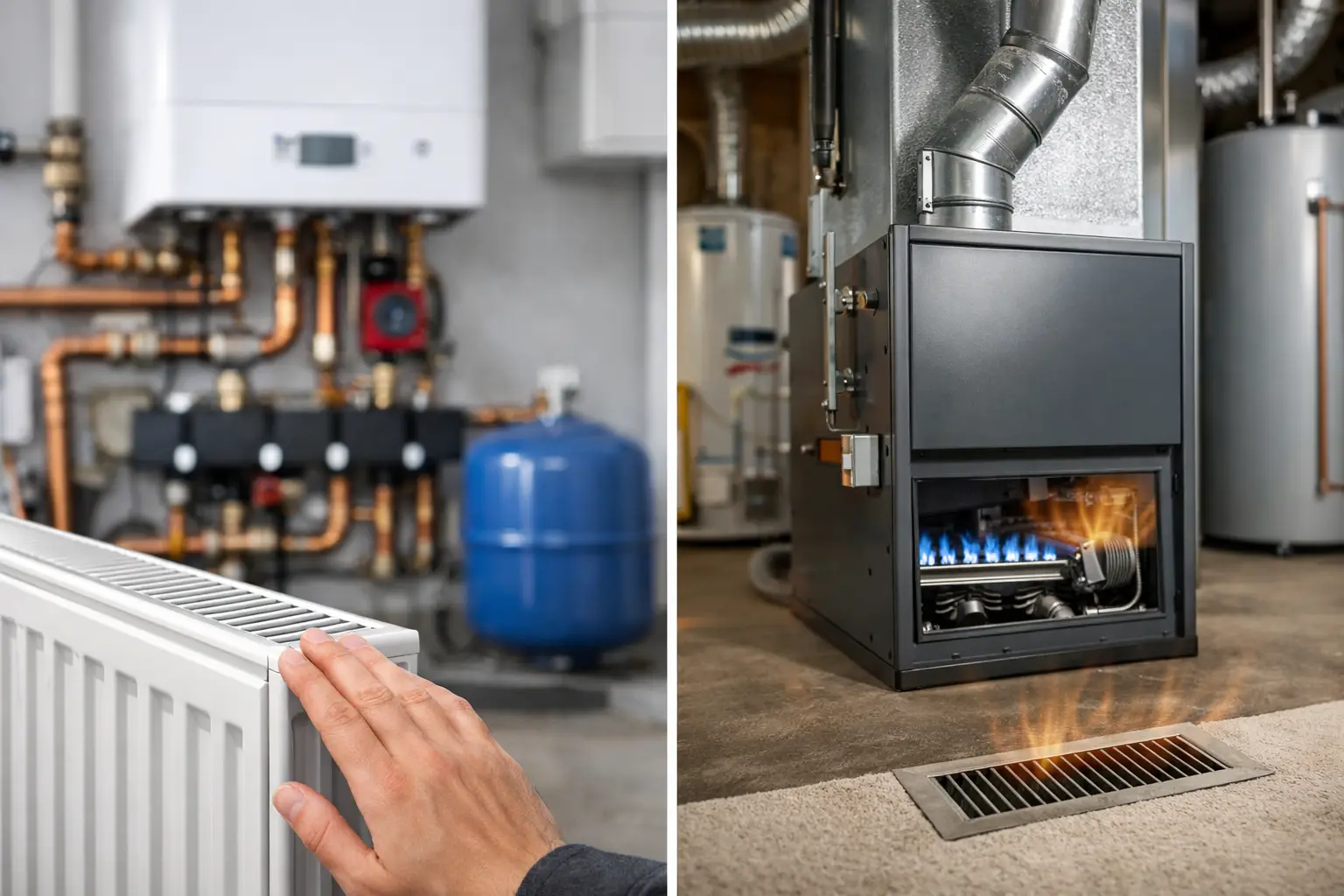
A heating replacement is not just a question of what will make the house warm. It affects how each room feels on a cold morning, whether the air feels dry, what future repairs may cost, and how easily the system can work with your home’s layout. When comparing boiler versus furnace heating, the better choice depends on your existing equipment, comfort priorities, fuel availability, and budget – not on a one-size-fits-all answer.
For many homeowners, the most practical first question is simple: are you replacing a system that has failed, or planning a larger comfort upgrade? Keeping a similar system can reduce installation work. Switching from a furnace to a boiler, or the other way around, can deliver a different kind of comfort but may require significant changes to your home.
How boiler heating works
A boiler heats water and circulates it through pipes to radiators, baseboard units, or in-floor radiant tubing. The heat transfers from those surfaces into the room, creating steady, gentle warmth. Modern high-efficiency boilers can use natural gas or propane, and they are often paired with zoning controls that let you manage temperatures in different areas of the home.
Because a boiler does not move heated air through ductwork, it generally produces quieter heat with less airborne dust circulation. That is a meaningful benefit for homeowners who prefer radiant comfort or who have rooms that feel drafty with forced-air heating.
Boilers are especially common in homes with existing radiators, hydronic baseboards, or radiant floors. If those components are in good condition, replacing an aging boiler with a properly sized efficient model can be a smart way to improve comfort and reduce fuel use without rebuilding the heating distribution system.
What boiler comfort feels like
Radiant and hydronic heat warms surfaces and people, not just the air. Floors can feel more comfortable underfoot, and room temperatures tend to change gradually instead of cycling quickly between warm blasts and cooler pauses. Many homeowners describe boiler heat as even and calm.
That slower response is also a trade-off. If you turn the thermostat up several degrees, a boiler system may take longer to catch up than a furnace. Proper controls, zoning, and routine maintenance make a major difference in performance.
How furnace heating works
A furnace heats air and sends it through ductwork using a blower motor. Warm air reaches rooms through supply vents, while return vents pull cooler air back to the system for reheating. Gas furnaces are common in homes across many colder regions because they can heat a house quickly and work with a central duct system.
A furnace is often the straightforward option when the home already has usable ducts. It can also support more than winter heating. The same ductwork can distribute air conditioning, work with certain heat pump configurations, and accommodate air cleaners, humidifiers, and other indoor air quality equipment.
What furnace comfort feels like
Forced-air heat responds quickly. If the house gets chilly after a door is left open or temperatures drop overnight, a furnace can raise the indoor temperature fast. This makes it a practical choice for busy households that want responsive controls.
The trade-off is that moving air can create more noticeable temperature differences between rooms, particularly in homes with leaky, poorly designed, or unbalanced ducts. Furnaces can also make dry winter air more apparent. A professional duct assessment and thermostat setup can improve these concerns considerably.
Boiler versus furnace heating: the key differences
The central difference is the delivery method. Boilers circulate heated water, while furnaces circulate heated air. That affects comfort, installation requirements, maintenance, and the upgrades available to you.
A boiler may be the better fit when your home already has a hydronic system, you value quiet radiant warmth, or you want room-by-room zoning without adding ductwork. A furnace may make more sense when ductwork is already in place, fast heating is a priority, or you want one central system to support heating, cooling, filtration, and humidity control.
Neither option is automatically more efficient. Annual efficiency depends on the equipment model, fuel source, sizing, installation quality, thermostat settings, insulation, duct condition, and maintenance. A high-efficiency furnace installed on undersized or leaking ducts may underperform. Likewise, a high-efficiency boiler cannot deliver its full value if pumps, controls, or radiators are not operating properly.
Installation cost depends on what is already in your home
Equipment price matters, but installation scope usually has a bigger influence on the final project cost. Replacing an existing furnace with a new furnace is generally less complex than converting a home from hydronic heat to forced air. The same is true in reverse: converting a ducted home to a full boiler and radiator or radiant-floor system can involve extensive piping and finish work.
If your current boiler is aging but the pipes and heat emitters are sound, a boiler replacement can be a cost-effective long-term solution. If your home has a functioning duct system and you also need central air conditioning, a furnace or heat pump solution may provide more value from the same distribution system.
Before deciding, ask for an in-home assessment that considers more than square footage. Proper sizing should account for insulation, windows, ceiling height, home orientation, air leakage, number of occupants, and the condition of ducts or piping. Oversized heating equipment can short-cycle, waste energy, and wear out sooner.
Maintenance and repair considerations
Both systems need annual professional service. For a furnace, that typically includes checking the heat exchanger, burners, ignition components, filter condition, blower operation, venting, safety switches, and carbon monoxide performance. Homeowners should also replace or clean filters on schedule to protect airflow and efficiency.
For a boiler, service commonly includes inspecting the burner, venting, pressure, expansion tank, circulator pumps, valves, controls, and water quality. Small leaks, unusual banging sounds, pressure changes, or cold zones should be addressed early. Ignoring them can turn a manageable repair into water damage or a system shutdown during cold weather.
Boilers often have fewer moving air-handling components than furnaces, but their piping and hydronic controls require specialized knowledge. Furnaces have readily accessible filters and familiar ductwork, but duct leaks, blower issues, and combustion problems require professional attention. In either case, licensed service protects comfort and safety.
Can a boiler or furnace work with a heat pump?
Yes, but the setup differs. A ducted heat pump can often work alongside a furnace, using the existing ductwork for efficient electric heating and air conditioning. The furnace can provide backup heat during very cold weather or when it is the more economical choice based on local utility rates.
Hydronic heat pump options are also available for some boiler-based homes, although system design is more specialized. A homeowner with a boiler may choose to keep it for dependable radiant heat while adding separate cooling solutions, such as ductless equipment or a dedicated air handler where appropriate.
This is one reason the decision should be based on the entire home comfort system, not only the heating appliance. Your cooling needs, available rebates, electrical capacity, and plans for future upgrades all deserve a place in the conversation.
Which system is right for your home?
Choose a boiler when you already have a well-maintained hydronic system, prefer quiet and even radiant heat, or want the comfort of warm floors and zoned rooms. Choose a furnace when your home has ducts, you want quick heating response, or you want central heating and cooling from one air distribution system.
If both options are possible, focus on the cost of ownership rather than the purchase price alone. Compare projected fuel use, expected maintenance, needed home modifications, available incentive programs, and the condition of the infrastructure you already own. The right answer may be to replace like for like, or it may be a broader upgrade that solves uneven rooms, high energy bills, and cooling needs at the same time.
When your current system is unreliable, do not wait for the next cold spell to force a rushed decision. A qualified home assessment can show what is worth repairing, what should be replaced, and which heating path will keep your household comfortable for years to come.